The Madras High Court has clarified that customs authorities cannot initiate penalty proceedings against exporters or their brokers for alleged misclassification of goods under the MEIS scheme when the Directorate General of Foreign Trade (DGFT) has already granted and not revoked the incentive scrips. This judgment reinforces the principle of administrative jurisdictional boundaries under India’s foreign trade regime.
Background & Facts
The Dispute
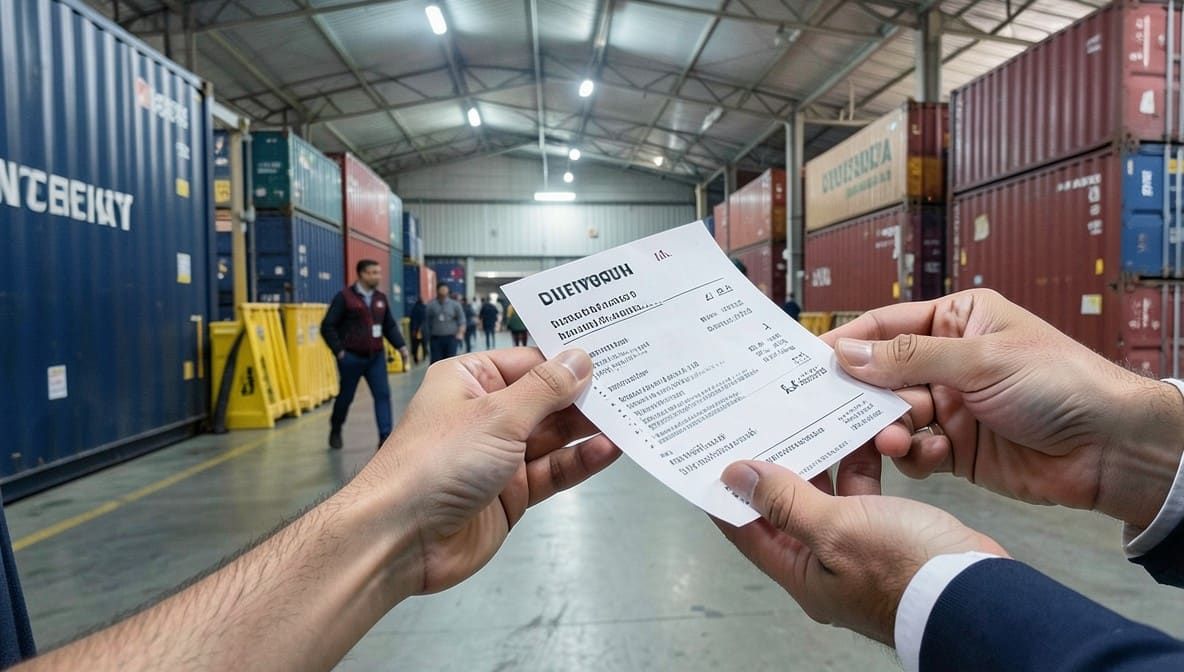
The appellant, M/s. Seaswan Shipping & Logistics, is a licensed Customs Broker registered under the Customs Brokers Licensing Regulations, 2018, authorized to operate in Chennai and Tuticorin. Between 2017 and 2019, the appellant filed shipping bills on behalf of 17 exporters, including M/s. Shivam Exports, for the export of machine-made safety matches. The goods were classified under CTSH 36050090 and declared with a FOB value of Rs. 5,73,80,848. The appellant claimed benefits under the Merchandise Exports from India Scheme (MEIS), which entitles exporters to tradable scrips based on FOB value realized.
Key Facts
- The shipping bills were processed and cleared by Customs authorities at Tuticorin port without objection.
- The DGFT granted MEIS scrips amounting to Rs. 11,47,617 to the exporters based on the declared classification.
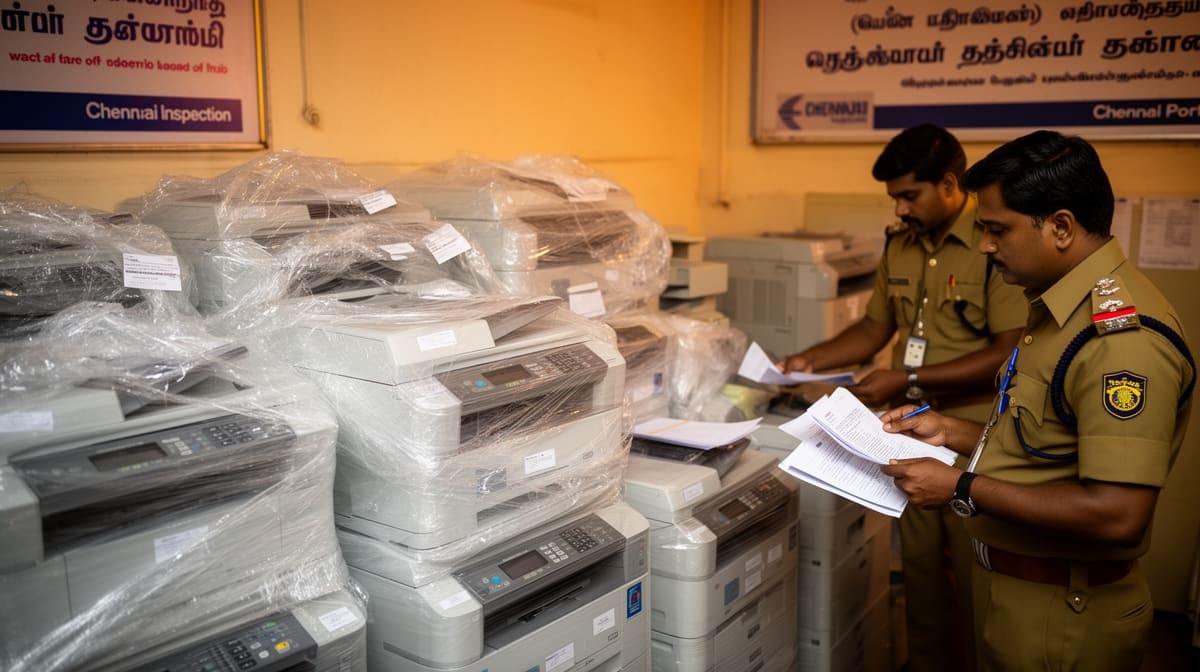
- The Customs Intelligence and Investigation Branch (SIIB), Tuticorin, later alleged that the correct classification should have been CTSH 36050010, which attracts a lower MEIS incentive rate of 3% compared to 5% under CTSH 36050090.
- The appellant was not the exporter but acted solely as an agent, filing shipping bills based on instructions from the exporters.
- The DGFT did not initiate any proceedings, issue any show cause notice, or revoke the MEIS scrips granted to the exporters.
- The appellant submitted a reply dated 29.09.2022 denying any wilful misstatement.
Procedural History
- 2017 - 2019: Export of safety matches with classification CTSH 36050090; MEIS scrips issued by DGFT.
- 2022: SIIB initiated inquiry; issued show cause notice to exporter and appellant.
- 30.09.2022: Adjudicating Authority imposed penalty of Rs. 10 lakhs on both exporter and appellant under Sections 114 and 114AA of the Customs Act, 1962.
- 03.01.2024: CESTAT, Chennai, modified the penalty to Rs. 1 lakh under Section 114AA only, setting aside the penalty under Section 114(III).
- 09.04.2026: Civil Miscellaneous Appeal heard and reserved by Madras High Court.
- 15.04.2026: Judgment pronounced by Division Bench.
The Parties' Positions
For the Appellant (Seaswan Shipping & Logistics):
- Acted strictly as agent of the exporter; followed exporter’s instructions on classification.
- Customs authorities had previously cleared similar shipments without objection.
- DGFT, the sole authority under the Foreign Trade Policy, issued and did not revoke the MEIS scrips.
- No mens rea can be inferred from a mere classification error, especially where the agent had no independent duty to verify HS codes.
- Penalty under Section 114AA requires proof of wilful misstatement, which is absent.
For the Respondent (Commissioner of Customs):
- The classification CTSH 36050090 was intentionally misrepresented to claim higher MEIS benefits.
- The difference in incentive rates (3% vs. 5%) resulted in wrongful gain and revenue loss.
- Customs authorities have jurisdiction to prevent leakage of incentives under the Customs Act.
- The appellant, as a licensed broker, is expected to exercise due diligence.
Relief Sought
The appellant sought quashing of the CESTAT order dated 03.01.2024, setting aside the penalty of Rs. 1 lakh imposed under Section 114AA, and a declaration that customs authorities lack jurisdiction to penalize for MEIS misclassification when DGFT has not acted.
The Legal Issue
The central questions were: (1) Whether customs authorities have jurisdiction to impose penalties under the Customs Act for misclassification of exported goods under the MEIS scheme when the DGFT has issued and not revoked the scrips; (2) Whether a mere error in classification, without proof of wilful intent, attracts penalty under Section 114AA; and (3) Whether Section 28 or 28AAA of the Customs Act can be invoked in the absence of any import or duty evasion.
Arguments Presented
For the Appellant
The appellant relied on Titan Medical Systems Pvt. Ltd. v. Collector of Customs, New Delhi (2003) and Nitta Geletin India Ltd. v. Commissioner of Customs (Kerala HC, 2025) to argue that once a foreign trade authority (DGFT) grants a benefit and does not revoke it, customs authorities cannot unilaterally challenge the validity of the grant. The appellant emphasized that as a broker, they acted on the exporter’s instructions and had no independent obligation to verify HS codes. The absence of any action by DGFT negated any allegation of fraud or misrepresentation. Mens rea, a mandatory element under Section 114AA, was absent.
For the Respondent
The respondent contended that customs authorities have a statutory duty under the Customs Act to prevent revenue leakage, including through fraudulent export declarations. The misclassification, even if unintentional, resulted in undue benefit and constituted a contravention. The appellant, as a licensed broker, was expected to exercise professional care. The invocation of Section 28AAA was justified as it covers suppression of facts leading to wrongful incentive claims.
The Court's Analysis
The Court undertook a detailed analysis of the statutory framework governing the MEIS scheme and the division of powers between DGFT and customs authorities. It emphasized that the MEIS scheme is governed exclusively by Chapter III of the Foreign Trade Policy, administered by DGFT under the Foreign Trade (Development and Regulation) Act, 1992. The Court noted that DGFT, not customs, has the exclusive authority to grant, monitor, and revoke MEIS scrips.
"Once an adverse license was issued and not questioned by the licensing authority, the customs authorities cannot refuse exemption on an allegation that there was misrepresentation. If there was any misrepresentation, it was for the licensing authority to take steps in that behalf."
The Court applied the reasoning from Titan Medical Systems and Nitta Geletin to hold that the customs department’s action was a clear overreach. The fact that DGFT had issued the scrips and taken no action to revoke them rendered the customs department’s allegations of misclassification legally irrelevant. The Court observed that the exporter’s right to the scrips was subsisting and valid, and customs could not unilaterally declare them invalid.
Regarding Section 28 and 28AAA, the Court held that Section 28 applies only to cases of short payment or non-payment of import duties, which were entirely absent here since no goods were imported. Section 28AAA, which deals with collusion or wilful misstatement in import contexts, was equally inapplicable to export-based incentive claims.
On the issue of mens rea under Section 114AA, the Court held that a mere error in classification, especially when acting as an agent following the exporter’s instructions, cannot be equated with wilful misstatement. The appellant had no motive to misclassify, and the customs department failed to establish any intent to defraud.
The Verdict
The Madras High Court allowed the appeal and set aside the CESTAT order dated 03.01.2024. The penalty of Rs. 1 lakh imposed under Section 114AA of the Customs Act against the appellant was quashed. The Court held that customs authorities have no jurisdiction to penalize for MEIS misclassification when DGFT has issued and not revoked the scrips. No costs were awarded.
What This Means For Similar Cases
Customs Authorities Cannot Act as De Facto Foreign Trade Regulators
- Practitioners must challenge any penalty notice under Customs Act for export misclassification if DGFT has not initiated proceedings or revoked scrips.
- The burden shifts to the revenue to prove that DGFT had identified and acted upon the alleged misclassification.
- Merely alleging a higher incentive claim does not confer jurisdiction on customs authorities.
Broker Liability Requires Proof of Wilful Intent
- Licensed customs brokers acting as agents cannot be penalized under Section 114AA for errors in HS code declaration unless wilful intent is proven.
- Reliance on exporter instructions, absence of prior objections from customs, and DGFT’s non-action are strong defenses.
- Penalty proceedings against brokers must be preceded by evidence of fraud, not mere clerical or technical errors.
MEIS Scrips Are Legally Valid Until Revoked by DGFT
- MEIS scrips, once issued, are valid and enforceable until formally revoked by DGFT under the Foreign Trade Policy.
- Customs cannot retroactively invalidate scrips or impose penalties based on alleged misclassification.
- Any dispute over classification must be resolved by DGFT, not customs, under the Foreign Trade Act.