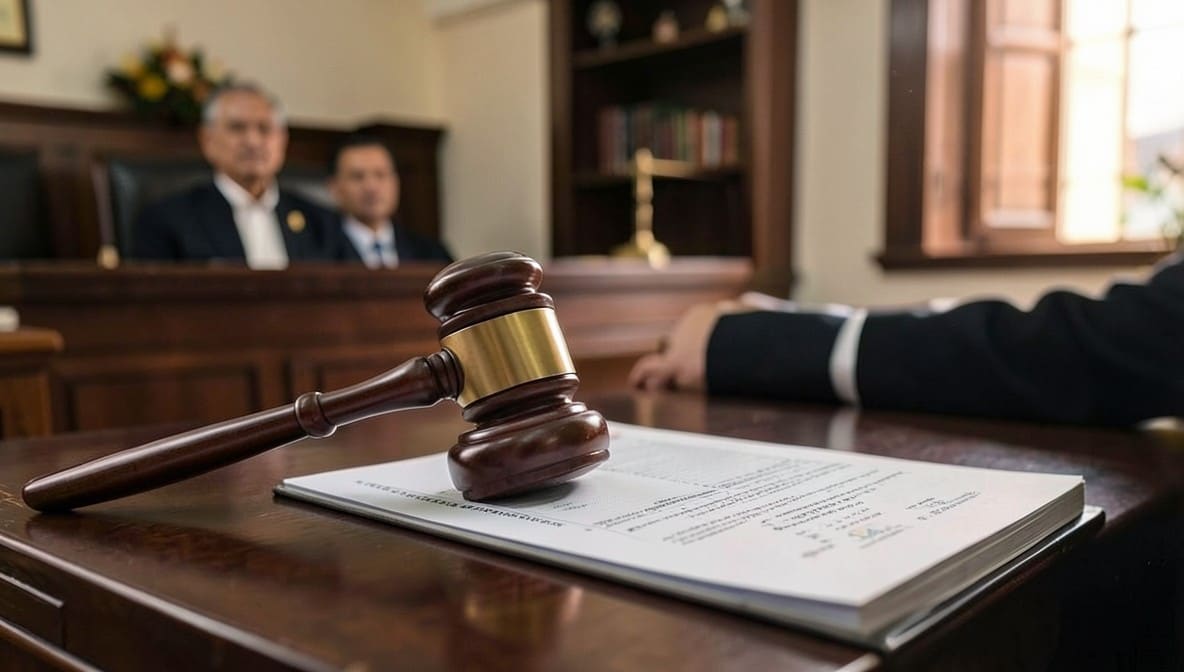
In a significant ruling on bail jurisprudence, the Karnataka High Court granted bail to an accused charged under Section 108 of the Bharatiya Nagarik Suraksha Sanhita (BNS) for allegedly abetting the suicide of a woman who discovered his religious identity was concealed. The Court emphasized that while the offence is grave, the absence of the accused’s name in the deceased’s suicide note and lack of prior criminal antecedents tilted the balance in favour of bail, reinforcing that custody is not automatic merely on the gravity of the offence.
Background & Facts
The Dispute
The petitioner, Izaz Ahamad, was accused of deceiving the deceased, a woman who committed suicide on 15.03.2026, by misrepresenting his religious identity under the pretext of marriage. The deceased confided in her sister 2-3 days before her death that she had fallen in love with the petitioner, believing him to be Hindu, only to later discover he was Muslim. The petitioner allegedly refused to marry her after this revelation, leading to the suicide.
Key Facts
- The deceased committed suicide on 15.03.2026
- The deceased confided in her sister about the deception 2-3 days before her death
- A complaint was filed by the deceased’s sister, alleging abetment of suicide under Section 108 BNS
- The FIR (Crime No. 99/2026) was registered on 21.04.2026 at Siddapura Police Station, Uttara Kannada
- The petitioner was arrested on 22.04.2026
- The deceased’s suicide note did not mention the petitioner’s name
Procedural History
- 21.04.2026: FIR registered under Section 108 BNS
- 22.04.2026: Petitioner arrested
- 2026: Criminal Petition (Crl.P No. 101140 of 2026) filed under Section 483 BNSS (equivalent to Section 439 CrPC) before the Karnataka High Court, Dharwad Bench
- 08.06.2026: Present bail order passed
Relief Sought
The petitioner sought regular bail, arguing:
- No criminal antecedents
- Maximum punishment for the offence is 10 years imprisonment
- Willingness to abide by bail conditions
- Absence of evidence linking him directly to the suicide
The Legal Issue
The central question was whether Section 108 BNS, which penalizes abetment of suicide, justifies continued custody of the accused when:
- The deceased’s suicide note does not implicate the accused
- There is no evidence of direct instigation or abetment
- The accused has no prior criminal record
Arguments Presented
For the Petitioner
- The petitioner has no criminal antecedents and has not been convicted of any offence
- The maximum punishment under Section 108 BNS is 10 years, but this alone does not justify denial of bail
- The petitioner is willing to abide by any bail conditions imposed by the Court
- The deceased’s suicide note does not mention the petitioner, weakening the prosecution’s case
For the Respondent
- The State did not present specific material to oppose bail, such as prior criminal convictions or evidence of tampering
- The gravity of the offence (abetment of suicide) was emphasized, but no substantive argument was made to deny bail
The Court's Analysis
The Court examined the gravity of the offence under Section 108 BNS but noted that the absence of the petitioner’s name in the suicide note and the lack of criminal antecedents were critical factors. The Court relied on established principles that bail should not be denied solely on the gravity of the offence unless there is a risk of tampering with evidence or influencing witnesses.
"A perusal of the death note of the deceased does not disclose the name of the petitioner. Considering the gravity of the offence, this Court is of the view that the petitioner is entitled for bail."
The Court further observed that the State did not place any material to suggest the petitioner had been implicated in any prior criminal proceedings or posed a flight risk. This reinforced the presumption of innocence and the right to liberty under Article 21 of the Constitution of India.
The Verdict
The petition was allowed, and the petitioner was granted bail subject to the following conditions:
- Execution of a personal bond for Rs. 2,00,000 with two sureties for the like sum
- Marking presence before the police station as and when called
- Cooperation with investigation and compliance with court directions
- No tampering with evidence or influencing witnesses
- No leaving the jurisdiction of the police station without prior intimation
- No commission of further offences
What This Means For Similar Cases
Bail Is Not Automatic, But Custody Is Not Mandatory
- Courts must balance gravity of offence with individual liberty and evidence on record
- Mere allegations of deception or emotional harm without direct evidence (e.g., suicide note) may not justify denial of bail
- Section 108 BNS requires proof of abetment, not just emotional distress caused by deception
Suicide Note as Critical Evidence
- The absence of the accused’s name in a suicide note can be a decisive factor in bail considerations
- Prosecution must establish a direct link between the accused’s actions and the suicide to oppose bail effectively
- Courts may view suicide notes as primary evidence in abetment cases, and their contents can significantly influence bail outcomes
Conditions for Bail Under BNS
- Section 483 BNSS (equivalent to Section 439 CrPC) empowers courts to impose stringent conditions for bail
- Practitioners should argue for proportionate bail conditions based on the accused’s profile (e.g., no prior record, cooperation with investigation)
- Surety amounts and reporting requirements must be reasonable and justifiable, not punitive