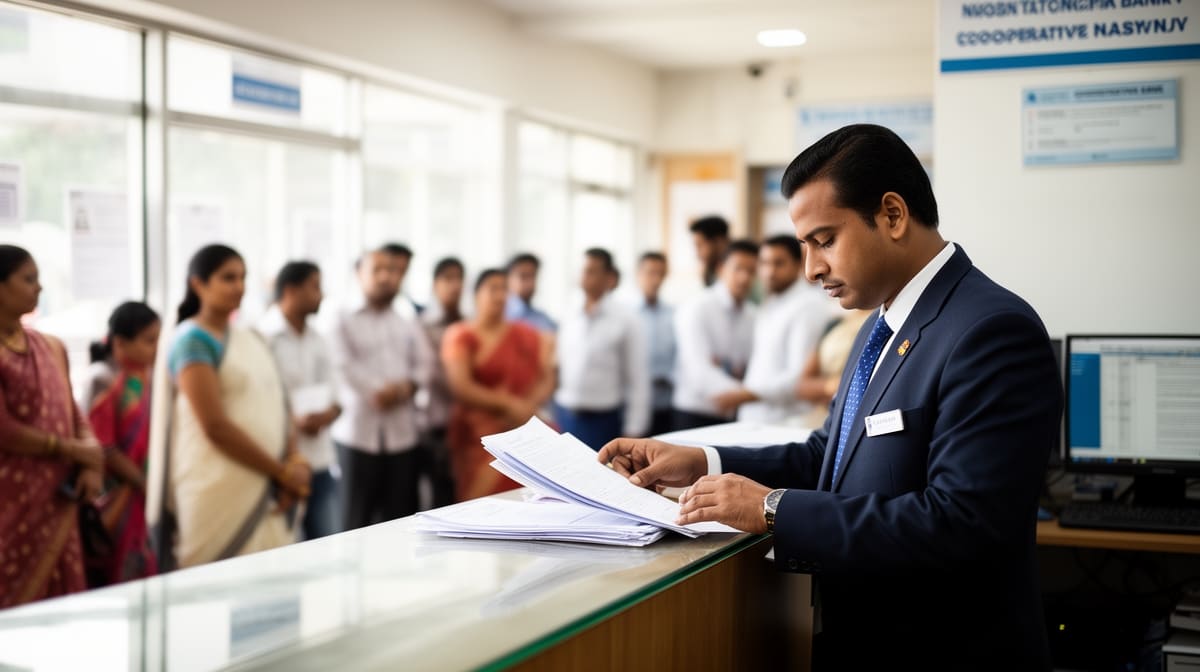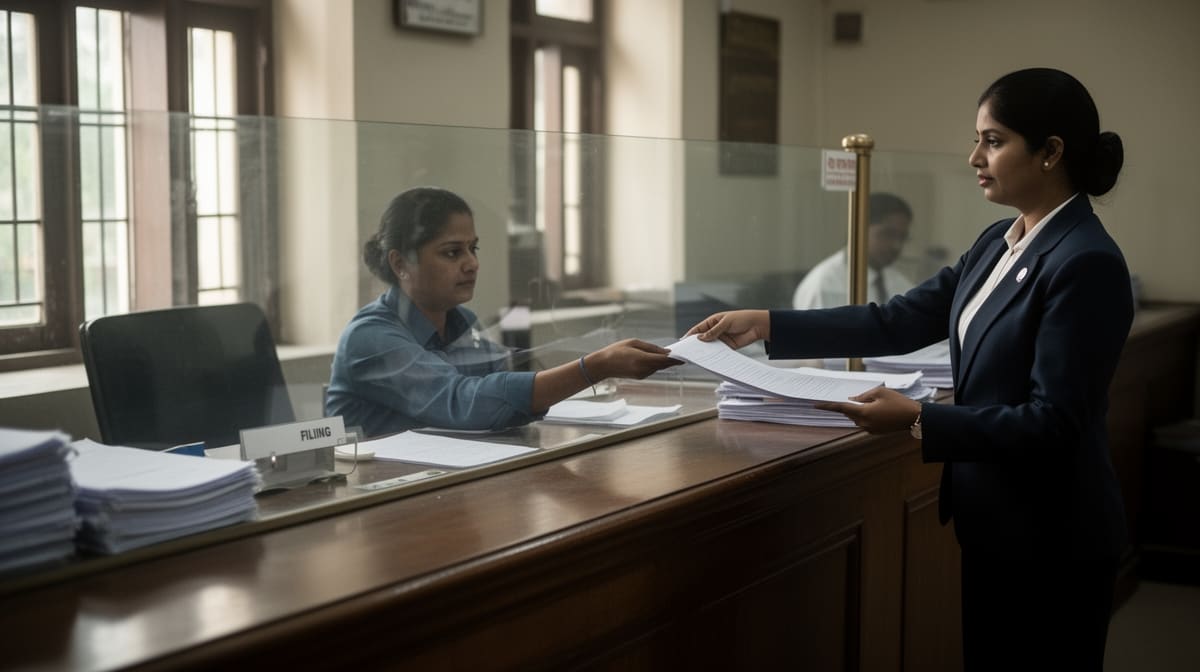
The Bombay High Court has clarified that revisional authorities under Section 101 of the Maharashtra Co-operative Societies Act cannot merely set aside recovery certificates on grounds of insufficient documentation without undertaking a substantive determination of dues. This ruling reinforces the statutory duty to adjudicate claims on merit, not on procedural technicalities.
Background & Facts
The Dispute
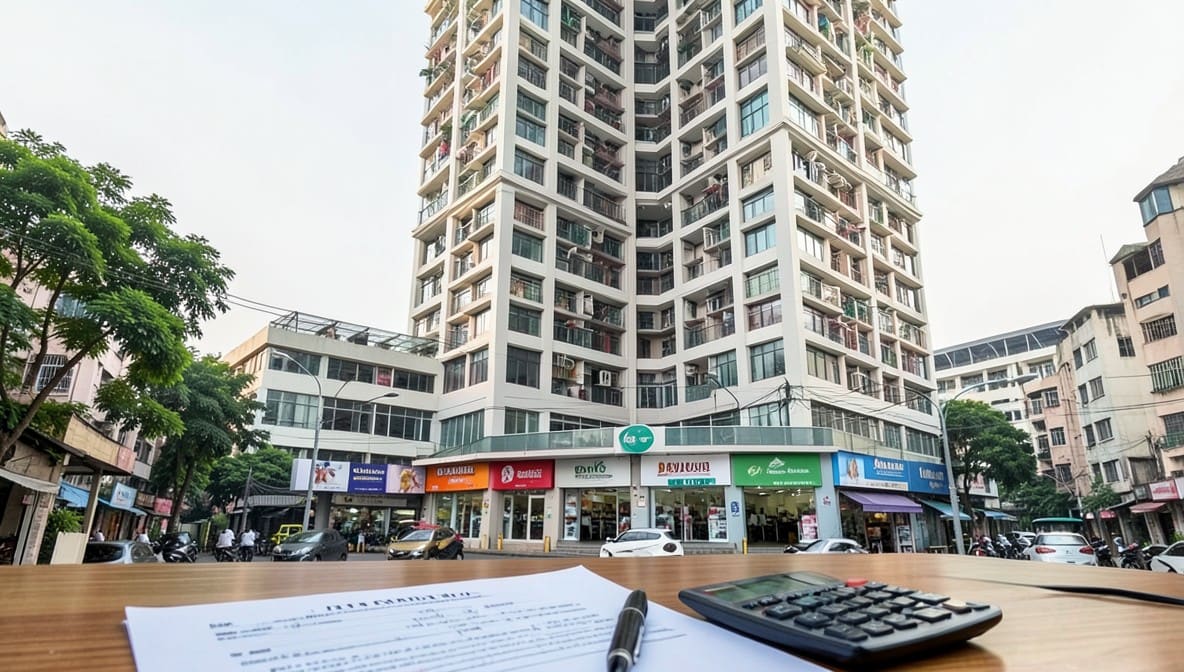
The petitioner, Casa Maria Co-op Housing Society Ltd, initiated recovery proceedings under Section 101 of the Maharashtra Co-operative Societies Act, 1960, against respondents occupying flats Nos. 101, 301A, 301B, and 302. The society claimed unpaid maintenance charges for the period from 1st October 2012 to 31st May 2016. The respondents did not deny liability outright but contested the quantum of dues, asserting that payments made to the original developer should be adjusted against the society’s claim.
Key Facts
- The society filed an application under Section 101 with Schedules A and B annexed, detailing the computation of dues
- Schedule 1 Part B itemized maintenance charges under distinct heads: property taxes, water charges, common electricity, security expenses, housekeeping, and salary payments
- The respondents submitted replies before the first authority but did not provide documentary evidence of payments to the developer
- The respondents’ primary defense was that they had made payments to the developer on behalf of the society, which should be set off against the society’s claim
- No formal reconciliation or accounting was provided by respondents to substantiate the alleged payments
Procedural History
- 2019: Society filed application under Section 101 for recovery of maintenance dues
- 2020: First authority issued recovery certificate in favor of the society
- 2021: Respondents filed revision application before the revisional authority
- 2022: Revisional authority allowed the revision, set aside the recovery certificate, and held that documents produced by the society were insufficient to determine exact dues
- 2022: Writ Petition No. 12921 of 2022 filed before Bombay High Court
- 2023: Writ Petitions No. 16251 of 2023 and No. 13279 of 2023 filed by other respondents in similar circumstances
- 23 March 2026: Judgment delivered by the Bombay High Court
The Parties' Positions
For the Petitioner (Society): The claim was structured, itemized, and supported by detailed schedules. The revisional authority had a statutory duty to evaluate the claim against the defense, not to dismiss it for lack of documentation without analysis.
For the Respondents: The payments made to the developer constituted a valid set-off. The society’s documents were inadequate to prove the exact liability, and the revisional authority was justified in rejecting the certificate.
Relief Sought
The petitioner sought quashing of the revisional authority’s order dated 2022, restoration of the recovery certificate, and directions for enforcement of dues. Alternatively, the matter was to be remanded for proper adjudication.
The Legal Issue
The central question was whether a revisional authority under Section 101 of the Maharashtra Co-operative Societies Act, 1960 may set aside a recovery certificate solely on the ground that the documents submitted by the society are insufficient, without undertaking a substantive examination of the claim and the respondent’s defense.
Arguments Presented
For the Petitioner
The petitioner argued that Section 101 imposes a duty on the authority to determine the actual dues, not merely to accept or reject documents at face value. The schedules annexed were detailed, itemized, and constituted prima facie evidence. The respondents’ defense of payments to a third party required corroboration, which was absent. The revisional authority’s failure to reconcile the claim with the defense amounted to abdication of statutory duty.
For the Respondent
The respondents contended that the society’s claim lacked proper substantiation, particularly regarding the allocation of charges and the absence of receipts or agreements linking the payments to the respondents. They argued that the revisional authority acted within its discretion to require stronger proof before enforcing recovery.
The Court's Analysis
The Court emphasized that Section 101 is a statutory mechanism designed for efficient recovery of dues by cooperative societies. The revisional authority is not a mere appellate body but a quasi-judicial entity bound to adjudicate disputes on merit. Merely stating that documents are insufficient without engaging with the substance of the claim or the defense is legally untenable.
"The law requires the revisional authority to examine the correctness of the claim and determine the dues. Merely stating that documents are insufficient, without undertaking such exercise, is not enough."
The Court noted that the society’s schedules were not vague or generic. They broke down the claim into specific heads, each with a basis in the society’s bylaws and past practice. The respondents’ defense of payments to the developer was not denied as such, but no evidence was produced to substantiate it. The revisional authority could not shift the burden of proof onto the society without first evaluating the plausibility of the defense.
The Court held that the authority’s role is not to demand perfection in documentation but to conduct a fair, reasoned determination. Failure to do so renders the order arbitrary and violative of natural justice.
The Verdict
The petitions succeeded. The Bombay High Court quashed the revisional authority’s order dated 2022. The matter was remanded to the revisional authority for fresh adjudication. Both parties were directed to appear before the revisional authority on 1st April 2026 at 11 a.m. The authority was directed to hear both sides, examine all material on record, and determine the actual dues payable after considering the society’s schedules and the respondents’ defense.
What This Means For Similar Cases
Determination of Dues Is Mandatory, Not Discretionary
- Practitioners must now argue that revisional authorities under Section 101 MCoS Act cannot evade adjudication by citing "insufficient documents"
- A structured, itemized claim supported by schedules constitutes prima facie evidence requiring rebuttal, not rejection
- Authorities must record reasons for accepting or rejecting specific components of the claim
Defense of Third-Party Payments Requires Evidence
- Allegations of payments to developers or third parties must be substantiated with receipts, bank statements, or written agreements
- Unsubstantiated assertions cannot override documented claims by the society
- The burden of proof for set-off lies with the party asserting it
Procedural Fairness Requires Active Adjudication
- Quasi-judicial bodies must engage with the substance of disputes, not dispose of them on procedural grounds
- Failure to analyze evidence constitutes a violation of natural justice and renders orders liable to be set aside
- Courts will intervene where authorities act as passive reviewers rather than active adjudicators