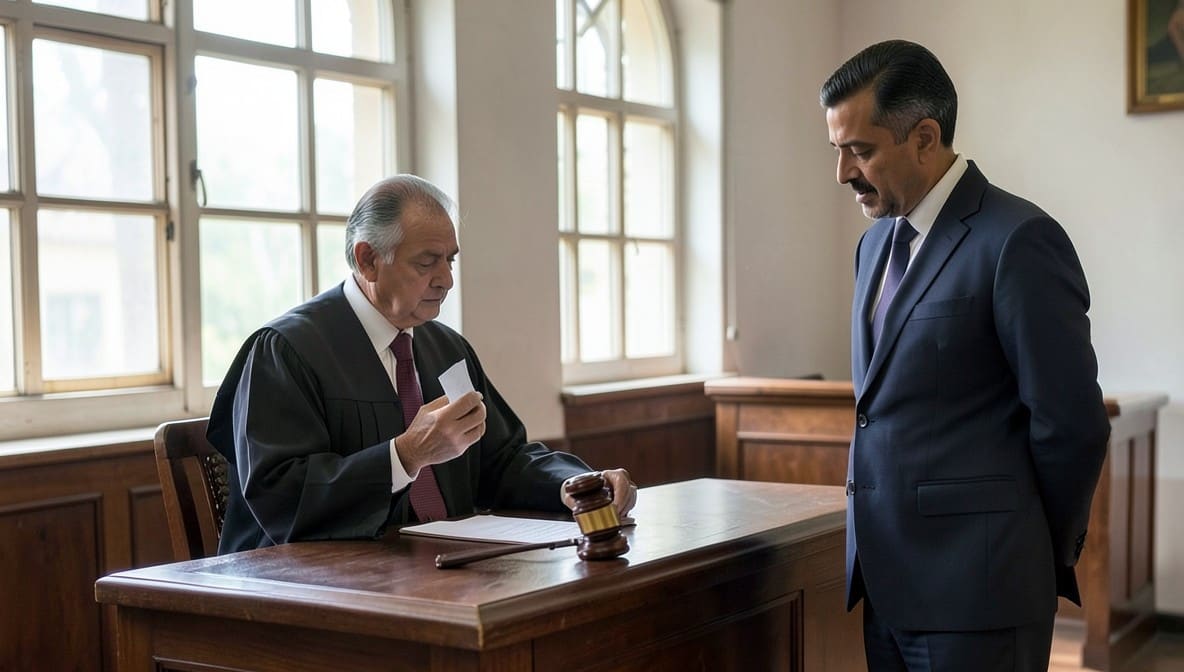
The Securities Appellate Tribunal has clarified that director liability under the SEBI Act is strictly tied to tenure and active involvement, not mere association with a company. This judgment reinforces that regulatory penalties cannot be imposed retroactively on individuals who have formally resigned before the alleged violations occurred, setting a critical precedent for corporate governance accountability.
Background & Facts
The Dispute
The appellants, Sanjay Dwivedi and his wife Deepali Dwivedi, were directors of D.S. Capital Venture Pvt. Ltd., a SEBI-registered investment adviser. SEBI initiated regulatory action against the company and its directors following 17 investor complaints filed on the SCORES platform, alleging false assurances, assured returns, non-redressal of grievances, and fraudulent trade practices. The Adjudicating Officer (AO) imposed a penalty of ₹15 lakh each on both appellants under Sections 15A(a), 15C, 15EB, and 15HA of the SEBI Act, 1992.
Key Facts
D.S. Capital Venture Pvt. Ltd. was registered with SEBI as an investment adviser.
Sanjay Dwivedi served as Director in three separate terms: 07.09.2016 to 27.01.2017; 23.07.2018 to 08.10.2018; and as Additional Director from 09.11.2019 to 20.11.2019.
Deepali Dwivedi was appointed Director on 25.01.2017 and resigned effective 10.10.2018, with Form DIR-12 filed with the Ministry of Corporate Affairs.
Sanjay Dwivedi was in judicial custody from 05.04.2019 to 21.10.2019.
The 17 SCORES complaints were received between 28.05.2019 and 26.01.2020.
The Show Cause Notice (SCN) was issued on 23.08.2021.
The appellants did not respond to the SCN or participate in proceedings.
Piyush Sharma, Sanjay’s brother-in-law and co-director, was identified in internal replies as the primary operator of the company.
The company itself was penalized ₹20 lakh and did not challenge the order.
Abhishek Tiwari, another director, was penalized ₹15 lakh and also did not appeal.
Procedural History
23.08.2021: SEBI issued Show Cause Notice to the company and its directors.
10.01.2023: AO imposed penalty of ₹15 lakh each on Sanjay and Deepali Dwivedi.
15.06.2023: Appeal No.711 of 2024 filed before SAT.
19.04.2023: SAT delivered order in Appeal No.363 of 2023 (Piyush Sharma’s appeal), reducing his penalty to ₹3 lakh and rejecting liability under Sections 15A(a) and 15HA.
28.04.2023: SAT upheld penalty under Section 15EB against Piyush Sharma for violation of IA Regulations.
09.06.2026: Hearing concluded and reserved for orders.
15.06.2026: SAT pronounced judgment.
The Parties' Positions
For the Appellants
Sanjay Dwivedi was a director for only 11 days during the relevant complaint period (09.11.2019 - 20.11.2019) and was in jail during that time.
Deepali Dwivedi resigned as director on 10.10.2018, well before any of the 17 complaints were filed (first complaint: 28.05.2019).
Form DIR-12 was filed with MCA confirming her resignation.
Piyush Sharma, not Sanjay, was the de facto operator of the company.
SAT had already reduced Piyush’s penalty to ₹3 lakh, indicating inconsistency in imposing ₹15 lakh on Sanjay.
Neither appellant participated in company affairs during the relevant period.
For the Respondent (SEBI)
Sanjay was a director during the period when complaints were pending and the SCN was issued.
Deepali was a director at the time of registration and had stated she managed day-to-day affairs.
Resignation of Deepali was not properly communicated to SEBI, and the company failed to update records.
Directors are jointly liable under Section 27 of the SEBI Act for failures of the company.
Non-response to SCN and non-participation in proceedings warrant strict liability.
Relief Sought
The appellants sought: (i) setting aside of the penalty order dated 10.01.2023; (ii) reduction or deletion of penalty against Sanjay Dwivedi; (iii) complete quashing of penalty against Deepali Dwivedi; and (iv) in the alternative, reduction of penalty to a reasonable quantum.
The Legal Issue
Can a director be held liable under the SEBI Act for violations occurring after their formal resignation, and does mere directorship during a prior term attract liability for subsequent failures if there is no active involvement?
Arguments Presented
For the Appellant
The appellants relied on the principle of personal liability tied to tenure and active role. They cited Arnesh Kumar v. State of Bihar to argue that liability cannot be presumed merely from position. They emphasized that Sanjay’s 11-day tenure as Additional Director coincided with his incarceration, and he had no control over operations. Deepali’s resignation was formally filed with MCA via Form DIR-12, and all complaints arose after that date. They argued that SEBI’s failure to verify directorship status before initiating proceedings was a procedural lapse. The reduction of Piyush Sharma’s penalty to ₹3 lakh demonstrated that the tribunal recognized limited culpability, making the ₹15 lakh penalty on Sanjay disproportionate.
For the Respondent
SEBI contended that directors are collectively responsible under Section 27 of the SEBI Act for the company’s non-compliance, regardless of individual involvement. It argued that Deepali’s resignation was not communicated to SEBI, and the company’s failure to update records rendered her liable. For Sanjay, SEBI relied on his 99% shareholding and multiple directorships to argue he remained the controlling mind. It cited SEBI v. Ramesh Garg to assert that directors cannot evade liability by claiming non-participation.
The Court's Analysis
The Tribunal conducted a meticulous review of timelines, directorship records, and statutory obligations under the Companies Act, 2013 and the SEBI Act. It emphasized that liability under the SEBI Act is not vicarious but must be grounded in personal conduct and tenure.
"Section 166(6) of the Companies Act, 2013 forbears a Director from delegating his functions. Thus, Sanjay was duty bound as a Director of the Company to ensure that the SCORES complaints were addressed, which failed to do."
However, the Tribunal immediately qualified this by noting that the provision applies only during the tenure of office. It held that the mere fact of being a director in a prior term does not create ongoing liability for acts occurring after resignation.
The Tribunal distinguished the case of Piyush Sharma, whose penalty was reduced because the complaints under Sections 15A(a) and 15HA were not substantiated. It applied the same reasoning to Sanjay: since the complaints under Sections 15A(a) and 15HA were not proven, those penalties could not stand. The Tribunal further noted that Sanjay’s 99% shareholding and prior directorships established his influence, justifying liability under Section 15C for failure to redress grievances during his final 11-day term.
Regarding Deepali, the Tribunal found the submission of Form DIR-12 to be conclusive proof of resignation effective 10.10.2018. SEBI’s general denial of para 5.12 in its reply was insufficient to rebut the documentary evidence. The Tribunal held:
"The complaints are from 28.5.2019. The SCN, inspection and the impugned order are all subsequent to the said date. Therefore, the penalty against appellant No.2 is not sustainable."
The Tribunal rejected SEBI’s argument that non-communication of resignation to SEBI created liability, noting that statutory compliance with MCA under the Companies Act is sufficient to extinguish directorial duties.
The Verdict
The appeal was allowed in part. The penalty against appellant No.1, Sanjay Dwivedi, was reduced from ₹15 lakh to ₹8 lakh - ₹5 lakh under Section 15C and ₹3 lakh under Section 15EB. The penalty against appellant No.2, Deepali Dwivedi, was set aside in its entirety. The order dated 10.01.2023 of the AO, SEBI, was modified accordingly. No costs were awarded. Pending applications were disposed of.
What This Means For Similar Cases
Resignation Must Be Documented, Not Just Asserted
Practitioners must ensure Form DIR-12 is filed with MCA for any director resignation - this is conclusive proof under the Companies Act.
SEBI cannot impose liability on a former director for post-resignation violations if the resignation is properly documented.
Legal notices and compliance filings must be tracked across MCA, SEBI, and stock exchanges to establish clear timelines.
Director Liability Is Not Automatic - It Is Temporal and Functional
Liability under SEBI Act is tied to the period of actual directorship, not shareholding or past association.
Merely being a shareholder or former director does not create ongoing liability for company defaults.
The Tribunal’s reliance on Section 166(6) confirms that directors are liable only for failures occurring during their tenure, not for subsequent lapses.
Consistency in Penalty Imposition Is Mandatory
When the same tribunal reduces penalties for co-directors based on limited involvement, identical standards must apply to all.
Disproportionate penalties against directors with minimal or no operational control will be struck down as arbitrary.
Practitioners should cite parallel orders (e.g., Appeal No.363 of 2023) to argue for equitable reduction.