The Patna High Court has drawn a clear distinction in granting anticipatory bail among co-accused in an SC/ST Act case, denying relief to the alleged primary perpetrator while extending it to others based on the nature and specificity of their alleged roles. This order reinforces the principle that bail decisions under the SC/ST Act must be grounded in the individualized gravity and factual precision of allegations, not blanket assumptions of collective guilt.
Background & Facts
The Dispute
The case arises from an FIR registered at Garkha Police Station, Saran District, under Case No. 229 of 2025, alleging atrocities against a woman from a Scheduled Caste community. The complainant, Champa Devi, accused four individuals - Harendra Rai, Suchindra Rai, Abhishek Kumar, and Ajit Kumar - along with five unknown persons - of committing offences under Sections 3(1)(r), 3(1)(s), and 3(2)(va) of the Scheduled Castes and Scheduled Tribes (Prevention of Atrocities) Act, 1989, as well as Sections 126(2), 115(2), 118(2), and 329 of the Bharatiya Nyaya Sanhita (BNS).
Key Facts
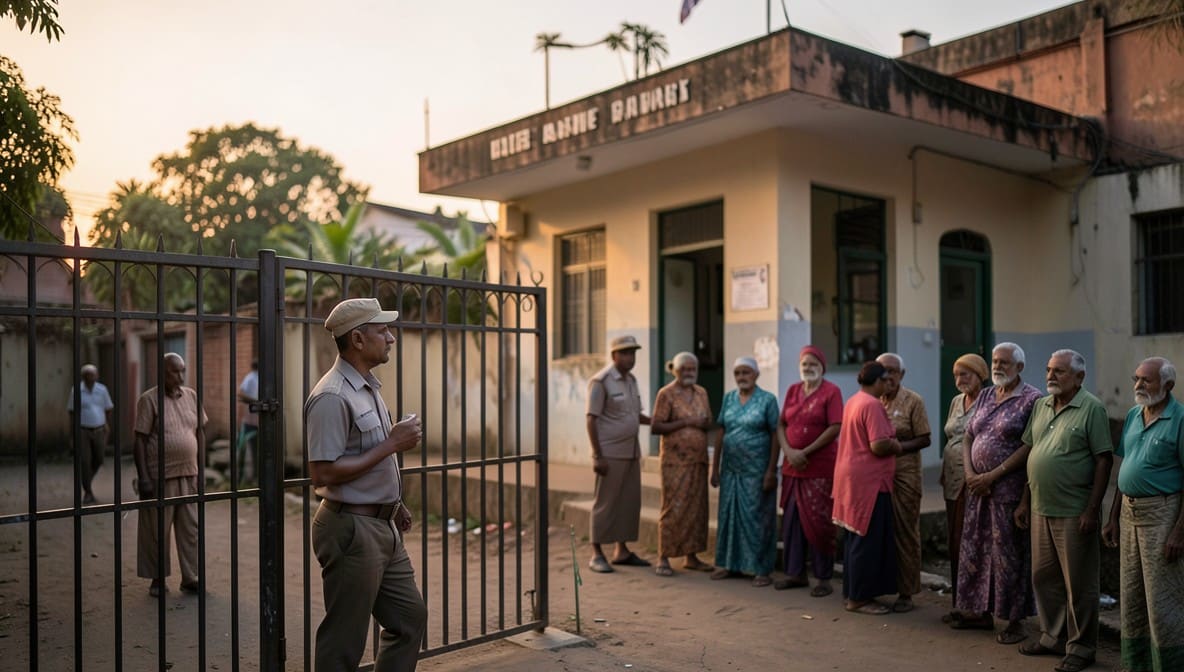
- The incident allegedly occurred on 30.03.2025 at 2:00 p.m. at the complainant’s residence in Vill. Uttarwari Kadana.
- The complainant’s son observed the accused persons drinking alcohol near a flour mill and heard them use caste-based slurs.
- A verbal altercation ensued between the son and the accused, leading to a physical confrontation outside the house.
- The complainant alleges that Harendra Rai, the first appellant, entered her house while her daughter was sleeping and assaulted her with a "tangi" (a traditional wooden pestle), causing injury to her leg.
- The FIR was registered after the complainant was advised by police to first get medical treatment for her daughter.
- The accused persons have no prior criminal record and are described by counsel as persons of clean antecedents.
- The case was referred for mediation by a coordinate bench of the High Court, which ultimately failed.
Procedural History
- 30.03.2025: Alleged incident occurred.
- 05.04.2025: FIR No. 229 of 2025 registered at Garkha PS.
- 15.06.2025: Accused filed Application for Anticipatory Bail (A.B.P. No. 1749 of 2025) before the Special Judge (SC/ST Act), Chhapra.
- 24.06.2025: Special Judge rejected the anticipatory bail application.
- 15.07.2025: Criminal Appeal (SJ) No. 3101 of 2025 filed before the Patna High Court.
- 04.05.2026: Oral order delivered by Justice Satya Vrat Verma.
The Parties' Positions
For the Appellants: Counsel argued that the allegations were vague, omnibus, and lacked specific intent to humiliate on caste grounds. The assault by Harendra Rai was alleged to be an isolated act of domestic violence, not a caste-based atrocity. The appellants emphasized their clean antecedents and the failure of mediation as evidence of willingness to resolve the matter.
For the Respondent (State): The Special Public Prosecutor contended that the allegation of assaulting a woman by "tangi" inside her home, while she was sleeping, constituted a grave atrocity under Section 3(1)(r) of the SC/ST Act. The entry into the house and targeted assault on a female member, the State argued, demonstrated a deliberate act of caste-based degradation.
Relief Sought
The appellants sought anticipatory bail under Section 438 CrPC, as applied through Section 14-A(2) of the SC/ST Act, for all four accused. Alternatively, they sought conditions for bail tailored to the individual roles of each accused.
The Legal Issue
Can anticipatory bail be granted selectively under the SC/ST Act based on the differential gravity and specificity of allegations against co-accused, even when charged under the same provisions?
Arguments Presented
For the Appellant
Counsel relied on Arnesh Kumar v. State of Bihar to argue that arrest and denial of bail cannot be automatic in cases involving non-bailable offences, especially where allegations are general and lack corroborative evidence. He emphasized that the use of caste slurs was not specific, the drinking incident was not illegal under the Excise Act, and the assault by Harendra Rai was not proven to be motivated by caste animus. He further submitted that the other three accused had no direct involvement in the alleged entry into the house or assault on the daughter.
For the Respondent
The State contended that Section 3(1)(r) of the SC/ST Act criminalizes the use of force or violence against a member of a Scheduled Caste in their dwelling, especially when it involves sexual or physical degradation. The allegation of assaulting a woman with a "tangi" while she slept was not merely an assault - it was a caste-based atrocity designed to humiliate and intimidate the entire family. The State argued that the entry into the house and the nature of the weapon used distinguished Harendra Rai’s conduct from the others.
The Court's Analysis
The Court undertook a granular analysis of the allegations against each accused. It noted that while the FIR broadly implicated all four appellants in the initial altercation outside the house, the specific allegation of entering the dwelling and assaulting the daughter with a "tangi" was exclusively attributed to appellant no. 1, Harendra Rai.
"The allegation that appellant no. 1 entered the house and assaulted the daughter of the informant, who was sleeping, by tangi, is a specific and grave act falling squarely within the ambit of Section 3(1)(r) of the SC/ST Act."
The Court observed that the other three appellants were not alleged to have entered the house or participated in the assault on the daughter. Their involvement, if any, was limited to the verbal exchange and the initial fight outside the premises. The Court held that while the entire incident must be viewed in the context of caste-based hostility, the law requires individualized assessment of culpability.
The Court further noted that the appellants had no prior criminal history, the case had undergone mediation, and the allegations against the three appellants did not rise to the level of direct atrocity as defined under the Act. The Court emphasized that anticipatory bail is not a denial of justice under the SC/ST Act but a procedural safeguard against arbitrary arrest, particularly where the role is peripheral.
The Verdict
The appeal was partly allowed. The Court set aside the order dated 24.06.2025 denying anticipatory bail to appellants no. 2, 3, and 4 (Suchindra Rai, Abhishek Kumar, and Ajit Kumar). These three appellants are granted anticipatory bail on furnishing bail bonds of Rs. 5,000 each with two sureties of the like amount, subject to conditions under Section 482(2) of the Bharatiya Nagarik Suraksha Sanhita. They must surrender within six weeks from 04.05.2026. The Court denied anticipatory bail to appellant no. 1, Harendra Rai, due to the specific and grave nature of the alleged atrocity.
What This Means For Similar Cases
Individualized Assessment Is Mandatory
- Practitioners must now argue for bail on a person-by-person basis, even in group offences under the SC/ST Act.
- General allegations against multiple accused cannot justify blanket denial of anticipatory bail.
- The role of each accused must be dissected: participation in the initial altercation vs. direct atrocity in the dwelling.
"Tangi" Assault Triggers Heightened Scrutiny
- Assaults using traditional weapons inside a victim’s home, especially against women, are treated as aggravated atrocity under Section 3(1)(r).
- Such acts are unlikely to attract anticipatory bail unless compelling evidence of false implication is presented.
- Defence counsel must prepare detailed affidavits on medical reports, witness statements, and absence of caste motive to challenge the atrocity label.
Mediation Does Not Preclude Prosecution But May Influence Bail
- While mediation failure does not absolve accused of liability, its occurrence may be cited to demonstrate willingness to resolve disputes and reduce the risk of flight.
- Courts may view mediation as a mitigating factor for co-accused with lesser roles.