The Allahabad High Court has clarified that mere invocation of the SC/ST (Prevention of Atrocities) Act, 1989, does not automatically negate bail when the allegations are general, injuries are minor, and the charge sheet reveals exoneration of co-accused. This ruling reinforces that bail jurisprudence must be applied with scrutiny of evidentiary substance, not merely the label of the statute.
Background & Facts
The Dispute
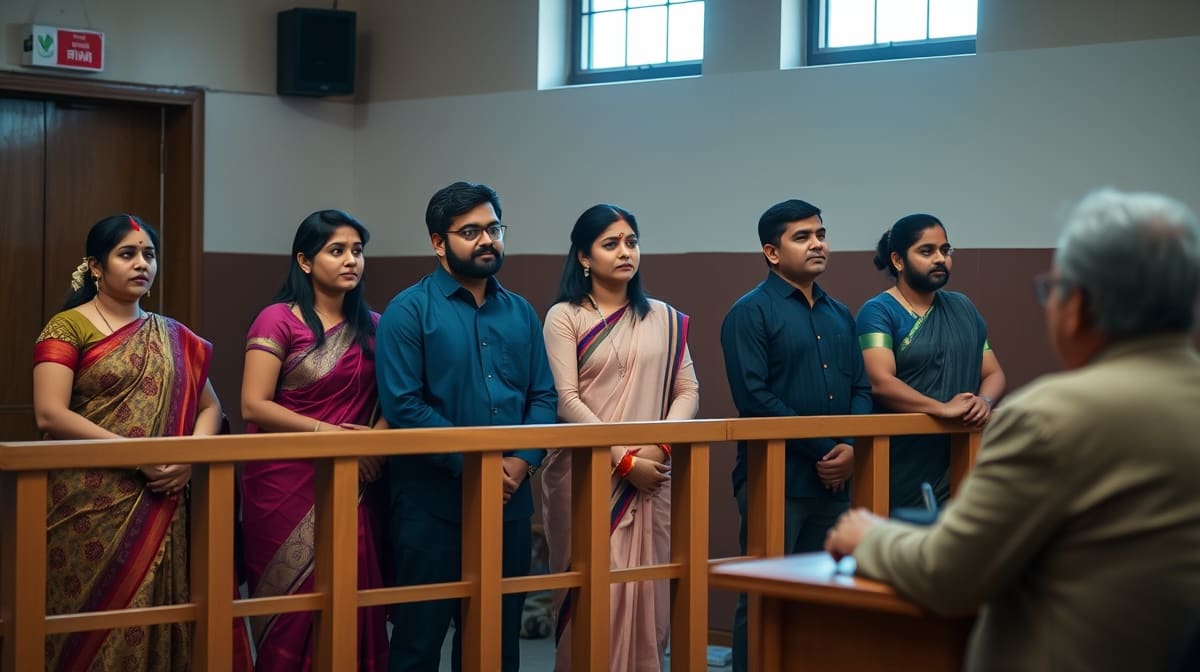
The appellants - Shakeel @ Shakeel Ahmad, Arjusain @ Azhar Hussain, Shahrukh @ Shahrukh Khan, Bhura @ Bhure Khan, Shahrukh @ Tahir, Rahul, and Warsi @ Aabidd - were named in FIR No. 223 of 2023, lodged at Police Station Barhan, District Agra, under Sections 147, 148, 149, 323, 452, 504, 506 IPC and Sections 3(1)(da), 3(1)(dha) of the SC/ST (Prevention of Atrocities) Act, 1989. The complainant, a woman, alleged that on 20.10.2023 at approximately 8:00 p.m., while she and her daughter were participating in a bhajan programme, the accused persons arrived armed with lathis, threatened them, assaulted them, and outraged their modesty. She further alleged that they chased them.
Key Facts
- The complainant (injured no. 1) suffered an abrasion and generalized body pain; injuries opined as simple and fresh.
- Injured no. 2 suffered two abrasions and abdominal pain; injuries classified as simple and fresh.
- Injured no. 3 (first informant) suffered traumatic swelling, a bluish contused swelling on the right back, and vertigo; injuries deemed simple and fresh.
- All three injured persons were medically examined on 21.10.2023; no serious or grievous injuries were recorded.
- The charge sheet, filed on 15.12.2023, named seven accused including the appellants, but two named individuals - Amil and Adil - were explicitly exonerated and listed in Column No. 12 of the charge sheet as persons not charge-sheeted.
- The allegations against the appellants were general and omnibus: no specific act, weapon, or individual role was attributed to any appellant.
- The appellants have no prior criminal record, as affirmed in para 32 of the affidavit in support of bail.
- The appellants have been in custody since 10.03.2026.
Procedural History
- 20.10.2023: Alleged incident occurred.
- 21.10.2023: FIR lodged; medical examinations conducted.
- 15.12.2023: Charge sheet filed by police.
- 10.02.2026: Appellants granted interim bail by Special Judge (SC/ST), Agra.
- 10.03.2026: Interim bail cancelled; bail applications rejected by Special Judge.
- 11.05.2026: Criminal Appeal No. 3380 of 2026 heard before the Allahabad High Court.
- 02.04.2026: Notice issued to opposite party no. 2 (complainant).
- 28.04.2026 & 29.04.2026: Reports received confirming personal service of notice on complainant.
- 30.04.2026: Matter adjourned to allow time for response to notice.
- 11.05.2026: Final hearing held; judgment delivered.
The Parties' Positions
For the Appellant
- The allegations are vague, omnibus, and lack specificity regarding individual roles.
- The injuries sustained are simple and do not corroborate the number of assailants alleged.
- Two co-accused (Amil and Adil) were exonerated in the charge sheet, indicating selective prosecution.
- Appellants have no criminal antecedents and have been in custody since 10.03.2026.
- Interim bail had been granted and extended; its cancellation lacks reasoned justification.
- No evidence suggests risk of tampering or witness intimidation.
For the Respondent
- The offence falls under the SC/ST Act, which mandates strict treatment.
- The nature of the crime - assault on women during a religious gathering - demands deterrence.
- Bail should not be granted merely because injuries are simple; the social impact is grave.
- The State did not oppose interim bail initially but contended that final bail should be denied due to the seriousness of the charge.
Relief Sought
The appellants sought: (1) setting aside the order dated 10.03.2026 rejecting bail; (2) release on bail with appropriate conditions; and (3) directions to the trial court to expedite trial.
The Legal Issue
Can bail be granted under the SC/ST (Prevention of Atrocities) Act, 1989, where the allegations are general and omnibus, the injuries are simple, co-accused have been exonerated, and there is no material suggesting risk of evidence tampering or witness intimidation?
Arguments Presented
For the Appellant
Counsel relied on Arnesh Kumar v. State of Bihar to argue that arrest and denial of bail cannot be automatic merely because an offence under the SC/ST Act is invoked. He emphasized that the charge sheet itself reveals that two accused were exonerated despite identical allegations, undermining the credibility of the case against the appellants. He further cited State of Rajasthan v. Balchand to contend that simple injuries, absence of specific attribution, and lack of motive weigh heavily in favour of bail. The appellants’ clean record and prolonged custody since 10.03.2026 were highlighted as factors favouring liberty.
For the Respondent
The State argued that offences under the SC/ST Act are heinous and require stringent bail conditions. It contended that the nature of the crime - targeting women during a religious event - has a societal impact that justifies continued custody. The State did not dispute the simplicity of injuries or the exoneration of two accused but maintained that the Act’s protective intent overrides procedural leniency.
The Court's Analysis
The Court undertook a meticulous review of the charge sheet, injury report, and allegations. It noted that the FIR contained no specific acts attributed to any individual appellant, and the description of the assault was broad and collective. The Court observed:
"General and omnibus allegations have been levelled against the appellants. Number of injuries as per the injury report do not coincide with the manner of assault. The injuries of the injured were opined to be simple in nature."
The Court further noted that the charge sheet explicitly exonerated two accused who were named in the same allegations, raising serious doubts about the reliability of the prosecution’s case. The Court held that the mere invocation of the SC/ST Act does not create a presumption against bail; the factual matrix must be examined. The Court distinguished this case from those involving grave injuries, premeditation, or threats to witnesses. It emphasized that the absence of any material indicating risk of evidence tampering or witness intimidation was decisive. The Court also acknowledged that the appellants had been on interim bail since 10.02.2026 without any violation, further supporting the conclusion that liberty could be safely granted.
The Court rejected the State’s argument that societal impact alone justifies denial of bail, holding that bail jurisprudence must be guided by evidence, not rhetoric. It held that the principles laid down in Arnesh Kumar and State of U.P. v. Chandra Shekhar apply even in cases under the SC/ST Act, particularly where the evidentiary foundation is weak.
The Verdict
The appeal succeeded. The impugned order dated 10.03.2026 rejecting bail was set aside. The appellants - Shakeel @ Shakeel Ahmad, Arjusain @ Azhar Hussain, Shahrukh @ Shahrukh Khan, Bhura @ Bhure Khan, Shahrukh @ Tahir, Rahul, and Warsi @ Aabidd - are released on bail upon furnishing a personal bond and two sureties each in the like amount to the satisfaction of the trial court. The appellants must comply with six conditions: (1) no tampering with evidence or harassment of victims; (2) attendance at all court dates; (3) no adjournment requests when witnesses are present; (4) no misuse of bail; (5) personal appearance on key dates (opening of case, framing of charge, Section 313 Cr.P.C. statement); and (6) compliance with summons under Section 84 BNSS/82 Cr.P.C. and potential prosecution under Section 209 BNS/174-A IPC for non-appearance. The trial court is directed to conclude the trial expeditiously. In case of breach, bail may be cancelled and the appellants re-arrested.
What This Means For Similar Cases
Omnibus Allegations Undermine Prosecution Credibility
- Practitioners must challenge bail denials under the SC/ST Act where allegations are vague, collective, or lack individual attribution.
- Charge sheets that exonerate co-accused while prosecuting others must be flagged as indicators of selective or unreliable prosecution.
- Courts must scrutinize whether the charge sheet reflects a coherent narrative or merely a blanket accusation.
Simple Injuries Are Material to Bail Determination
- Injuries classified as "simple" under medical reports significantly weaken the prosecution’s case for continued custody.
- The absence of grievous injury, weapon use, or organized violence supports the argument that the case does not warrant pre-trial detention.
- Medical reports must be systematically cited in bail applications to counter the presumption of severity under special statutes.
Interim Bail as a Precedent for Final Bail
- Grant of interim bail, especially when extended without violation, creates a strong presumption in favour of final bail.
- Courts should not cancel interim bail without fresh, compelling reasons tied to conduct or evidence.
- The duration of custody since arrest (here, since 10.03.2026) must be weighed against the nature of the offence and evidentiary strength.
Procedural Fairness Trumps Statutory Label
- The SC/ST Act does not override constitutional rights to liberty under Article 21.
- Bail decisions must be grounded in evidence, not the stigma of the statute.
- Trial courts must be directed to expedite trials in such cases to prevent undue pre-trial detention.