The Patna High Court has clarified that mere registration of a mobile SIM in an accused’s name, without any active participation in the alleged atrocity, cannot sustain denial of bail under the Scheduled Castes and Scheduled Tribes (Prevention of Atrocities) Act, 1989. The judgment underscores the necessity of individualized culpability and rejects automatic presumption of guilt based on incidental association.
Background & Facts
The Dispute
The appellant, Ajit Kumar S/o Sanjay Rai, was named as an accused in Lalganj P.S. Case No. 152 of 2024, registered for offences under Sections 365, 302, 120B, 201 and 34 of the Indian Penal Code, along with Sections 3(2)(v) and 3(2)(va) of the SC/ST Act. The case arose from the alleged abduction and murder of Uma Kant, a young man from the same locality, on 06.06.2024 at approximately 7:30 pm.
Key Facts
- The informant, father of the deceased Uma Kant, filed the FIR on 06.06.2024, reporting his son missing after his phone was switched off.
- The initial FIR named unknown accused.
- During investigation, it was revealed that Uma Kant had been in communication with a woman named Aarti, who was using a mobile SIM registered in the name of the appellant, Ajit Kumar.
- The SIM was not in the appellant’s personal possession; it had been given by his sister, Anshu, to Aarti without the appellant’s knowledge or consent.
- Aarti was in contact with three other individuals - Shravan, Nitesh, and Birendra - who allegedly conspired to lure Uma Kant to a location under false pretenses, claiming he was unmarried and deceiving Aarti.
- Aarti was arrested and made a confession implicating Shravan, Nitesh, and Birendra as the primary perpetrators.
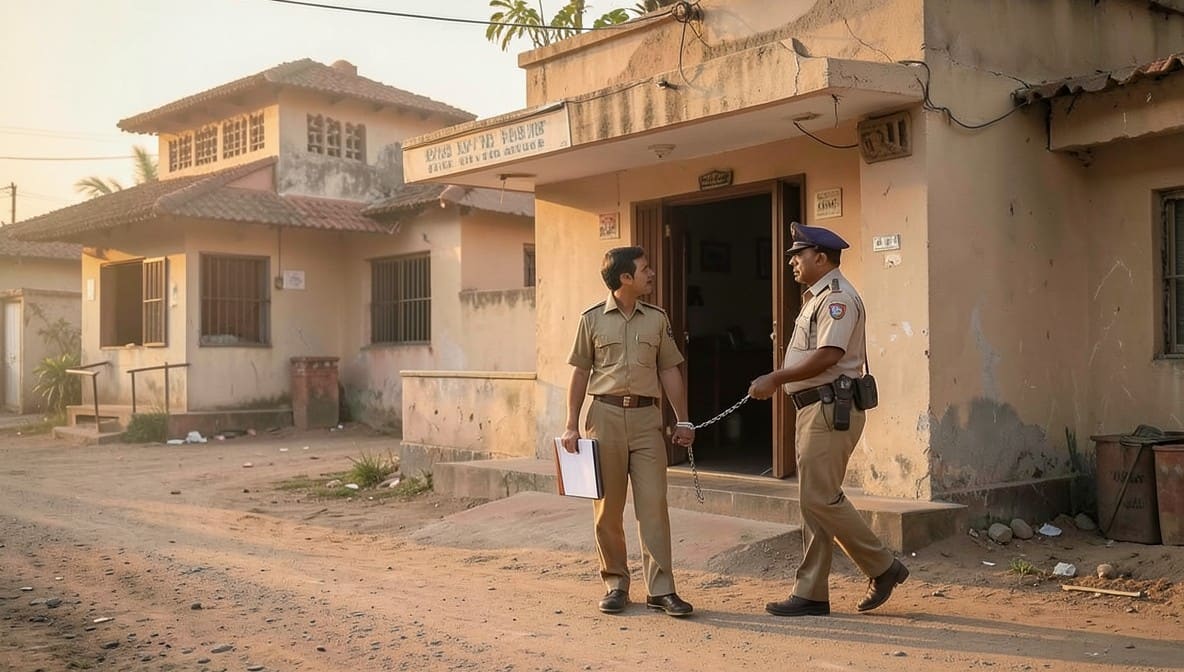
- The appellant had no prior criminal record and surrendered voluntarily on 20.08.2025.
- No evidence linked the appellant to planning, presence, or participation in the crime.
Procedural History
- 06.06.2024: FIR registered at Lalganj Police Station, Case No. 152 of 2024.
- 20.08.2025: Appellant surrendered before the trial court.
- 02.09.2025: Exclusive Special Judge (SC/ST), Hajipur, denied regular bail to the appellant.
- 17.04.2026: High Court directed presence of informant, SHO, and Investigating Officer for hearing.
- 08.05.2026: Hearing held before the Division Bench of Patna High Court.
The Parties' Positions
For the Appellant
The appellant’s counsel argued that the appellant had no role in the crime. His only connection was the incidental use of a SIM registered in his name, which was given to Aarti by his sister without his knowledge. He had no motive, no association with the accused, and no involvement in the conspiracy. His surrender demonstrated cooperation with the investigation.
For the Respondent
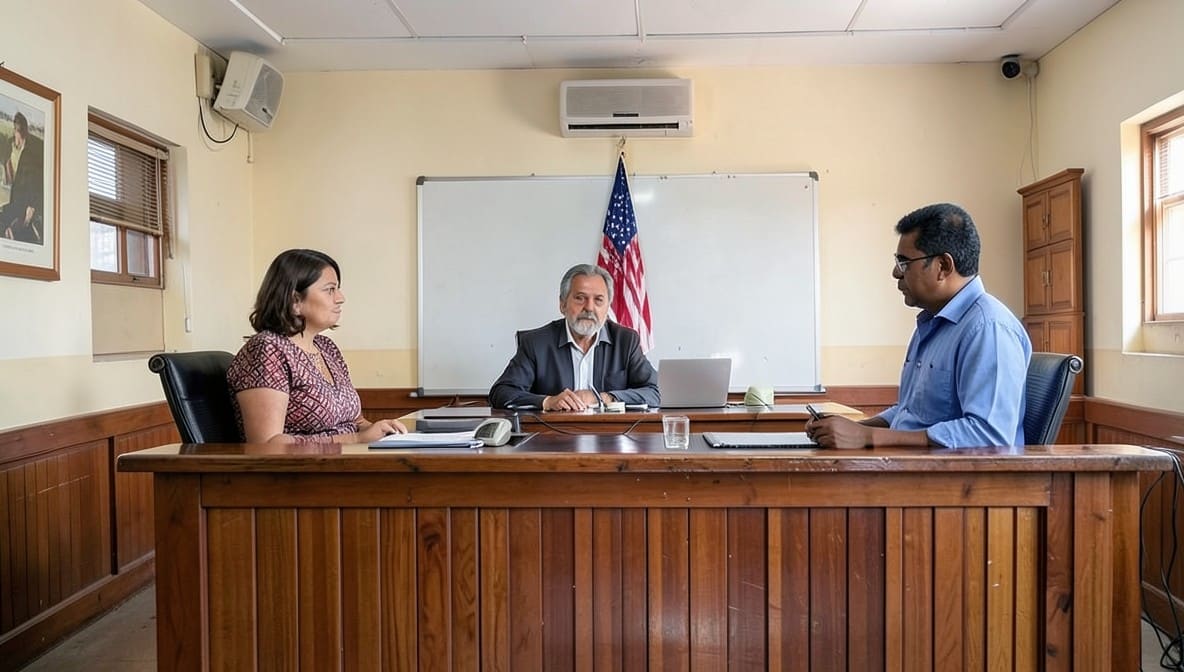
The State, through the Special Public Prosecutor, did not oppose the bail plea. The SHO and Investigating Officer, present in court, confirmed that the investigation revealed no evidence connecting the appellant to the offence. They concurred that the appellant was not a perpetrator or conspirator.
Relief Sought
The appellant sought regular bail, arguing that his continued detention was unjustified in light of the investigation’s findings and his clean antecedents.
The Legal Issue
The central question was whether an accused under the SC/ST Act can be denied bail solely on the basis of a mobile SIM registered in his name, when the investigation conclusively establishes no personal involvement in the alleged atrocity.
Arguments Presented
For the Appellant
The appellant’s counsel relied on the principle that the SC/ST Act must be applied with precision and not used to justify blanket denial of bail without individualized culpability. He cited State of Madhya Pradesh v. Madan Lal and Rajesh Kumar v. State of Bihar to argue that mere association or incidental connection, without active participation, cannot justify continued incarceration. He emphasized that the appellant had surrendered, had no criminal record, and the investigating agency itself had exonerated him.
For the Respondent
The State, through the Special Public Prosecutor, did not contest the bail plea. The SHO and Investigating Officer confirmed that the appellant was not involved in the crime and that the allegations against him were based solely on the SIM registration, which was proven to be without his knowledge or consent.
The Court's Analysis
The Court examined the nature of the allegations and the evidentiary record. It noted that the SC/ST Act is a special law designed to combat systemic atrocities against marginalized communities, and its provisions must be invoked only where there is clear, direct involvement in acts of violence or humiliation based on caste identity.
"The appellant’s name appears in the FIR only because a SIM registered in his name was used by another person, without his knowledge or consent. There is no allegation, let alone evidence, that he had any role in the conspiracy, the lure, the assault, or the murder."
The Court emphasized that the investigating agency, which is best placed to assess the facts, had concluded that the appellant was not involved. The State itself did not oppose bail. The Court held that denying bail under these circumstances would violate the fundamental right to liberty under Article 21 of the Constitution and the settled principle that bail is the rule and jail the exception.
The Court further observed that the SC/ST Act does not create a presumption of guilt against persons merely because a device registered in their name was used in the commission of an offence. The burden remains on the prosecution to establish active participation.
The Verdict
The appellant succeeded. The Court set aside the bail denial order dated 02.09.2025 and granted regular bail. The appellant is directed to be released upon furnishing a personal bond of Rs. 5,000/- with two sureties of like amount each, to the satisfaction of the trial court or its successor. The personal appearance of the SHO and Investigating Officer is dispensed with.
What This Means For Similar Cases
SIM Registration Alone Cannot Justify Denial of Bail
- Practitioners must challenge bail denials under the SC/ST Act where the accused’s connection to the crime is limited to incidental use of property (e.g., mobile, vehicle, land) registered in their name.
- The burden shifts to the prosecution to prove active participation, not mere association.
- Investigating agencies’ conclusions exonerating an accused must be formally placed on record to support bail applications.
SC/ST Act Requires Specific Culpability, Not Collective Punishment
- Courts must scrutinize whether the alleged act falls within the scope of Section 3(2) of the SC/ST Act - i.e., whether caste-based humiliation or violence is established.
- If the offence is essentially a common crime (e.g., murder, abduction) without caste-based motive or conduct, the special provisions of the Act must not be used to justify prolonged detention.
- Bail applications must be decided on individual conduct, not circumstantial or technical links.
Surrender and Clean Antecedents Are Critical Factors
- Voluntary surrender, absence of prior record, and cooperation with investigation are strong mitigating factors, even in cases under stringent statutes.
- Courts must not treat the SC/ST Act as a blanket justification for denying bail without evaluating the factual matrix.