The Patna High Court has granted anticipatory bail to three women accused under the Scheduled Castes and Scheduled Tribes (Prevention of Atrocities) Act, 1989, holding that allegations rooted in a failed civil transaction cannot automatically be treated as atrocities. The judgment underscores the need to distinguish between genuine caste-based violence and criminal complaints arising from economic disputes.
Background & Facts
The Dispute
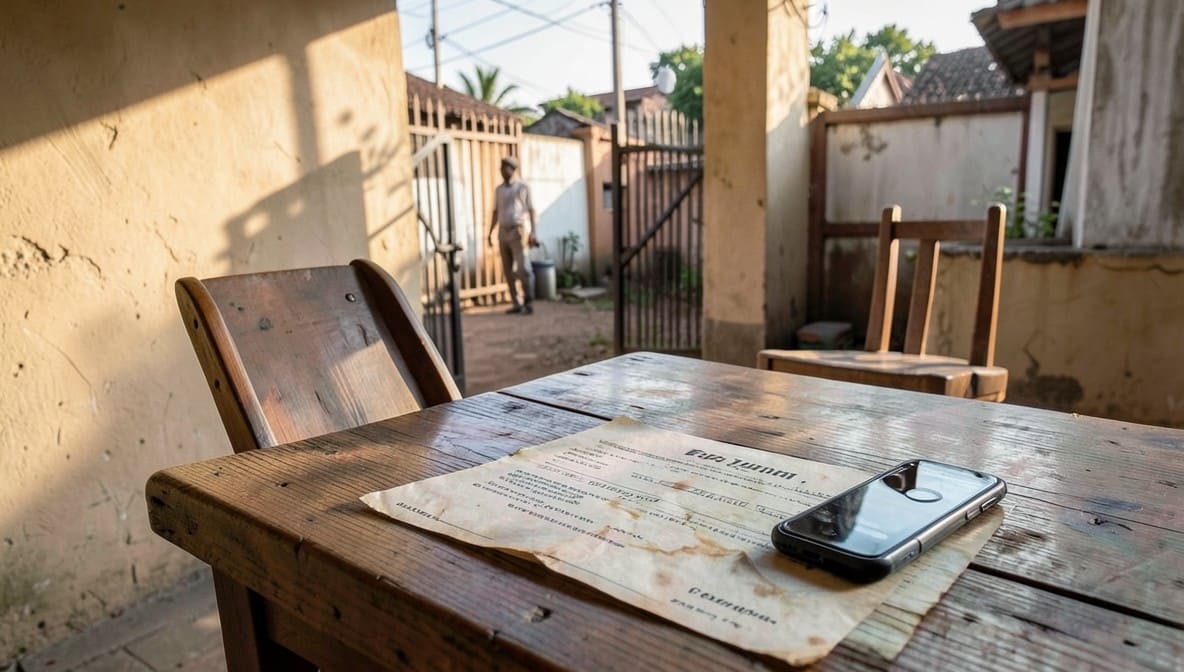
The dispute originated from a land sale agreement between the informant, Baby Devi @ Bhuna Devi, and Devendra Singh, husband of Appellant No. 1. On or about 2024, the informant entered into an agreement to sell her land to Devendra Singh and received consideration amount. However, it was later revealed that the same land had already been sold to a third party, Ribha. Upon discovering this, Devendra Singh demanded return of the money. The informant issued a cheque for Rs. 5,10,000 as repayment, which subsequently bounced upon presentation.
Key Facts
- The informant and Devendra Singh entered into a land sale agreement in 2024
- The informant had already sold the land to Ribha prior to the agreement with Devendra Singh
- A cheque for Rs. 5,10,000 was issued by the informant as repayment, which bounced
- On 27.12.2024, the informant alleged that Priyanka Kumari (Appellant No. 2) entered her house at 11 a.m., snatched her mobile phone, abused her, and took photographs of her jewellery
- The informant further alleged that Priyanka and Lalu (unidentified) snatched her gold chain and Rs. 5,000 in cash
- Dharmendar (maternal uncle of the informant) was accused of using casteist slurs and assaulting her
- The informant claimed that CCTV footage from neighbours would corroborate her version
- A criminal case was registered on 2025 under PS Case No. 78 of 2025 at Belaganj Police Station
- The FIR invoked Sections 126(2), 115(2), 303(2), 74, 352, 351(2), 3(5), 3(1)(r), and 3(1)(s) of the SC/ST Act
Procedural History
- 27.12.2024: Alleged incident occurred
- 2025: FIR registered at Belaganj PS, Case No. 78 of 2025
- 20.05.2025: Exclusive Special Judge (SC/ST), Gaya, rejected anticipatory bail application (ABP No. 123 of 2025)
- 27.04.2026: Criminal Appeal (SJ) No. 2779 of 2025 filed before Patna High Court
- 30.04.2026: Hearing concluded before Justice Satya Vrat Verma
The Parties' Positions
The appellants - Baby Devi, Priyanka Kumari, and Kanchan Devi - are all women with no prior criminal record. They contend that the FIR is a retaliatory measure following the dishonour of the cheque issued by the informant. They assert that the allegations of caste-based assault and theft are fabricated to coerce repayment of a civil debt.
The informant, Baby Devi @ Bhuna Devi, alleges that the appellants committed atrocities under the SC/ST Act by using casteist language, physically assaulting her, and stealing property.
Relief Sought
The appellants sought anticipatory bail under Section 438 CrPC, read with Section 14-A(2) of the SC/ST Act, to protect themselves from arrest in a case they claim is maliciously instituted to settle a civil dispute.
The Legal Issue
The central question was whether allegations of theft, assault, and use of casteist language, arising primarily from a failed land transaction and bounced cheque, constitute a prima facie case of atrocity under the SC/ST Act, warranting denial of anticipatory bail.
Arguments Presented
For the Appellant
Learned counsel submitted that the entire case stems from a civil dispute over a bounced cheque, not caste-based animosity. They argued that the informant’s allegations are inconsistent, lack corroboration, and were triggered only after the cheque was dishonoured. Reliance was placed on Arnesh Kumar v. State of Bihar to argue that arrest cannot be automatic even under special statutes, and that the court must examine the genuineness of allegations before denying bail. They emphasized that the appellants are women with clean antecedents and that the FIR was filed with mala fide intent to extort money.
For the Respondent
The Special Public Prosecutor and counsel for the informant opposed bail, arguing that the use of casteist slurs and physical assault on a woman from a Scheduled Caste community prima facie attracts the SC/ST Act. They contended that the nature of the allegations, even if disputed, requires custodial interrogation and that the court should not interfere at the bail stage. However, they failed to rebut the appellants’ submission regarding the existence of the land transaction and the bounced cheque.
The Court's Analysis
The Court examined the factual matrix and found that the genesis of the complaint lies in a civil dispute over a failed land transaction and a dishonoured cheque. The Court noted that while the SC/ST Act is a protective statute, it cannot be weaponised to settle private economic grievances. The Court observed that the informant’s version lacks credibility, as she admitted to issuing a cheque for Rs. 5,10,000 as repayment, which was dishonoured, and that the criminal complaint followed immediately thereafter.
"The allegations, even if taken at face value, appear to be an aftermath of a civil dispute and not an act motivated by caste prejudice. The use of casteist language, if any, must be viewed in context and not in isolation."
The Court further held that the absence of independent witnesses, lack of medical evidence, and the timing of the FIR - immediately after the cheque bounced - raise serious doubts about the veracity of the allegations. The Court applied the principle from Arnesh Kumar v. State of Bihar that arrest is not mandatory under the SC/ST Act and that courts must evaluate the prima facie truth of allegations before denying liberty.
The Court also noted that the appellants are women, have no criminal antecedents, and are likely to cooperate with investigation. There was no indication of threat to witnesses or risk of evidence tampering.
The Verdict
The appeal was allowed. The impugned order dated 20.05.2025 rejecting anticipatory bail was set aside. The appellants are granted anticipatory bail on furnishing bail bonds of Rs. 5,000 each with two sureties of like amount, to be submitted before the trial court or its successor. The bail is subject to conditions under Section 482(2) of the BNSS. The appellants must surrender within six weeks from the date of this order. The Court directed that the investigation shall proceed without prejudice to the appellants’ right to bail.
What This Means For Similar Cases
False Allegations Under SC/ST Act Cannot Override Civil Dispute Origins
- Practitioners must challenge SC/ST Act FIRs where the genesis is a civil dispute, especially involving bounced cheques or property transactions
- Courts must examine the temporal proximity between the civil dispute and the criminal complaint
- Mere use of casteist language in the heat of a financial altercation does not automatically constitute an atrocity
Anticipatory Bail Is Not Automatically Denied Under Special Statutes
- Arnesh Kumar remains binding: arrest is not mandatory even under the SC/ST Act
- Clean antecedents, gender, and lack of threat to investigation are strong factors favouring bail
- Courts must apply the triple test - prima facie case, likelihood of fleeing, and tampering with evidence - before denying bail
Documentary Evidence Trumps Oral Allegations in Atrocity Cases
- A bounced cheque, land agreement, and bank records can be decisive in disproving the motive behind an atrocity complaint
- Where the complainant admits to financial transactions, the burden shifts to the prosecution to prove caste-based animus
- Courts should not treat SC/ST Act as a tool for civil enforcement