The Chhattisgarh High Court has clarified that a purchaser of a building superstructure, without acquiring title to the underlying land, cannot claim protection against SARFAESI Act proceedings initiated by a prior mortgagee. The judgment underscores the primacy of documented security interests over subsequent transfers that exclude land rights.
Background & Facts
The Dispute
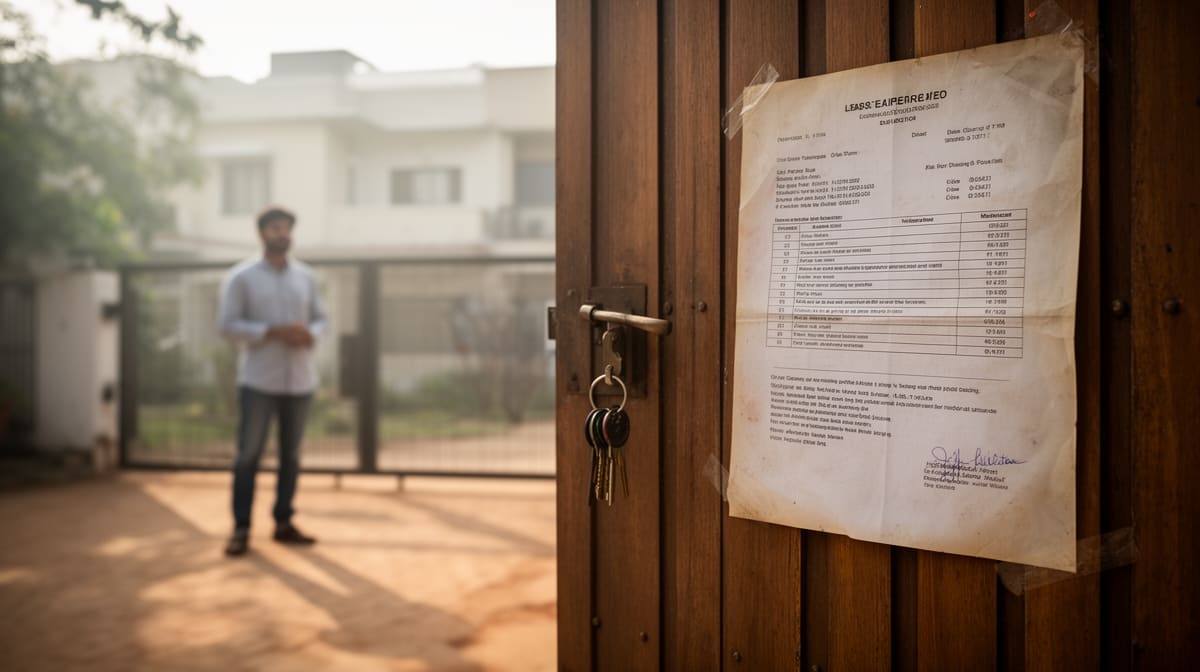
The dispute centers on Shop No. 1, constructed on Plot No. 462-A in T.P. Nagar, Korba, originally leased to defendant Nos. 5 to 7. On 21.12.2015, these defendants executed an equitable mortgage in favor of Punjab National Bank (Respondent No. 1) to secure a loan. On 03.07.2017, the Municipal Corporation granted permission for transfer of the superstructure. Subsequently, on 04.08.2017, the appellant, Amit Agrawal, purchased Shop No. 1 from defendants 5 to 7 via a registered sale deed for Rs. 15,00,000. The sale deed explicitly transferred only the superstructure, excluding the land and terrace. The appellant later obtained a home loan from ICICI Bank on 25.03.2019, mortgaging the same shop.
Key Facts
- Plot No. 462-A was leased to defendants 5 to 7 prior to 2015
- Equitable mortgage in favor of Punjab National Bank executed on 21.12.2015
- Municipal Corporation granted permission for superstructure transfer on 03.07.2017
- Registered sale deed executed on 04.08.2017 transferring only the shop (superstructure), not the land
- Appellant obtained ICICI Bank loan on 25.03.2019 using the shop as collateral
- Punjab National Bank issued notice under Section 13 of SARFAESI Act on 09.01.2024
- Auction conducted under Rule 9(6) of Security Interest (Enforcement) Rules, 2002, with symbolic possession delivered to auction purchaser Mr. Ashok Kumar Mittal
- Appellant filed suit for declaration of title and permanent injunction on 2024
- Application for temporary injunction filed under Order 39 Rules 1 & 2 CPC on same date
Procedural History
- 21.12.2015: Equitable mortgage created in favor of Punjab National Bank
- 03.07.2017: Municipal Corporation granted permission for transfer of superstructure
- 04.08.2017: Registered sale deed executed between defendants 5 - 7 and appellant
- 25.03.2019: Appellant mortgaged shop to ICICI Bank
- 09.01.2024: SARFAESI auction notice published by Punjab National Bank
- 2024: Civil Suit No. 8-A/2024 filed by appellant seeking declaration and injunction
- 05.02.2025: Learned 1st District Judge, Korba, dismissed application for temporary injunction
- 04.05.2026: Appeal filed under Order 43 Rule 1(r) CPC dismissed by Chhattisgarh High Court
The Parties' Positions
Appellant (Plaintiff): Claims to be a bona fide purchaser who conducted due diligence, obtained municipal permission, and is in lawful possession. Argues that the bank’s SARFAESI proceedings are illegal as he was not a party to the mortgage and has no notice of it.
Respondent No. 1 (Bank): Contends that the mortgage on the entire plot, including the superstructure, was created in 2015, prior to the sale. Asserts that the sale deed excluded land, and the Municipal Corporation’s permission was granted without its consent, rendering the transfer invalid. Invokes Section 34 of SARFAESI Act to bar civil court jurisdiction.
Defendants 5 - 7: Do not oppose the injunction application and confirm the transfer was done with municipal permission.
Relief Sought
The appellant sought temporary injunction restraining the bank from auctioning or disturbing possession of Shop No. 1 pending final adjudication of the title suit. The relief was denied by the trial court and upheld on appeal.
The Legal Issue
Can a purchaser of a building superstructure, who does not acquire title to the underlying land, claim temporary injunction against SARFAESI proceedings initiated by a prior mortgagee, when the mortgage was created before the sale and the sale deed expressly excluded the land?
Arguments Presented
For the Appellant
Counsel argued that the appellant is a bona fide purchaser who acted in good faith, obtained municipal clearance, and invested his entire savings in the property. He relied on the principle that a subsequent purchaser without notice is protected under equity. He emphasized that the Debt Recovery Tribunal refused to entertain his claim, leaving him without remedy, and urged the civil court to intervene to prevent irreparable loss.
For the Respondent
The bank contended that the equitable mortgage dated 21.12.2015 was valid, subsisting, and prior in time. It argued that the sale deed explicitly excluded the land, meaning the appellant acquired no interest in the mortgaged property. The bank further asserted that the Municipal Corporation’s permission was obtained without its consent, violating Rule 9(6) of the Security Interest (Enforcement) Rules, 2002. It invoked Section 34 of SARFAESI Act to bar civil court jurisdiction and highlighted that auction had already been completed with symbolic possession delivered.
The Court's Analysis
The High Court examined the nature of the transaction and the documentary evidence. It noted that the mortgage in favor of the bank was created on 21.12.2015, while the sale deed was executed on 04.08.2017. The court emphasized that the sale deed transferred only the superstructure, with express exclusion of the land and terrace. The court held that the appellant, by accepting this limitation, could not claim ownership over the mortgaged land.
"The plaintiff has not acquired any title over the land forming the subject matter of the mortgage and subsequent proceedings."
The court further observed that the bank had lawfully initiated SARFAESI proceedings under Section 13, issued notice on 09.01.2024, and completed the auction with symbolic possession delivered to the auction purchaser. The court rejected the appellant’s argument that he was a stranger to the proceedings, noting that his claim was inherently defective because he never held title to the mortgaged asset.
The court applied the threefold test for temporary injunction: prima facie case, balance of convenience, and irreparable injury. It found that the appellant failed on all counts. The bank’s prior mortgage created a superior right. The appellant’s possession was derivative and conditional on the landowner’s rights, which were already encumbered. The court also noted that the appellant had himself mortgaged the property to ICICI Bank, indicating awareness of its encumbered nature.
The court held that the trial court’s refusal to grant injunction was neither arbitrary nor perverse. The appellate court declined to substitute its discretion, reaffirming that interim relief is discretionary and must be grounded in clear legal entitlement.
The Verdict
The appeal was dismissed. The Chhattisgarh High Court upheld the trial court’s order dated 05.02.2025 rejecting the application for temporary injunction. The auction conducted by Punjab National Bank under SARFAESI Act, with symbolic possession delivered to Mr. Ashok Kumar Mittal, stands confirmed. The appellant’s claim to the superstructure remains subject to the prior mortgage and does not confer any enforceable right against the mortgagee or auction purchaser.
What This Means For Similar Cases
Prior Mortgage Trumps Subsequent Superstructure Purchase
- Practitioners must verify land title and mortgage status before advising clients on property purchases, even if only the building is being acquired
- A sale deed excluding land cannot confer protection against SARFAESI proceedings initiated by a prior mortgagee
- Municipal permissions for construction transfer do not override equitable mortgages registered on the land
No Remedy Against SARFAESI in Civil Court for Non-Mortgagors
- Civil courts lack jurisdiction under Section 34 of SARFAESI Act to adjudicate title disputes involving mortgaged property
- Buyers must ensure they are acquiring rights free of prior encumbrances; ignorance is not a defense
- Debt Recovery Tribunals will not entertain claims from non-parties to the loan agreement
Due Diligence Is Non-Negotiable
- Buyers must obtain certified copies of mortgage records from Sub-Registrar offices
- Title searches must include both land records and mortgage registries
- Any purchase involving structures on leased or mortgaged land requires explicit consent from the mortgagee