A landmark ruling by the Madras High Court has clarified that a document masquerading as a sale agreement but executed solely as security for a loan cannot be enforced as a contract of sale. The judgment reinforces the principle that courts must look beyond the form of a document to its true substance, particularly in cases involving high-value transactions and alleged financial coercion.
Background & Facts
The Dispute
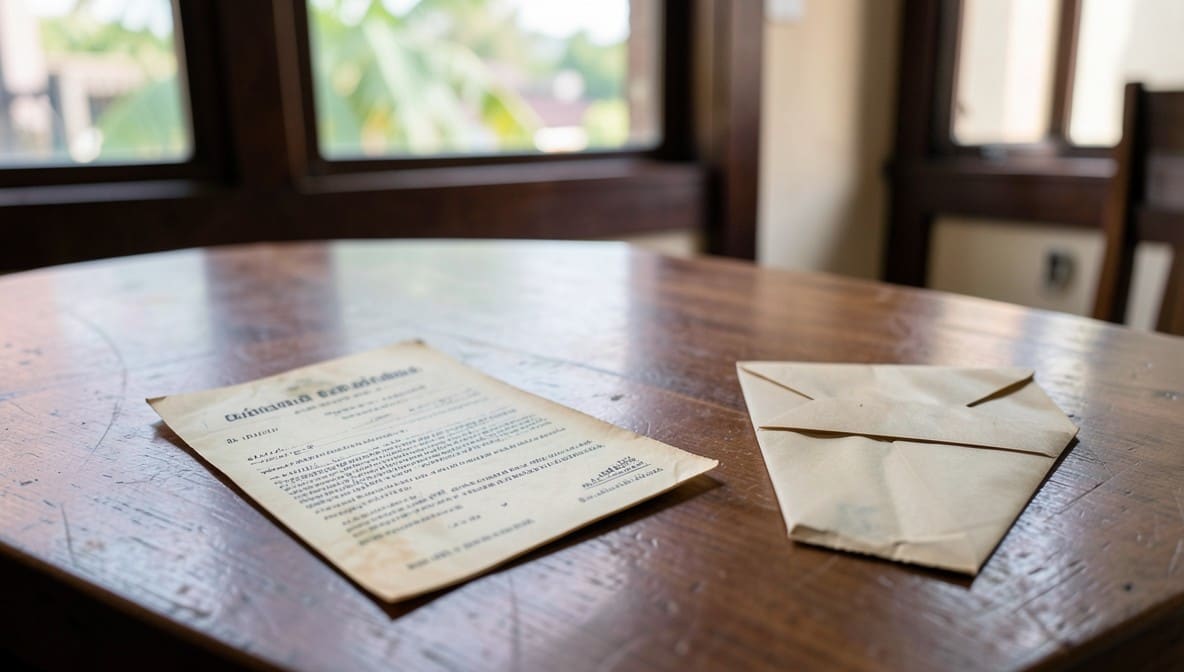
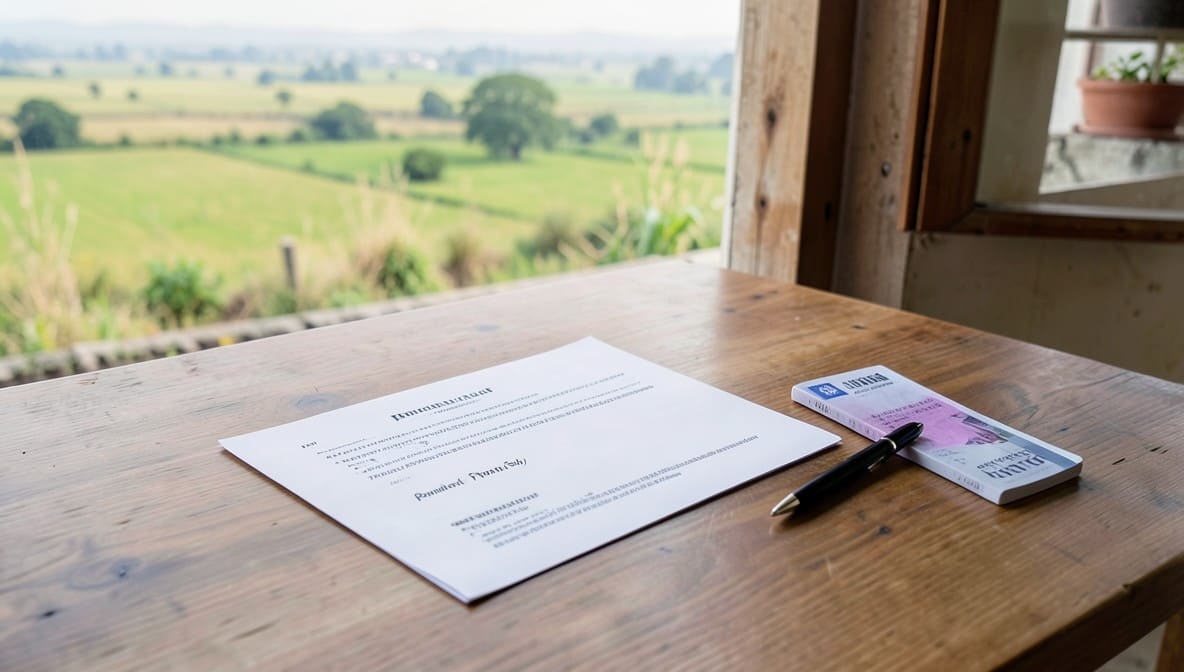
The dispute arose from a document titled "Sale Agreement" dated December 17, 2013, wherein the defendant allegedly agreed to sell a residential property in Karaikal for Rs.22,00,000/-, receiving Rs.20,00,000/- as advance. The plaintiff claimed the defendant defaulted on completing the sale, prompting a suit for specific performance. The defendant countered that the document was never intended as a sale contract but was instead a security instrument for a loan of Rs.20,00,000/- advanced by the plaintiff and his brother, who operated a jewellery business and were known moneylenders.
Procedural History
- December 2013: Execution of the disputed Sale Agreement (Ex-A.1)
- March 2014: Plaintiff issued pre-suit notice demanding performance
- 2014: Suit filed in District Court, Karaikal (O.S. No.15 of 2014)
- August 13, 2018: Trial Court decreed specific performance in favour of plaintiff
- 2019: Defendant filed First Appeal (A.S. No.458 of 2019) before Madras High Court
Relief Sought
The plaintiff sought specific performance of the sale agreement or, alternatively, refund of Rs.20,00,000/- with 18% interest. The defendant sought dismissal of the suit and asserted that the agreement was a sham document created to secure repayment of a loan.
The Legal Issue
The central question was whether a document executed as security for a loan, despite bearing the label of a sale agreement, can be enforced as a contract of sale under the Specific Relief Act, 1963, when the surrounding circumstances indicate a different intention.
Arguments Presented
For the Appellant/Petitioner
The appellant’s counsel, Senior Advocate T. Murugamanickam, argued that the Sale Agreement was fabricated using a blank stamped paper signed by the defendant during a loan transaction. He relied on Roop Kumar v. Mohan Thedani and Tejram v. Patirambhau to establish that courts must examine the true nature of transactions where there is a disparity between consideration and market value. He emphasized that the defendant’s wife, a competent witness under Section 120 of the Indian Evidence Act, was not permitted to testify fully due to the defendant’s absence abroad, and that the Trial Court erred in drawing adverse inference. He further contended that the absence of bank records for Rs.20,00,000/- and the defendant’s residence on the property undermined the plausibility of a genuine sale.
For the Respondent/State
The respondent’s counsel, R. Sunilkumar, argued that the execution of Ex-A.1 was proved through the testimony of the plaintiff (P.W.1) and his brother (P.W.2), both attesting witnesses. He relied on Iswar Bhai C. Patel v. Harihar Behera and Vidhyadhar v. Manikrao to assert that once the plaintiff discharged the initial burden of proving execution, the onus shifted to the defendant to disprove the document’s authenticity. He maintained that the defendant’s failure to seek forensic verification of signatures or to appear in person warranted acceptance of the Trial Court’s findings.
The Court's Analysis
The Court undertook a meticulous analysis of the transaction’s substance, rejecting formalism in favour of contextual interpretation. It acknowledged that while the plaintiff had prima facie proved execution of Ex-A.1 through attesting witnesses, the burden to establish the document’s true purpose remained with the plaintiff under Section 101 of the Indian Evidence Act.
"It is quite unbelievable that such a huge amount was transacted in cash, that too in the year of 2014. If really the plaintiff had saved the advance amount of Rs.20,00,000/- over a span of about 5 years in his bank account, he could have very well filed his bank statement which he failed to do so."
The Court noted the gross disparity between the sale price (Rs.22,00,000/-) and the property’s market value (Rs.70,00,000/-), the defendant’s continuous residence on the property, and the plaintiff’s failure to disclose the advance in his income tax returns. These factors, combined with the defendant’s credible account of obtaining blank stamped papers during a loan transaction, led the Court to conclude that Ex-A.1 was not a sale agreement but a security device.
The Court distinguished Bhagirath v. Ram Ratan and R.K. Mohammed Ubaidullah v. Hajee C. Abdul Wahab, which dealt with genuine sale agreements, and held that the doctrine of specific performance under Section 10 of the Specific Relief Act, 1963 requires a genuine intention to transfer ownership - a condition absent here. The Court further held that the wife’s inconsistent signatures did not invalidate the plaintiff’s burden of proving the transaction’s true nature.
The Verdict
The appellant prevailed in part. The Madras High Court set aside the Trial Court’s decree for specific performance and granted the alternate relief: a money decree of Rs.20,00,000/- with simple interest at 9% per annum from the date of suit. A charge was created on the suit property to secure repayment, to be lifted automatically upon full payment.
What This Means For Similar Cases
Sale Agreements as Security Are Not Enforceable as Sales
- Practitioners must now scrutinize the context of every sale agreement, especially where consideration is disproportionately low
- Courts will not enforce documents as sales if the surrounding facts indicate a loan security arrangement
- The burden shifts to the plaintiff to prove genuine intent to sell, not merely execution of the document
Financial Transactions Must Be Documented Transparently
- Cash transactions exceeding Rs.20,00,000/- without bank records invite judicial skepticism under Section 106 of the Indian Evidence Act
- Failure to produce income tax returns or bank statements for large sums weakens credibility
- Courts will infer sham transactions where documentation lacks economic rationality
Expert Evidence Is Critical in Disputed Signatures
- Parties challenging document authenticity must promptly seek forensic verification
- Failure to apply for handwriting analysis or expert opinion will be viewed as acquiescence
- Courts will not entertain belated challenges to signatures without credible evidence