The Chennai Customs, Excise & Service Tax Appellate Tribunal has clarified a critical distinction in indirect tax jurisprudence: the reimbursement of material costs by a contractor under a BOOT works contract does not constitute 'trading' or an 'exempt service' under the CENVAT Credit Rules, 2004. This ruling resolves long-standing ambiguity regarding the application of Rule 6(3A) and affirms that the nature of the underlying contract, not the form of billing, determines tax treatment.
Background & Facts
The Dispute
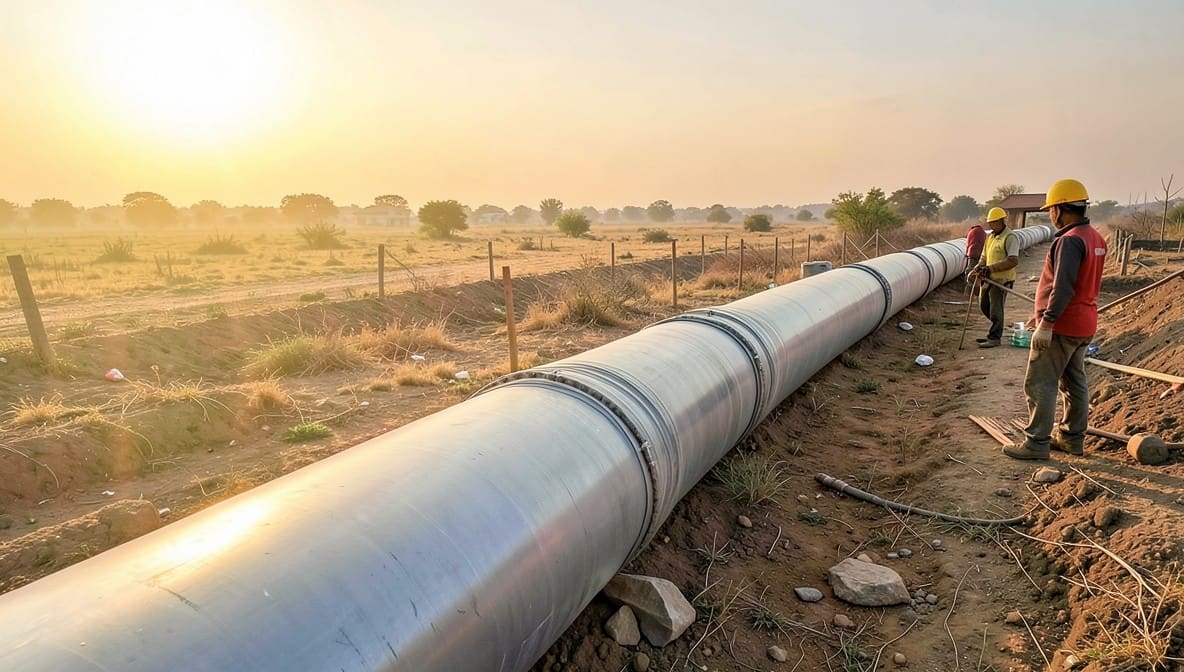
The appellant, IL & FS Water Ltd., was engaged by Indian Oil Corporation Ltd. (IOCL) under a Build, Own, Operate and Transfer (BOOT) agreement dated 04.02.2010 to design, construct, operate and maintain a water transmission project from the Mahanadi River to the Paradip Refinery in Odisha. The project included a 93 km pipeline, water intake structures, reservoirs, and treatment plants, to be delivered on a fixed lump sum contract price of Rs. 465 crores. The appellant subcontracted the entire execution to M/s Lanco Infratech Ltd., which supplied materials and billed the appellant separately for material and service components. The appellant, in turn, billed IOCL for the entire project cost, including reimbursed material costs.
Key Facts
- The BOOT contract was executed on 04.02.2010 for a 25-year term
- The contract price of Rs. 465 crores included all costs: design, engineering, procurement, construction, commissioning, and materials
- The appellant did not engage in independent trading of goods; materials were procured solely for project execution
- Sub-contractor Lanco Infratech Ltd. billed the appellant with separate line items for material (subject to VAT) and service
- The appellant reimbursed Lanco for material costs and included them in its invoice to IOCL
- The appellant maintained separate books of account for input services and input goods
- CENVAT credit was availed only on input services used for the works contract, and proportionately adjusted where applicable
- No separate agreement for sale of goods existed between the appellant and IOCL
Procedural History
- 2010-11 to 2014-15: Period under audit for service tax and CENVAT credit availment
- 2016: Departmental audit initiated by Principal Commissioner of Service Tax-I, Chennai
- 15.12.2016: Impugned Order issued demanding Rs. 2,83,34,028 as service tax, interest, and penalties under Rule 6(3A) of CENVAT Credit Rules, 2004
- 19.01.2026: Hearing before CESTAT Chennai
- 30.04.2026: Final Order passed by CESTAT Chennai
The Parties' Positions
For the Appellant
- The activity was a single, indivisible works contract under the BOOT model
- Reimbursement of material costs to the sub-contractor was not 'trading' but an integral part of project execution
- Rule 2(e) and Rule 6(3A) were misapplied because 'trading' was not an exempt service during FY 2010-11
- Separate accounting maintained; no common input service credit was wrongly availed
- Departmental circulars relied upon by Revenue were not binding and misinterpreted Supreme Court precedents
For the Respondent
- The transfer of property in goods via sub-contractor billing constituted 'trading'
- 'Trading' was an exempt service under Rule 2(e) from 01.04.2008, and Rule 6(3A) mandated reversal of common input credit
- The value of deemed sale of goods under works contract was exempt from service tax and thus required proportionate reversal
- Departmental Letter No. 334/3/2011 and CBEC Circular No. 943/04/2011 supported this interpretation
Relief Sought
The appellant sought: (1) setting aside of the impugned order dated 15.12.2016; (2) cancellation of the demand of Rs. 2,83,34,028; (3) cancellation of interest and penalties; and (4) consequential relief as per law.
The Legal Issue
The central question was whether the reimbursement of material costs by a contractor to its sub-contractor, under a BOOT works contract, constitutes 'trading' or an 'exempt service' under Rule 6(3A) of the CENVAT Credit Rules, 2004, thereby mandating reversal of CENVAT credit on common input services.
Arguments Presented
For the Appellant
The appellant relied on Vanguard Rolling Shutters v. CST, Hindustan Aeronautics Ltd. v. State of Karnataka, and Kone Elevator India Pvt. Ltd. v. State of Tamil Nadu to establish that the dominant object of the BOOT contract was execution of works, not sale of goods. It argued that the transfer of property in materials was incidental to the performance of the contract and did not constitute a separate sale. The appellant emphasized that Rule 2(e) could not be applied retroactively to FY 2010-11, as 'trading' was not declared an exempt service until 01.07.2012. It further contended that the Department's reliance on circulars was misplaced, as they could not override judicial precedents. The appellant maintained that separate accounting was in place and no common input credit was wrongly availed.
For the Respondent
The Revenue contended that the sub-contractor's billing for materials constituted a sale, and the appellant's reimbursement of such costs amounted to 'trading'. It relied on Departmental Letter No. 334/3/2011 and CBEC Circular No. 943/04/2011 to argue that 'trading' was an exempt service even prior to 01.07.2012. It asserted that Rule 6(3A) applied because the value of goods transferred under the works contract was exempt from service tax, and therefore, proportionate reversal of common input credit was mandatory. The Revenue also argued that the appellant's accounting practices were insufficient to prove exclusive use of input services for taxable services.
The Court's Analysis
The Tribunal undertook a detailed examination of the nature of the BOOT contract, the legal distinction between sale and works contract, and the scope of Rule 6(3A). It emphasized that the Supreme Court in Hindustan Aeronautics Ltd. and Sentinel Rolling Shutters had consistently held that the dominant object of the contract, not the form of billing, determines its classification. The Tribunal noted that the BOOT contract was indivisible, with no separate agreement for sale of goods. The materials were procured and transferred solely for the purpose of executing the project, not for resale.
"The fact that there is supply of materials for the purpose of execution of the work contracts undertaken by the appellant cannot be disputed. But the question then arises whether that can be taken as pursuant to a distinct contract with a view to execute the work undertaken."
The Tribunal rejected the Revenue's reliance on the legal fiction under Article 366(29A)(b) of the Constitution, citing Imagic Creative Pvt. Ltd. v. Commissioner of Commercial Taxes, which held that such fictions must not be extended beyond their intended purpose. The Tribunal observed that the fiction was created to enable taxation of both sale and service components in a single contract, not to convert reimbursement of costs into 'trading'.
The Tribunal further held that Rule 6(3A) was inapplicable because 'trading' was not declared an exempt service during FY 2010-11. Even post-2012, the reimbursement of material costs by the appellant to the sub-contractor was not a trading activity but a cost recovery mechanism embedded in the lump sum contract price. The appellant's separate accounting and proportionate adjustment of credit were not refuted by the Department, and no suppression or fraud was alleged.
The Tribunal concluded that the Department's interpretation would lead to absurdity: a contractor would be penalized for merely passing through costs incurred in executing a works contract, despite having no commercial interest in the materials themselves.
The Verdict
The appellant succeeded. The Tribunal set aside the impugned order dated 15.12.2016, cancelled the demand of Rs. 2,83,34,028 for service tax, reversed the interest and penalties imposed under Rule 14 of the CENVAT Credit Rules, 2004, and directed the respondent to grant consequential relief as per law. The appeal was allowed in full.
What This Means For Similar Cases
Works Contract Reimbursements Are Not Trading
- Practitioners must argue that reimbursement of material costs under a works contract is not a separate trading activity, even if sub-contractors bill separately for materials
- The dominant object test from Hindustan Aeronautics and Kone Elevator remains the governing principle
- Revenue authorities cannot treat cost recovery as 'trading' merely because materials are billed separately
Rule 6(3A) Cannot Be Applied Retroactively or Misapplied
- Rule 6(3A) applies only when 'exempt services' are clearly defined under the law at the relevant time
- 'Trading' was not an exempt service until 01.07.2012; demands for FY 2010-11 are legally unsustainable
- Circulars cannot override statutory interpretation or Supreme Court precedents
Separate Accounting Is a Strong Defense
- Maintaining separate books for input services and clearly apportioning credit remains a critical compliance practice
- Even if Rule 6 applies, proportionate adjustment documented in invoices and ledgers negates allegations of wrongful availment
- Absence of suppression or fraud must be highlighted to defeat penalty proceedings