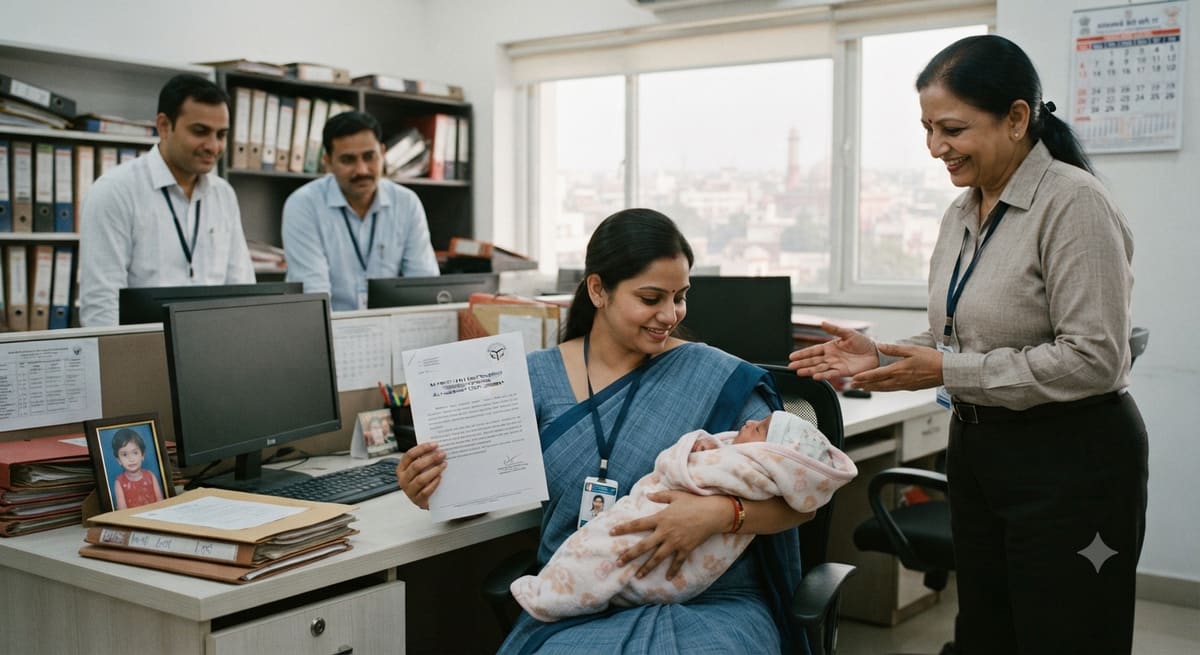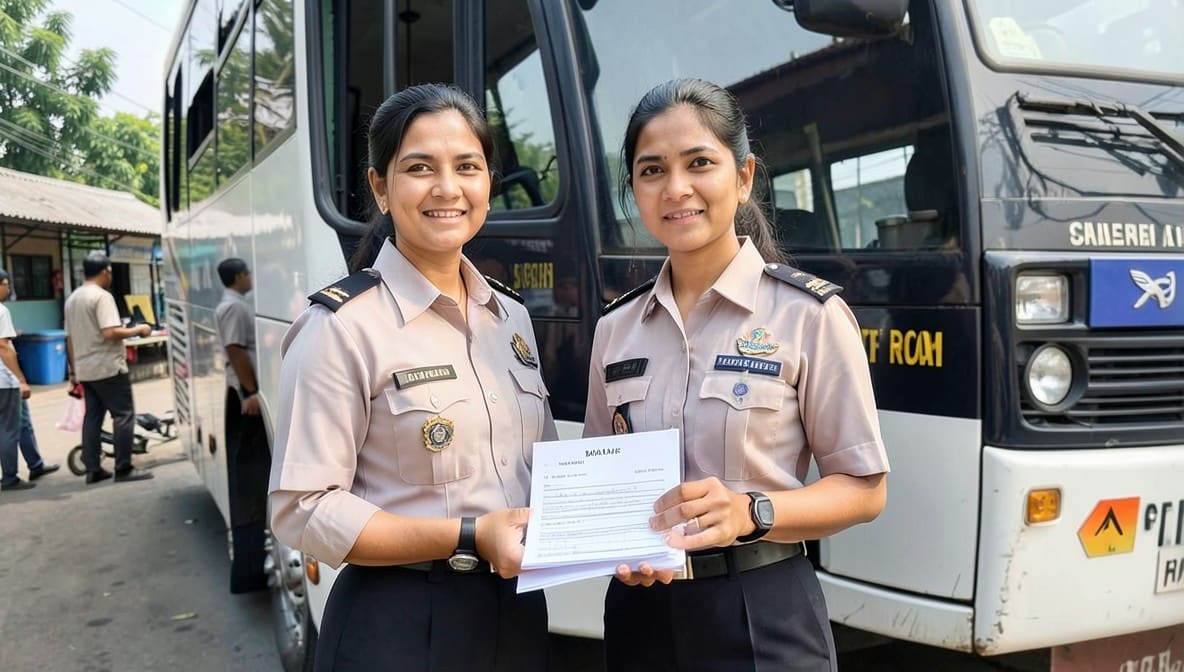
The Kerala High Court has directed a public sector employer to promptly adjudicate a female employee’s claim for maternity leave on full pay under Rule 100 of the Kerala Service Rules, reinforcing the state’s obligation to uphold statutory entitlements without undue delay.
Background & Facts
The Dispute
The petitioner, Divya E.C., a Conductor Grade-II with the Kerala State Road Transport Corporation (KSRTC), sought enforcement of her statutory right to maternity leave on full pay for the period from 13.11.2019 to 11.05.2020. She contended that this period fell within the 180-day entitlement granted under Rule 100 of the Kerala Service Rules, and that her leave had been improperly denied despite her actual absence from duty during this time.
Key Facts
- The petitioner was employed as a Conductor Grade-II with KSRTC, Thrissur Depot.
- She commenced maternity leave on 27.03.2019 and was granted an extension, rejoining duty in March 2021.
- She claimed entitlement to maternity leave on full pay for the period 13.11.2019 to 11.05.2020, totaling 180 days as permitted under Rule 100 of the Kerala Service Rules.
- She submitted a representation (Ext.P2) dated 13.03.2025 to the 3rd respondent, Assistant Transport Officer, Thrissur Depot, seeking sanction of full pay for the said period.
- The representation remained pending without any formal order or response.
- The petitioner also filed a Right to Information (RTI) application dated 20.03.2025 (Ext.P3), receiving a reply on 16.04.2025 (Ext.P4) confirming no decision had been taken on her representation.
- Exhibit P1, her duty pass dated 01.08.2015, established her employment status.
Procedural History
- 27.03.2019: Petitioner commenced maternity leave.
- 13.11.2019: Petitioner asserts entitlement to full pay maternity leave under Rule 100 KSR begins.
- 11.05.2020: End of claimed maternity leave period.
- March 2021: Petitioner rejoined duty.
- 13.03.2025: Petitioner filed Ext.P2 representation seeking full pay for 13.11.2019 to 11.05.2020.
- 20.03.2025: RTI application filed (Ext.P3).
- 16.04.2025: RTI reply received confirming no decision on representation (Ext.P4).
- 08.06.2026: Writ Petition (WP(C) No.4395 of 2026) filed before the High Court of Kerala.
Relief Sought
The petitioner sought a direction to the 2nd and 3rd respondents to sanction and disburse maternity leave on full pay for the period 13.11.2019 to 11.05.2020, along with payment of arrears and interest.
The Legal Issue
The central question was whether Rule 100 of the Kerala Service Rules entitles a female government servant to maternity leave on full pay for a continuous period of 180 days, and whether the failure to decide on a pending representation constitutes a violation of statutory rights.
Arguments Presented
For the Petitioner
The petitioner relied on Rule 100 of the Kerala Service Rules, which grants maternity leave on full pay for 180 days. She submitted that her absence from duty during the claimed period was undisputed and that her representation dated 13.03.2025 had been ignored for over a year. She argued that the state’s inaction amounted to a denial of a statutory benefit and violated her fundamental right to equality under Article 14 and the right to live with dignity under Article 21.
For the Respondent
The respondents did not file a counter-affidavit or oppose the petition substantively. The Advocate for the respondents appeared only to acknowledge service of notice and did not contest the factual or legal basis of the claim.
The Court's Analysis
The Court observed that the petitioner’s claim was grounded in a clear statutory provision - Rule 100 of the Kerala Service Rules - which provides for 180 days of maternity leave on full pay. The Court noted that the petitioner had been on maternity leave during the period claimed and had formally sought relief through Ext.P2, which remained pending without any adjudication.
"I find no reason to deny the same to the petitioner."
The Court emphasized that statutory entitlements, particularly those relating to maternity, are not subject to administrative discretion once the conditions are met. The prolonged inaction by the 3rd respondent, despite the lapse of over a year since the representation was filed, was deemed unacceptable. The Court held that the petitioner was entitled to a reasoned decision on her claim, not mere silence.
The Court further noted that the respondents had not raised any factual or legal objection to the claim, including any assertion that the petitioner was ineligible under Rule 100. In the absence of any counter-evidence or legal ground for denial, the Court concluded that the matter required adjudication on merits by the competent authority.
The Verdict
The petitioner succeeded. The Court directed the 3rd respondent, Assistant Transport Officer, Thrissur Depot, to consider Ext.P2 representation and pass a reasoned order within one month of receipt of a copy of this judgment. If the petitioner’s entitlement under Rule 100 of the Kerala Service Rules is established, all admitted benefits, including arrears of full pay for the period 13.11.2019 to 11.05.2020, shall be disbursed within one month thereafter.
What This Means For Similar Cases
Statutory Maternity Benefits Are Non-Discretionary
- Public employers cannot delay or ignore claims for maternity leave on full pay under Rule 100 KSR or similar provisions.
- Silence on a representation for over a year constitutes a violation of statutory rights and may attract judicial intervention.
Administrative Inaction Is Not a Valid Defense
- Departments must decide representations within a reasonable time, especially for time-bound benefits like maternity leave.
- Practitioners should cite this judgment when challenging delays in processing maternity or other statutory leave claims under service rules.
Documentation Is Critical
- Maintain copies of all representations, RTI replies, and duty records.
- This case confirms that even without a formal leave sanction order, actual absence coupled with a representation suffices to trigger the employer’s duty to adjudicate.