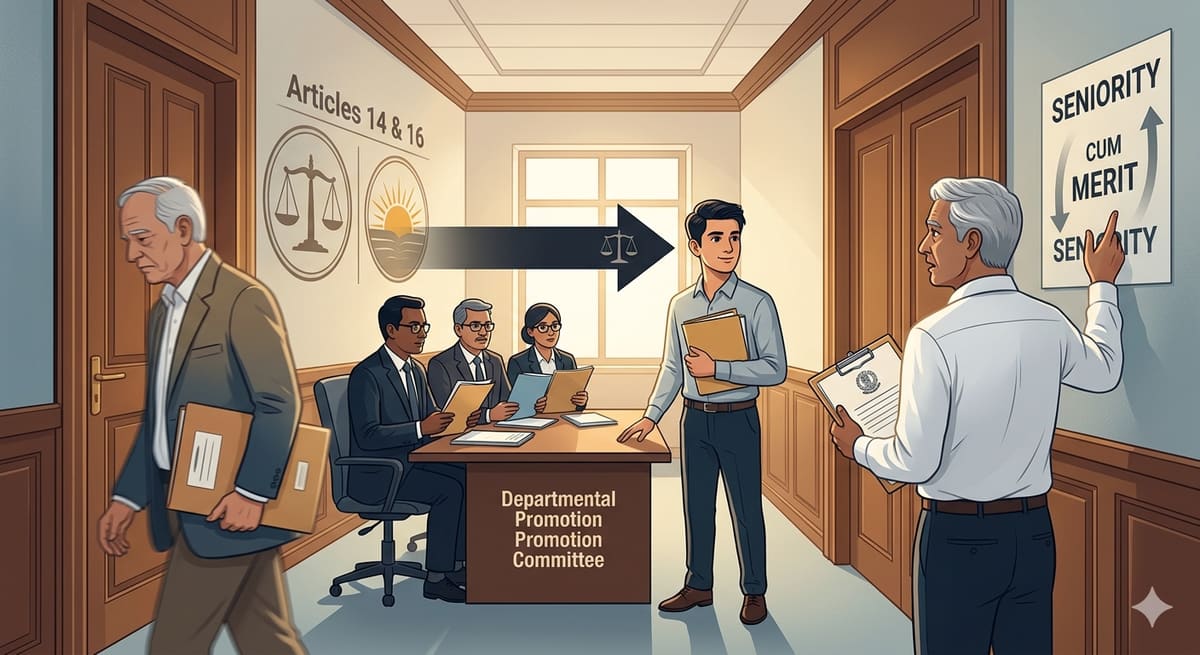
The Madhya Pradesh High Court has clarified that when a post is statutorily designated for promotion, any shift to direct recruitment - even if restricted to in-house candidates - must adhere strictly to the procedural framework prescribed for promotion. Failure to do so violates the vested rights of eligible service officers and constitutes illegal exercise of power.
Background & Facts
The Dispute
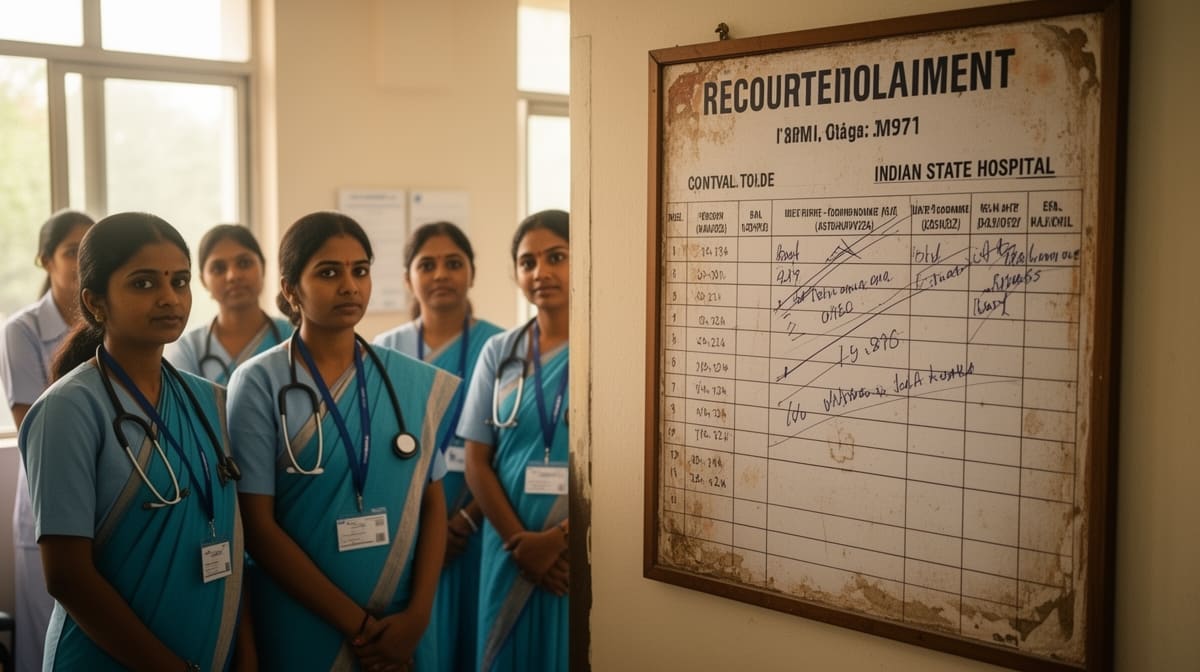
The petitioner, Dr. Ashish Kaushal, a Professor in Orthopedics at Gajra Raje Medical College (GRMC), Gwalior, challenged an in-house advertisement dated 06.02.2026 (Annexure P-1) issued by respondent no.4, which invited applications for the post of Professor in Orthopedics through direct recruitment. The petitioner, who had been serving as Associate Professor since 25.03.2013, contended that the post was statutorily meant for promotion under the M.P. Autonomous Medical and Dental College Educational Model Service Rules, 2018, and that direct recruitment in this context prejudiced his right to be considered for promotion on the basis of merit-cum-seniority.
Key Facts
- The petitioner was appointed as Assistant Professor on 28.05.2005
- Promoted to Associate Professor on 25.03.2013
- Designated as Professor on 21.03.2018
- Two Professor posts in Orthopedics are sanctioned under Schedule II of the Rules, both to be filled by promotion
- Impugned advertisement dated 06.02.2026 invited applications for direct recruitment under UR category only
- Petitioner filed objections on 22.02.2026 and 23.02.2026
- Writ petition filed on 25.02.2026
- Petitioner submitted application under the impugned advertisement on 24.02.2026 to preserve his opportunity
- Respondents relied on memo dated 10.12.2025 from Director, Medical Education, citing pending SLP in R.B. Rai before the Supreme Court as legal impediment to promotion
Procedural History
- 06.02.2026: Impugned advertisement issued by GRMC
- 22.02.2026: Petitioner lodged formal objection to advertisement
- 23.02.2026: Petitioner reiterated objection
- 24.02.2026: Petitioner applied for the post to avoid forfeiture of opportunity
- 25.02.2026: Writ Petition No. 7729/2026 filed before Madhya Pradesh High Court, Gwalior
- 12.03.2026: Case reserved for judgment
- 31.03.2026: Judgment delivered
The Parties' Positions
Petitioner: Argued that Rule 8 of the 2018 Rules mandates promotion for Professor posts in Orthopedics. Direct recruitment, even if in-house, cannot bypass the promotion framework. The absence of a defined assessment procedure for promotion renders the advertisement illegal. His vested right to promotion based on seniority and service record is being undermined.
Respondents: Contended that due to legal impediment arising from pending Supreme Court proceedings on reservation in promotion (R.B. Rai), promotion was temporarily suspended. The in-house advertisement was a temporary measure to fill the vacancy without excluding internal candidates. The petitioner’s participation in the process estopped him from challenging it.
Relief Sought
The petitioner sought:
- Quashing of the impugned advertisement dated 06.02.2026
- Direction to notify a definite procedure for promotion as mandated under Rule 8
- Direction to fill the post only through promotion after such procedure is established
The Legal Issue
Can a post statutorily designated for promotion be filled through direct recruitment, even if restricted to in-house candidates, without adopting the same assessment criteria prescribed for promotion under the service rules?
Arguments Presented
For the Petitioner
The petitioner’s counsel relied on Rule 8 of the M.P. Autonomous Medical and Dental College Educational Model Service Rules, 2018, which prescribes promotion through assessment of service in feeder post, written test, interview, or combination thereof. He cited Note-2 of Schedule II, which permits direct recruitment only when promotion is legally impeded or no eligible candidate is available. He argued that the respondents had not established that promotion was impossible - only that it was delayed. He emphasized that direct recruitment without applying promotion criteria disregards seniority and past service, violating the petitioner’s vested right under Article 14 and Article 16. He relied on Dr. Rajni Thakur v. State of Madhya Pradesh (W.P. No. 31493/2024) to show identical facts had been previously decided.
For the Respondent/State
The respondents’ counsel argued that the memo dated 10.12.2025 authorized direct recruitment pending resolution of the legal impediment concerning reservation in promotion. He contended that the in-house nature of the advertisement protected the interests of internal candidates, including the petitioner. He further argued that the petitioner’s application to the advertisement estopped him from challenging its legality, as he had voluntarily participated in the process.
The Court's Analysis
The Court first rejected the estoppel argument, noting that the petitioner had challenged the advertisement before the selection process concluded and had applied only to preserve his opportunity. The Court held that participation under protest does not amount to waiver of legal rights.
The Court then turned to the statutory framework. It observed that Rule 6 of the 2018 Rules categorically assigns Professor posts in Orthopedics to promotion under Schedule II. Rule 8 prescribes a specific methodology for promotion: assessment of service record, written test, interview, or combination. Note-2 permits direct recruitment only as an exception - when promotion is legally impeded or no eligible candidate exists.
The Court found that the respondents had not demonstrated that promotion was legally impossible. The pendency of an SLP before the Supreme Court did not constitute a legal impediment sufficient to override statutory mandates. The Court emphasized that temporary administrative convenience cannot override statutory rights.
"...if any different methodology apart from promotion is adopted then it would definitely give cause of prejudice to petitioner who is in line for promotion because even if in-house candidates only are considered for direct recruitment but in absence of following the same procedure which is followed for promotion, then the vested right of the petitioner to be considered for promotion would be frustrated and defeated."
The Court held that the impugned advertisement failed to incorporate any of the promotion criteria under Rule 8. It did not consider service record, seniority, or past performance - key elements of promotion. Instead, it allowed selection on merit alone, as in direct recruitment, thereby erasing the distinction between promotion and direct recruitment.
The Court further noted that no definite procedure for promotion had been notified by the Executive Committee, rendering the entire process arbitrary. The absence of a transparent, published assessment framework violated the principles of natural justice and equal opportunity.
The Court relied on its own coordinate bench’s judgment in Dr. Rajni Thakur, which had held that even in-house direct recruitment must follow the promotion procedure if the post is statutorily meant for promotion.
The Verdict
The petition succeeded. The Court quashed the impugned advertisement dated 06.02.2026. The respondents are directed to:
- Notify a definite procedure for assessment of candidates for promotion within 8 weeks, consistent with Rule 8 of the 2018 Rules
- Notify a separate procedure for direct recruitment, if required
- After compliance, reconsider whether to fill the post through direct recruitment, but only if a legal impediment to promotion persists
- If direct recruitment is re-issued, it must apply the same criteria as the notified promotion procedure
What This Means For Similar Cases
Promotion Criteria Are Non-Negotiable in Statutorily Reserved Posts
- Practitioners must challenge any recruitment drive that substitutes direct recruitment for promotion without adopting the statutory promotion methodology
- Merit alone cannot override seniority and service record where promotion is mandated
- Administrative convenience or pending litigation cannot override statutory obligations
In-House Recruitment Does Not Automatically Protect Vested Rights
- Even if recruitment is restricted to internal candidates, the methodology must mirror promotion
- Participation in the process does not waive the right to challenge illegality if the process itself violates statutory rights
- Service record must be weighted in assessment; otherwise, the process is not promotion
Executive Committees Must Notify Clear Procedures
- Institutions must proactively notify promotion and direct recruitment procedures
- Failure to do so renders any recruitment arbitrary and liable to be set aside
- Delay in framing rules cannot be used to justify illegal appointments