The Chhattisgarh High Court has dismissed a state appeal against the acquittal of four public servants and a contractor in a corruption case involving the sale of cooperative society land, reinforcing that mere execution of sale deeds without proof of dishonest intent or conspiracy cannot sustain conviction under the Prevention of Corruption Act.
Background & Facts
The Dispute
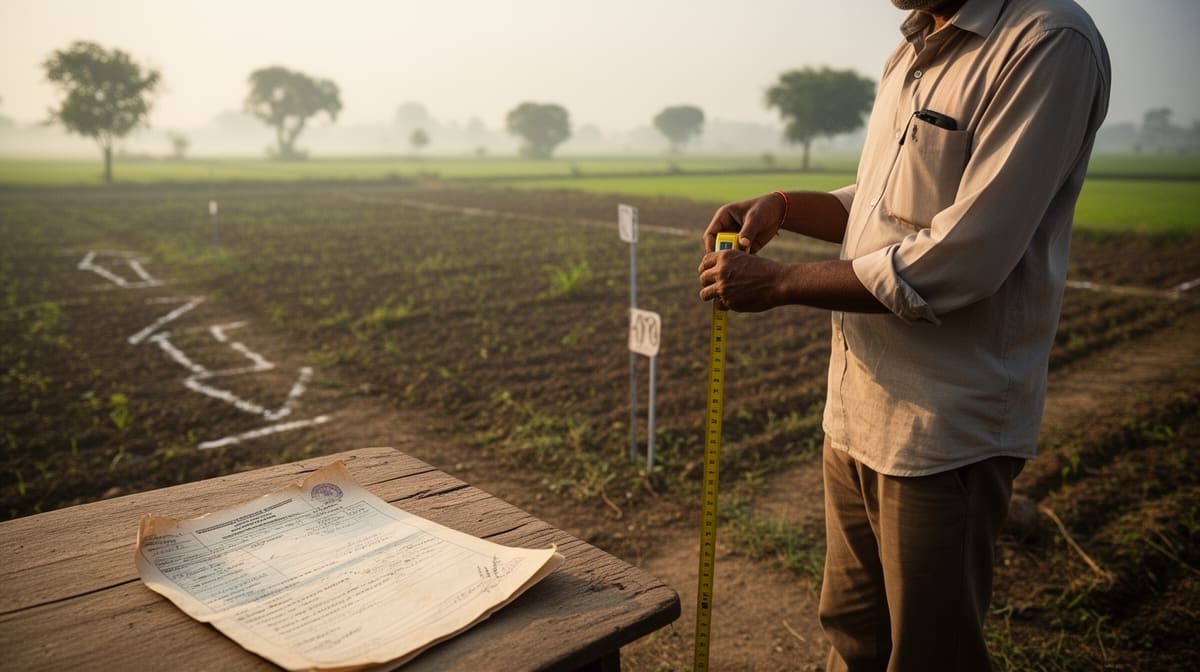
The case arose from allegations that respondents, including public servants and a contractor, conspired to illegally sell 6.53 acres of land belonging to Chhattisgarh Vikas Griha Nirman Sahkari Samiti, situated at Village Padumnagar, Charoda, Tahsil Patan, District Durg. The prosecution alleged that the land, which was owned by the cooperative society, was fraudulently represented as agricultural land to facilitate its sale to 14 purchasers, thereby causing wrongful loss to the society and wrongful gain to the accused.
Key Facts
- The land in question was registered under the cooperative society and was not privately owned.
- Sale deeds were executed between 1994 and 1996 in favor of 14 purchasers, including PW-1 Surekha Deshlehara, PW-2 Pukhraj Jain, and PW-4 Mohini Bai Kochar.
- The sale consideration ranged from Rs. 9,000 to Rs. 15,000 per plot, with total area of 6.53 acres.
- The District Registrar’s office issued notices to purchasers for deficiency in stamp duty, leading to additional payments ranging from Rs. 821 to Rs. 16,784.
- PW-8 Vishambar Pradhan, then Collector of Stamp, admitted under cross-examination that stamp duty was assessed and demanded on the basis of government guideline rates for agricultural land - directly contradicting the prosecution’s claim of misrepresentation.
- No original forged documents were recovered; all documents relied upon were either certified copies or stamped deeds.
- The complainant, Basarat Khan, filed a complaint on 04.05.1999, leading to Crime No. 40/1999 being registered by the Special Police Establishment, Bhopal.
- The Anti-Corruption Bureau seized documents on 04.08.1999, including files and orders (Ex. P/20 to P/22).
- PW-6 Rakesh Bhatt, Lokayukta Inspector, admitted that Vinay Mitra (Respondent No. 2) had filed a civil suit for recovery of dues from the society, and the court had awarded him Rs. 10,024 - indicating a civil dispute over dues, not criminal conspiracy.
Procedural History
- 04.05.1999: Complaint filed by Basarat Khan with Lokayukta.
- 1999: Crime No. 40/1999 registered by Special Police Establishment.
- 2000: Charge-sheet filed before Special Judge (PC Act), Durg, in Special Case No. 01/2001.
- 18.07.2017: Special Judge acquitted all accused of charges under Sections 120-B, 420, 467 IPC and Section 13(1)(d) read with Section 13(2) of the Prevention of Corruption Act, 1988.
- 16.03.2026: Appeal filed by State before Chhattisgarh High Court (ACQA No. 175 of 2018).
The Parties' Positions
For the State (Appellant):
- Argued that the accused, being public servants, abused their official positions to facilitate illegal land sales.
- Claimed the land was misrepresented as agricultural to evade higher stamp duty, constituting cheating and forgery.
- Asserted that the cumulative evidence established criminal conspiracy and dishonest intent.
- Contended that the trial court ignored material evidence and adopted a hyper-technical approach.
For Respondents 3 and 4 (Accused Public Servants):
- Supported the acquittal, arguing that the prosecution failed to prove any mens rea, fabrication, or misuse of position.
- Highlighted that PW-8’s testimony confirmed stamp duty was assessed on agricultural rates - negating the core allegation of misrepresentation.
- Emphasized absence of any forged document or evidence linking accused to fabrication.
Relief Sought
The State sought reversal of the acquittal order dated 18.07.2017 and conviction of all respondents under Sections 120-B, 420, 467 IPC and Section 13(1)(d) read with Section 13(2) of the Prevention of Corruption Act, 1988.
The Legal Issue
The central question was whether the prosecution established beyond reasonable doubt the essential ingredients of criminal conspiracy, cheating under Section 420 IPC, forgery under Section 467 IPC, and abuse of official position under Section 13(1)(d) of the Prevention of Corruption Act, particularly where the prosecution’s own witness admitted that land was treated as agricultural for stamp duty purposes.
Arguments Presented
For the Appellant
The State contended that the accused, including public servants, conspired to sell society land by falsely representing it as agricultural to reduce stamp duty and facilitate illegal transfers. It relied on the execution of multiple sale deeds, the discrepancy between market value and sale consideration, and the fact that respondents held official positions to argue that their conduct amounted to dishonest intent and abuse of power. It cited Jupally Lakshmikantha Reddy and Vishal Noble Singh to argue that the trial court erred in requiring direct proof of forgery and that circumstantial evidence was sufficient to infer conspiracy.
For the Respondent
Respondents 3 and 4, through counsel, argued that the prosecution failed to prove any prior meeting of minds, fabrication of documents, or misuse of official position. They emphasized that PW-8, the Collector of Stamp, unequivocally admitted that stamp duty was assessed on agricultural land rates - directly undermining the prosecution’s claim of misrepresentation. They further pointed out that no original forged documents were recovered, no witness testified to any collusion, and the civil suit filed by Vinay Mitra for recovery of dues indicated a legitimate financial dispute, not criminal conspiracy.
The Court's Analysis
The High Court undertook a meticulous review of the trial court’s findings and the prosecution evidence. It noted that the prosecution’s entire case hinged on the allegation that the land was misrepresented as agricultural. However, this allegation was directly contradicted by the testimony of PW-8 Vishambar Pradhan, who admitted under cross-examination that all stamp duty assessments (Ex. P/5 to P/17) were made on the basis of government guideline rates for agricultural land - a fact that the prosecution itself had relied upon to justify the stamp duty notices.
"This admission strikes at the very foundation of the prosecution story and renders the allegation of misrepresentation wholly unsubstantiated."
The Court further held that the mere execution of sale deeds, even if at undervalued prices, does not constitute cheating or forgery unless there is proof of fraudulent or dishonest intention at the time of the transaction. Citing Vishal Noble Singh v. State of Uttar Pradesh, the Court reiterated that to attract Section 420 IPC, there must be a fraudulent or dishonest intention at the time of making the promise - and mere failure to fulfill a promise later cannot be equated with initial dishonesty.
Regarding Section 467 IPC (forgery of valuable security), the Court observed that no forged document was recovered, and no evidence linked any accused to the creation of a false document. The Court relied on Jupally Lakshmikantha Reddy, which held that without proof of fabrication or connection of the accused to the creation of a fake document, Section 467 cannot be attracted.
On the charge under Section 13(1)(d) of the Prevention of Corruption Act, the Court found no evidence that any public servant obtained pecuniary advantage for themselves or others through illegal means. The fact that a civil suit was filed and a court awarded Rs. 10,024 to Vinay Mitra for dues owed by the society indicated a legitimate claim, not a corrupt transaction.
The Court emphasized the principles laid down in Mallappa v. State of Karnataka, holding that appellate courts must not interfere with acquittals unless there is patent illegality, perversity, or error of law. The trial court’s conclusion that the prosecution failed to prove its case beyond reasonable doubt was found to be a legally plausible view, supported by the evidence on record.
The Verdict
The appeal was dismissed. The acquittal of all respondents by the Special Judge dated 18.07.2017 was upheld. The Chhattisgarh High Court held that the prosecution failed to establish the essential ingredients of any of the alleged offences beyond reasonable doubt. No conviction was ordered. The respondents were acquitted of all charges under Sections 120-B, 420, 467 IPC and Section 13(1)(d) read with Section 13(2) of the Prevention of Corruption Act, 1988.
What This Means For Similar Cases
Prosecution Must Prove Dishonest Intent at Time of Transaction
- Practitioners must now establish that fraudulent or dishonest intent existed at the time of the alleged act - not inferred from subsequent events or financial outcomes.
- Mere undervaluation of property or failure to pay full stamp duty does not, by itself, prove cheating or forgery.
Documentary Evidence from Prosecution Witnesses Can Undermine the Entire Case
- If prosecution witnesses admit facts that contradict the core allegation (e.g., stamp duty assessed on agricultural rates), the prosecution’s case collapses.
- Courts will not sustain convictions based on speculative inferences when direct evidence from prosecution witnesses negates the theory.
Acquittal Appeals Require Specific Grounds of Perversity
- Appellate courts cannot re-appreciate evidence merely because a different view is possible.
- To reverse an acquittal, the appellate court must identify a patent illegality, misappreciation of evidence, or error of law - not just a difference in opinion.
- This judgment reinforces that acquittals are entitled to high deference under Mallappa and Vishal Noble Singh.
Civil Disputes Cannot Be Converted Into Criminal Prosecutions
- Where a financial dispute exists (e.g., recovery of dues), and a civil court has adjudicated the matter, criminal proceedings for cheating or conspiracy are inappropriate.
- Courts must guard against misuse of criminal law for private vendettas, as emphasized in Bhajan Lal and Vishal Noble Singh.
No Forgery Without Fabrication
- Section 467 IPC requires proof that the accused made or forged the document - not merely used it.
- Absence of original forged document and no link between accused and its creation renders the charge unsustainable.