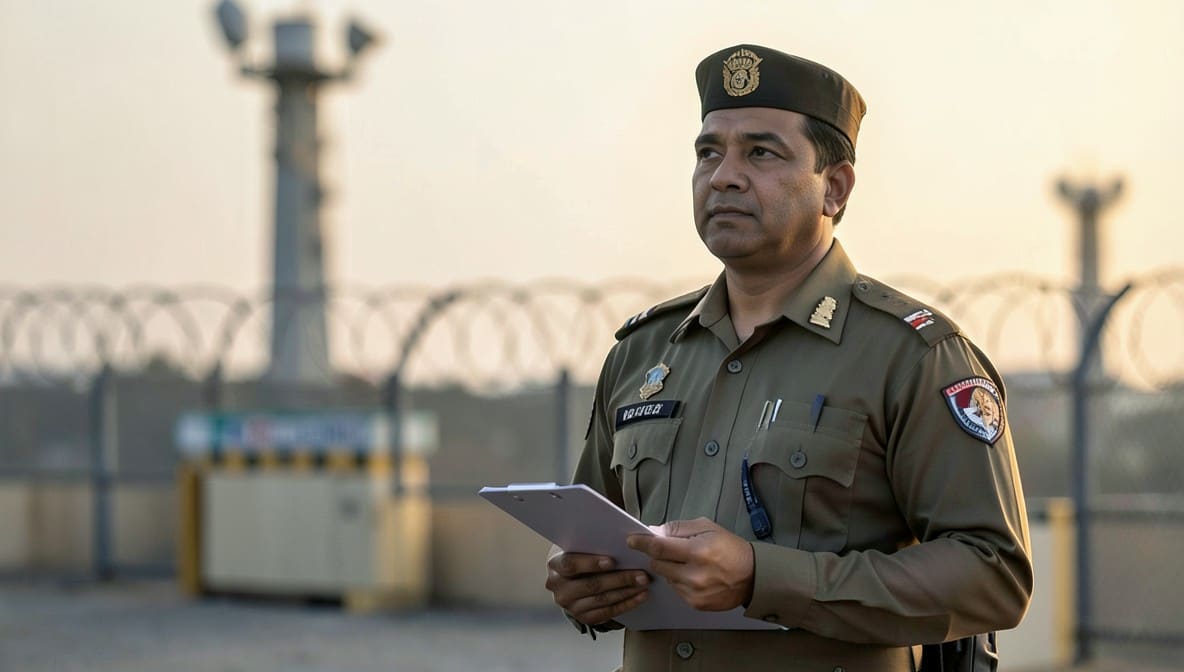
The Calcutta High Court has affirmed that members of India’s armed forces may be dismissed from service on grounds of serious criminal misconduct even before conviction, where retention poses a threat to institutional integrity and national security. The judgment underscores that due process does not require a criminal trial to conclude before administrative action is taken in cases involving grave breaches of public trust.
Background & Facts
The Dispute
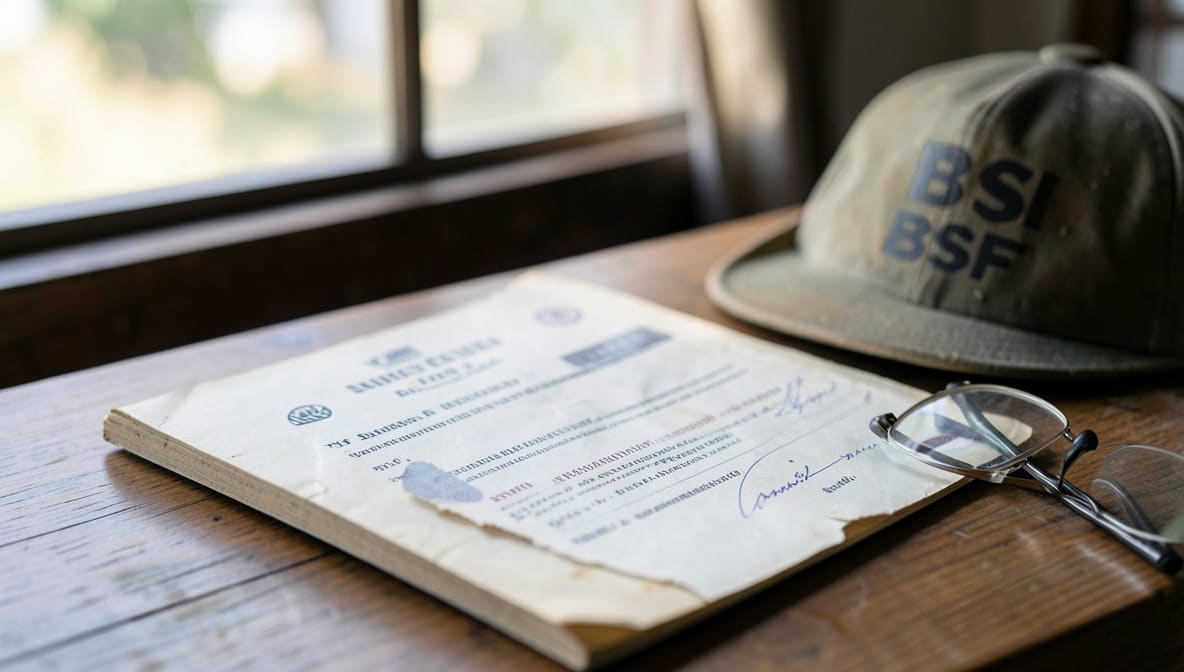
The petitioner, Md. Farhad Zaman, was a member of the Border Security Force (BSF). He was dismissed from service by order dated 02.12.2023, effective from the same date, for allegedly accepting illegal gratification from job aspirants during the detailed medical examination for recruitment to Constable (General Duty) positions in CAPFs, NIA, SSF, and Assam Rifles in January-February 2020 at Malda. The misconduct involved securing fraudulent "fit" certificates in exchange for bribes, compromising the integrity of recruitment and national security.
Key Facts
- The petitioner was deployed at Dhanakgiri, Meghalaya in 2020
- He colluded with Dr. Lokeshwar Khajuria, Senior Medical Officer of the same battalion, to facilitate bribes for medical clearance
- A candidate transferred Rs. 80,000 to the petitioner’s non-salary bank account, which was subsequently routed to a civilian’s account
- The petitioner allegedly used WhatsApp to coordinate with other candidates and medical officers, requesting names of those seeking "fit" certificates for payment
- A separate candidate, declared "unfit" by another officer, received a "fit" certificate after paying Rs. 2,00,000 to Dr. Khajuria
- Bank statements corroborated the money trail
- WhatsApp chats between the petitioner and the medical officer were deleted by a civilian claiming to be Dr. Khajuria’s brother
- Multiple civilians were identified as beneficiaries of the bribery scheme
- The petitioner allegedly threatened candidates and their families to prevent disclosure
- The petitioner was served a show cause notice detailing these allegations
Procedural History
- January-February 2020: Alleged bribery and fraudulent medical clearances occurred
- 2020: CBI initiated preliminary investigation based on complaints
- 02.12.2023: Commandant issued order dismissing petitioner from BSF service
- Prior to 02.12.2023: Show cause notice issued to petitioner, allowing him to submit explanation
- 02.12.2023: Petitioner’s reply to show cause notice was found unsatisfactory
- 09.04.2026: Writ Petition (WPA 840 of 2024) decided by Calcutta High Court
The Parties' Positions
Petitioner’s Position:
- No subjective satisfaction recorded by the Commandant
- Criminal trial is sub judice; dismissal without conviction violates presumption of innocence
- Should have been tried under BSF Act and Rules before Security Force Court
- Show cause notice did not include supporting documents
- No reason recorded for bypassing Security Force Court trial
- Dismissal was arbitrary and violated principles of natural justice
Respondent’s Position:
- Show cause notice clearly outlined allegations and evidence
- Petitioner was given full opportunity to respond
- Criminal case involves civilians who cannot be tried under BSF Act
- Security Force Court lacks jurisdiction over civilians; piecemeal trial is impracticable
- National security demands immediate removal of personnel involved in corruption
- Retention of such personnel would demoralize the Force and erode public trust
- Evidence of money trail and collusion is sufficient to justify dismissal
Relief Sought
The petitioner sought:
- Setting aside of the dismissal order dated 02.12.2023
- Reinstatement with full back wages and notional seniority
- Restoration of all service benefits
The Legal Issue
Can a member of an armed force be dismissed from service on grounds of serious criminal misconduct, even before conviction, when the criminal trial involves civilians and cannot be conducted under the service’s internal disciplinary framework?
Arguments Presented
For the Petitioner
The petitioner relied on Baldeb Raj Chadha v. Union of India (1980) 4 SCC 321 to argue that dismissal must be supported by material demonstrating public interest. He contended that no such material was placed before the authority or the Court. He cited Sat Pal Singh v. Union of India (19.10.2006, WP(C) 4796/1998) to assert that the authority must record subjective satisfaction under Rule 22 of the BSF Rules, which was allegedly absent. He also invoked Sees Ram v. Union of India (01.09.1996, CW 1809/1993) to argue that dismissal without a proper trial under the BSF Act violated procedural fairness. He claimed the show cause notice lacked supporting documents and that the decision was made without application of mind.
For the Respondent
The Union relied on Tulsiram Patel v. Union of India (1985) 3 SCC 398 to affirm that prior opportunity of hearing was granted through the show cause notice and reply. The affidavit of the Deputy Inspector General detailed the money trail, WhatsApp communications, and involvement of civilians. It was argued that the BSF Act and Rules cannot be applied to civilians, making a separate trial under the Act impracticable. The Court was reminded that the BSF is entrusted with national border security, requiring the highest standards of integrity. Retaining an officer under such grave allegations would undermine discipline and public confidence.
The Court's Analysis
The Court examined whether the dismissal order was legally sustainable despite the pending criminal trial. It held that the principle of natural justice was not violated, as the petitioner was provided a show cause notice, given an opportunity to respond, and his reply was considered. The Court emphasized that the BSF Act and Rules do not extend to civilians, and therefore, a trial under the Act would be futile and incomplete without evidence from non-service personnel.
"The very purpose of the trial will be defeated if proper evidence cannot be adduced. It is only for this purpose that the authority opined that trying the petitioner before the Security Force Court will be inappropriate and impracticable."
The Court rejected the petitioner’s argument that subjective satisfaction was unrecorded, noting that the show cause notice and dismissal order both explicitly referenced the criminal conspiracy, money trail, and threat to national security. The Court distinguished Sat Pal Singh and Sees Ram, where dismissals were based on unauthorized absence without proper inquiry. Here, the allegations involved active corruption with civilians, requiring a unified criminal investigation.
The Court further held that the gravity of the allegations - accepting bribes to compromise recruitment into security forces - directly threatened national integrity. The Court cited Tulsiram Patel to affirm that opportunity of hearing was satisfied, and Baldeb Raj Chadha to conclude that sufficient material existed to justify dismissal. A rational mind, the Court observed, could not condone the retention of a uniformed officer accused of such conduct.
"Any sympathy or leniency shown to this type of member is bound to send out a wrong signal to the Force and the society at large. Illegality of such nature cannot be accepted in the Force at all and the same is to be dealt with an iron hand as soon as the same is detected."
The Court concluded that the authority acted within its powers, and the dismissal was neither arbitrary nor procedurally flawed.
The Verdict
The writ petition was dismissed. The Calcutta High Court upheld the dismissal order dated 02.12.2023, confirming that the petitioner’s service was lawfully terminated. No reinstatement, back wages, or notional seniority were granted. The Court found no violation of natural justice or statutory procedure. No costs were awarded.
What This Means For Similar Cases
Pre-Trial Dismissal Is Permissible for Grave Misconduct
- Practitioners must advise clients in armed forces that serious criminal allegations involving corruption, national security, or public trust can justify immediate dismissal without awaiting criminal conviction
- The burden shifts to the employee to demonstrate that the disciplinary authority acted without material or in bad faith
- Mere pendency of a criminal case does not automatically bar administrative action
Jurisdictional Constraints Override Internal Disciplinary Procedures
- When criminal conspiracies involve civilians, internal service courts cannot conduct a complete trial
- Authorities are justified in bypassing service-specific trials if doing so would frustrate justice
- The BSF Act and similar statutes cannot be used to prosecute non-service personnel
- Administrative dismissal becomes the only viable mechanism to preserve institutional integrity
National Security Justifies Strict Standards
-
Armed forces are held to higher standards of conduct than civilian agencies
-
Even unproven allegations of corruption in recruitment processes are treated as existential threats
-
Disciplinary authorities may act on prima facie evidence supported by documentary trails (e.g., bank records, digital communications)
-
Courts will defer to institutional judgment where national security is implicated, provided procedural safeguards are met
-
Always ensure show cause notices include specific allegations and supporting evidence
-
Always record reasons for bypassing internal disciplinary mechanisms when civilians are involved
-
Never assume that criminal trial pendency automatically protects service personnel from administrative action