The Madhya Pradesh High Court has significantly clarified the evidentiary threshold in POCSO Act cases by holding that conviction cannot rest on an unverified age entry in a scholar register. This judgment underscores the necessity of reliable, documented proof of age in sexual offence prosecutions and grants interim relief to an accused who has already served over four years in custody.
Background & Facts
The Dispute
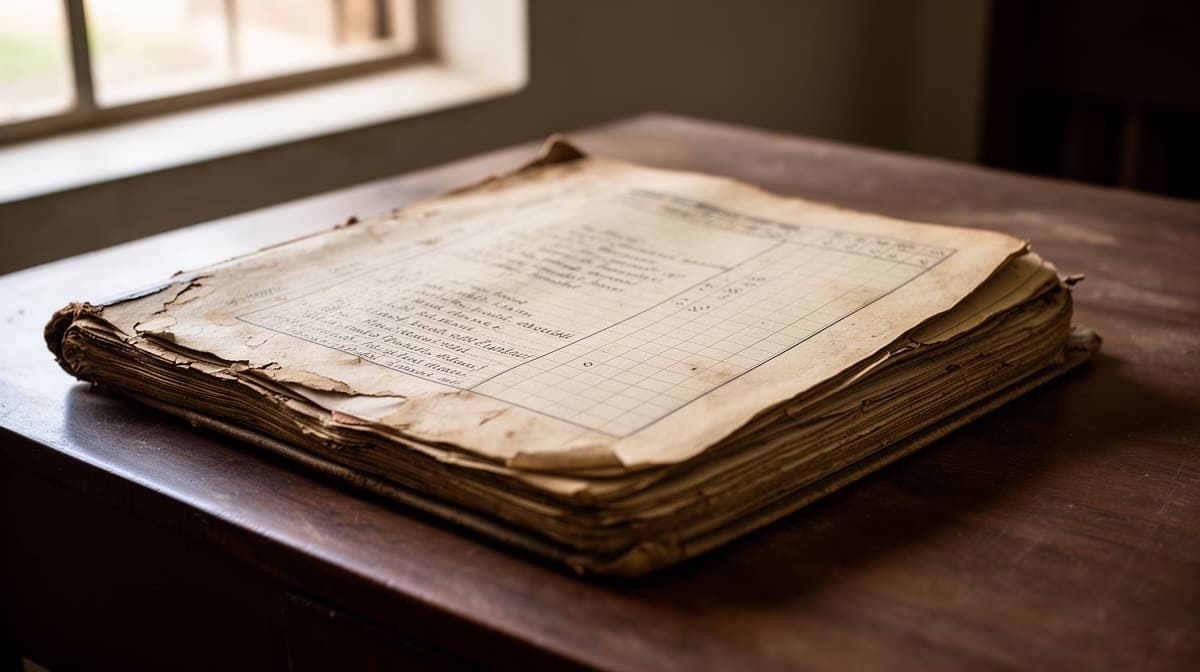
The appellant, Arjun Mohaniya, was convicted under Sections 363, 376(3) of the Indian Penal Code and Sections 3 and 4 of the Protection of Children from Sexual Offences (POCSO) Act, 2012. The prosecution alleged that on 01.07.2021, the appellant, aged 21 at the time, abducted the prosecutrix under the pretext of marriage, took her to multiple locations, and committed rape. The prosecution relied on the prosecutrix’s age as recorded in her scholar register to establish that she was a minor under the POCSO Act.
Key Facts
- The incident occurred on 01.07.2021
- The appellant was 21 years old on the date of the incident
- The prosecutrix’s age was recorded as 14 years in her scholar register
- The prosecution did not produce any birth certificate, school admission record, or medical examination report to substantiate the age entry
- The trial court relied solely on the scholar register to conclude the prosecutrix was a minor
- The appellant was sentenced to rigorous imprisonment of 3 years with fine of Rs.500/- for Section 363 IPC, 20 years with fine of Rs.1000/- for Section 376(3) IPC, and 20 years with fine of Rs.1000/- for POCSO Act Sections 3 and 4, with default stipulations
- The appellant has undergone actual incarceration of more than 4 years as of the date of the order
Procedural History
- 01.07.2021: Alleged incident
- 2022: Trial concluded; conviction and sentencing by Sessions Court
- 2023: Appeal filed before the High Court (CRA No. 6055 of 2025)
- 13.05.2026: Application under Section 430 of the Bharatiya Nagarik Suraksha Sanhita (BNSS) filed for suspension of sentence
The Parties' Positions
For the Appellant
- Counsel argued that the prosecutrix’s statement indicated she was a consenting party
- The scholar register entry was not corroborated by any official document
- The age recording was speculative, based on guesswork, and therefore unreliable
- The appellant has served over four years in custody, and the appeal may take years to conclude
- The appellant’s age at the time of the incident was 21, and he has no prior criminal record
For the Respondent/State
- Opposed suspension, arguing the gravity of the offence under POCSO Act warranted continued incarceration
- Contended that the scholar register was a public document and its entry should be presumed valid unless disproved
Relief Sought
The appellant sought suspension of his jail sentence pending final disposal of the appeal, release on bail, and deposit of fine if not already paid.
The Legal Issue
Can a conviction under the POCSO Act be sustained solely on the basis of an unverified age entry in a scholar register, when no other documentary or testimonial evidence establishes the prosecutrix’s age?
Arguments Presented
For the Appellant
The appellant’s counsel relied on the Division Bench judgment in Tejubai v. State of Madhya Pradesh, 2025(1) MPLJ Cr. 75, which held that age recorded in a scholar register without corroboration from birth records, school records, or medical examination cannot be the sole basis for determining minority under the POCSO Act. It was submitted that the prosecution failed to discharge its burden under Section 29 of the POCSO Act, which places the burden of proving the accused knew or had reason to believe the victim was a minor on the prosecution, not the accused. The absence of any proof of the source of the age entry rendered the record inadmissible as evidence.
For the Respondent/State
The State contended that the scholar register, being a public document under Section 35 of the Indian Evidence Act, carries a presumption of authenticity. It was argued that the appellant had not challenged the register during trial, and the trial court’s reliance on it was justified. The State also emphasized the seriousness of sexual offences against minors and the need to maintain deterrence.
The Court's Analysis
The Court examined the evidentiary foundation of the conviction and found that the sole basis for establishing the prosecutrix’s minority was the scholar register, which contained no indication of its source, date of entry, or verifying authority. The Court noted that the prosecution did not call any school official, parent, or guardian to authenticate the entry, nor did it produce any other corroborative evidence such as a birth certificate, hospital record, or age estimation report under Section 154 of the BNSS.
"The recording of the age of the prosecutrix in the scholar register cannot be the basis for conviction as already held by the Division Bench in the case of Tejubai v. State of Madhya Pradesh, 2025(1) MPLJ Cr. 75, further the age of the prosecutrix was recorded on the basis of guess."
The Court held that while Section 29 of the POCSO Act creates a presumption of age if the victim is shown to be under 18, this presumption is rebuttable and cannot be invoked where the underlying record is inherently unreliable. The Court emphasized that the prosecution’s failure to establish the provenance of the age entry rendered the entire conviction vulnerable. The Court further noted that the appellant had already served more than four years in custody, and the appeal, filed in 2025, was unlikely to be heard for a considerable period.
The Verdict
The application under Section 430 of the BNSS was allowed. The jail sentence of Arjun Mohaniya is suspended upon his deposit of the fine amount, if not already paid, and upon furnishing a personal bond of Rs.50,000 with one solvent surety of like amount, to be approved by the trial court. He is directed to appear before the Registry of the Madhya Pradesh High Court on 02.09.2026 and on all subsequent dates as directed. The suspension is subject to his compliance with all conditions of bail.
What This Means For Similar Cases
Age Evidence Must Be Verified, Not Assumed
- Practitioners must now challenge uncorroborated scholar register entries in POCSO cases as insufficient to establish minority
- Prosecution must produce at least one of the following: birth certificate, school admission register with date of birth, hospital delivery record, or medical age estimation report
- Reliance on guesswork or administrative entries without verification violates the standard of proof under Section 29 of the POCSO Act
Suspension of Sentence in Prolonged Appeals Is Now Justified
- Courts may grant interim bail where the accused has served more than half the potential sentence and the appeal is likely to take years
- The Court’s reasoning reinforces that prolonged incarceration without final adjudication violates the principle of audi alteram partem
- This precedent may be invoked in other POCSO and IPC cases involving lengthy appellate delays
Burden of Proof Remains on Prosecution
- The judgment reaffirms that the presumption under Section 29 of the POCSO Act is not a substitute for evidence
- Defence counsel should routinely file applications under Section 165 of the Indian Evidence Act to compel the prosecution to produce the source of age records
- Failure to do so renders the conviction unsustainable on appeal