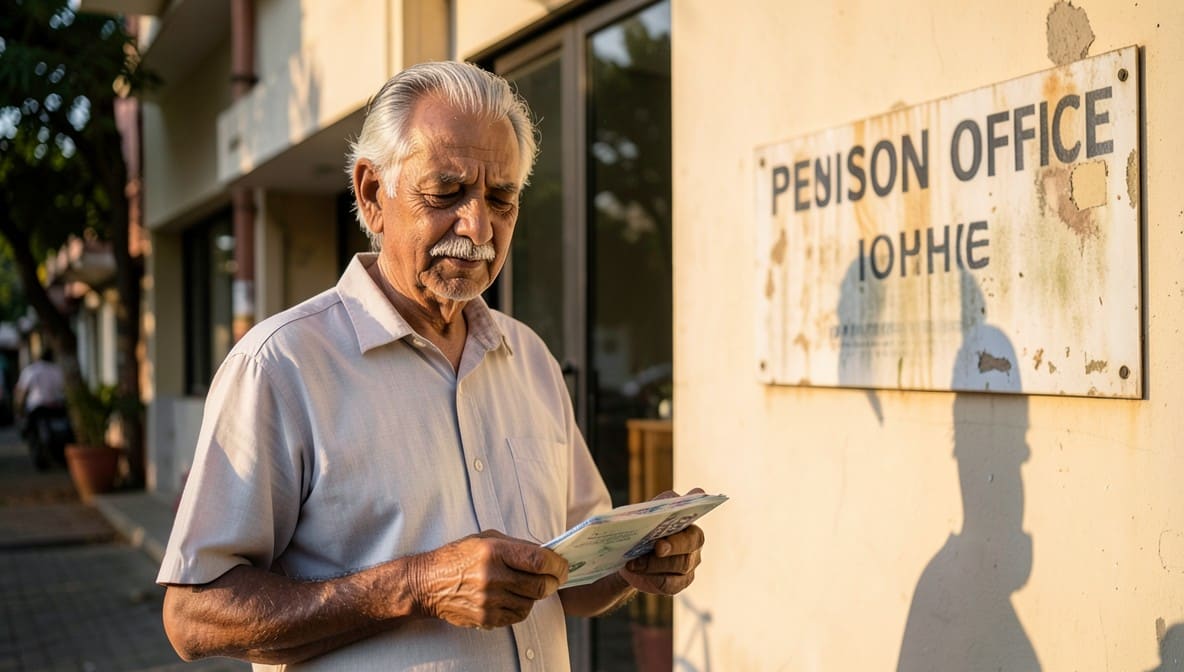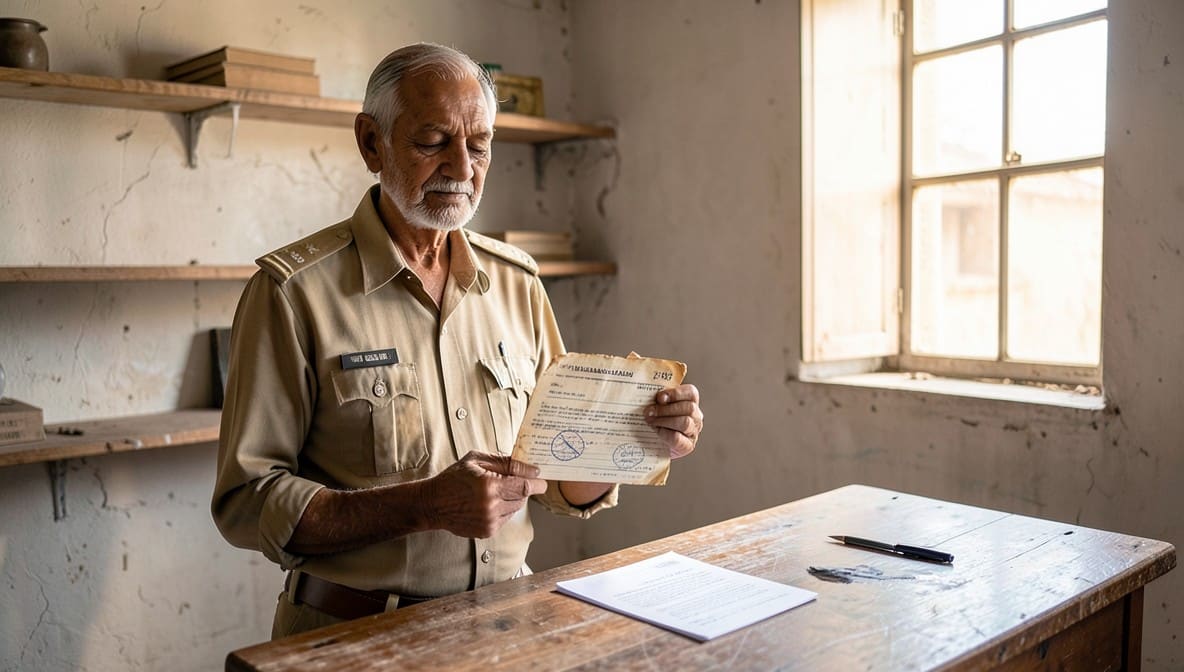
The Allahabad High Court has directed the State of Uttar Pradesh to consider the pension claims of Seasonal Collection Amins, affirming that their service must be evaluated under binding Supreme Court precedents that recognize irregular but continuous service as qualifying for retiral benefits. This order provides a clear procedural pathway for thousands of similarly situated employees seeking justice.
Background & Facts
The Dispute
The petitioners, five retired Seasonal Collection Amins, served in the Revenue Department of Uttar Pradesh on a seasonal, non-regular basis. Despite performing duties akin to regular employees - collecting land revenue, maintaining records, and enforcing revenue laws - they were denied pensionary and other retiral benefits on the ground that their employment was contractual and temporary. The petitioners contend that their service was continuous, substantial, and integral to the functioning of the department, and thus qualifies for recognition under established legal principles.
Key Facts
- The petitioners were engaged as Seasonal Collection Amins for multiple years, with service spanning from the 1980s to early 2000s
- Their duties included revenue collection, land record maintenance, and enforcement of revenue laws under the supervision of regular officers
- They received monthly stipends, not salaries, and were not formally absorbed into the regular cadre
- No formal appointment letters or service records were maintained by the department
- Upon retirement, they were informed that their service did not qualify for pension under Rule 17 of the CCS (Pension) Rules, 1972
- No departmental inquiry or formal termination order was issued to any petitioner
- Representations were made to the Revenue Department between 2015 and 2025, all of which remained unaddressed
Procedural History
- 2020 - 2025: Multiple informal representations submitted by petitioners to the Department of Revenue, Government of Uttar Pradesh
- 2026: Writ Petition No. 6115 of 2026 filed before the Allahabad High Court, Lucknow Bench
- 16 June 2026: Hearing conducted before Hon’ble Justice Arun Kumar Singh Deshwal
The Parties' Positions
For the Petitioners: The petitioners argued that their service was not casual or intermittent but continuous and essential to revenue administration. They relied on Prem Singh v. State of U.P. and Uday Pratap Thakur v. State of Bihar to assert that long-term, continuous service - even without formal regularization - must be considered for pensionary benefits if the nature of duties performed was identical to those of regular employees.
For the Respondent: The State did not dispute the factual nature of the petitioners’ service. The Standing Counsel conceded that the petitioners had rendered long-term service but argued that absence of formal appointment and budgetary allocation precluded pensionary entitlement. No legal argument was advanced to distinguish the facts from the Supreme Court precedents cited.
Relief Sought
The petitioners sought a writ of mandamus directing the State to:
- Recognize their service as qualifying service for pension
- Grant pensionary and other retiral benefits
- Compute arrears from the date of retirement
- Pay interest at 6% per annum from the date of retirement until realization
The Legal Issue
The central question was whether long-term, continuous service rendered by Seasonal Collection Amins, though not formally regularized, qualifies for pensionary benefits under constitutional principles of equality and reasonable classification, in light of the Supreme Court’s rulings in Prem Singh v. State of U.P. and Uday Pratap Thakur v. State of Bihar.
Arguments Presented
For the Petitioner
Shri Shyam Kinkar Pandey argued that the petitioners’ service was not episodic but sustained over decades, with duties indistinguishable from those of regular Revenue Department staff. He emphasized that the Supreme Court in Prem Singh held that service rendered in a de facto capacity, even without formal appointment, must be counted if the nature of work was permanent and continuous. He further cited Uday Pratap Thakur, where the Court ruled that denial of pension to long-serving non-regular employees violates Article 14 when similarly placed regular employees receive benefits. He contended that the State’s silence on representations amounted to a violation of Article 21 (right to livelihood).
For the Respondent
The Standing Counsel did not contest the factual matrix. He acknowledged the petitioners’ long service but asserted that absence of formal appointment, budgetary allocation, and statutory notification rendered them ineligible. He offered no legal distinction between the facts of this case and those in the cited Supreme Court judgments, effectively conceding the legal principle but deferring to administrative discretion.
The Court's Analysis
The Court observed that the State had not disputed the petitioners’ service history or the nature of their duties. It noted that the Supreme Court in Prem Singh v. State of U.P. had unequivocally held that "service rendered in a de facto capacity, if continuous and substantial, cannot be excluded from consideration for pension merely because of the absence of formal appointment." Similarly, in Uday Pratap Thakur, the Court emphasized that "the doctrine of equal pay for equal work extends to pensionary benefits where the nature of duties performed is identical and the service is long-standing."
"The State cannot retain the benefits of long-term service and then deny the attendant constitutional entitlements under the guise of procedural irregularities."
The Court further held that the petitioners’ representations had remained unaddressed for over a decade, amounting to a violation of the principle of reasonable opportunity under Article 14. The State’s failure to frame any policy or guidelines for such employees, despite their integral role in revenue administration, was deemed arbitrary and discriminatory.
The Court declined to directly grant pensionary benefits, recognizing that factual verification and computation of service duration required administrative adjudication. However, it emphasized that the State was bound by the Supreme Court’s precedents and could not evade its constitutional obligations through procedural technicalities.
The Verdict
The petition succeeded. The Court directed the petitioners to file a representation before Respondent No. 2 (Principal Secretary, Department of Revenue, Government of Uttar Pradesh) within 15 days from 16 June 2026. Upon receipt, the State shall consider and decide the representation within three months, strictly in accordance with the judgments in Prem Singh v. State of U.P. and Uday Pratap Thakur v. State of Bihar. The decision must include a reasoned order addressing the quantum of service, eligibility for pension, and computation of arrears.
What This Means For Similar Cases
Service Duration Trumps Formal Appointment
- Practitioners representing non-regular government workers must now argue that continuous, long-term service - even without appointment letters - qualifies for pension if duties were permanent and integral
- The burden shifts to the State to prove that the service was truly casual or intermittent
- Any denial must be supported by a reasoned order referencing specific policy provisions, not mere administrative convenience
Precedents Bind State Administrations
- Prem Singh and Uday Pratap Thakur now form binding precedent for all State departments in Uttar Pradesh and beyond
- Departments must proactively identify and evaluate claims of long-serving non-regular employees before retirement
- Delayed adjudication of representations will now attract judicial intervention under Article 226
Procedural Deadlines Are Enforceable
- The Court’s 15-day filing window and 3-month decision deadline establish a clear timeline for administrative compliance
- Failure to decide within three months will enable petitioners to file a fresh writ petition for contempt or specific direction
- This sets a template for future litigation against delayed pension decisions across all State services