The Patna High Court has clarified that anticipatory bail cannot be denied merely on speculative fears of future misuse of medical equipment, especially where no actual offence of prenatal sex determination has been alleged. This ruling reinforces the principle that bail must be granted when the prosecution fails to establish a prima facie case of intentional violation.
Background & Facts
The Dispute
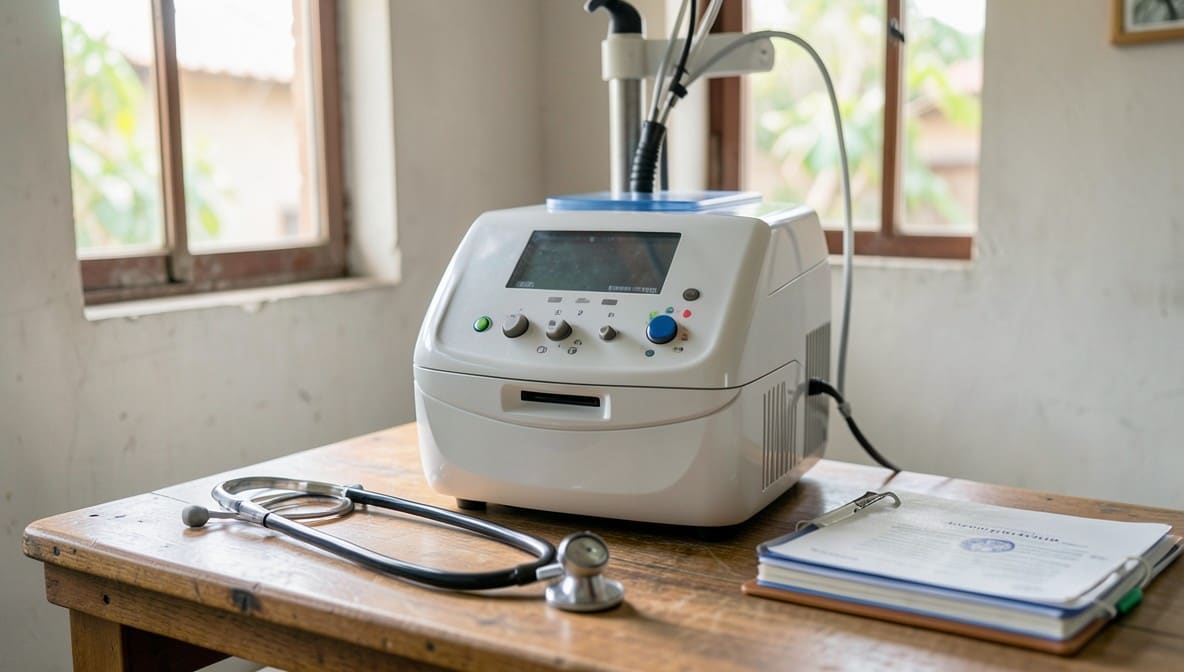
The petitioner, Alok Kumar Ranjan, son of Late Bhupendra Singh, is the owner of an ultrasound clinic located in Village Budhaura, P.S. Alauli, District Khagaria. He is apprehending arrest in connection with Daudnagar P.S. Case No. 126 of 2026, registered under Sections 318(2), 319(2), 271, 272 of the Bhartiya Nyaya Sanhita, 2023, and Sections 4, 18, and 23 of the Pre-Conception and Pre-Natal Diagnostic Techniques (PCPNDT) Act, 1994. The core allegation is that he operated an ultrasound clinic without a valid license issued by the competent authority.
Key Facts
- The petitioner applied for a license to operate the ultrasound clinic but the application was pending processing at the time of the raid.
- The clinic was operated under the direct supervision of Dr. Arvind Kumar Nanda, a qualified MBBS doctor and Medical Officer at Sadar Hospital, Jahanabad, with expertise in radiological examination.
- No complaint or allegation has been made regarding any prenatal sex determination, female foeticide, or misuse of the ultrasound machine for prohibited purposes.
- The petitioner has no prior criminal record and is described as a man of clean antecedents.
- The FIR was lodged following a raid conducted by authorities, based solely on suspicion that the clinic "may" be misused in the future.
- No evidence of actual violation of the PCPNDT Act, such as records of sex determination or termination, has been disclosed.
Procedural History
- 2026: FIR registered at Daudnagar P.S. under Case No. 126 of 2026.
- 09.06.2026: Petitioner filed Criminal Miscellaneous Application No. 37288 of 2026 before the Patna High Court seeking anticipatory bail.
- 09.06.2026: Oral order passed by the Court granting anticipatory bail.
Relief Sought
The petitioner sought anticipatory bail in the event of his arrest, with conditions including a bail bond of Rs. 10,000 and two sureties of like amount, to be furnished before the Sub-Divisional Judicial Magistrate, Daudnagar, within four weeks of the order.
The Legal Issue
The central question was whether anticipatory bail can be denied under Section 438 of the Bhartiya Nyaya Sanhita, 2023 when the prosecution has not established a prima facie case of intentional violation of the PCPNDT Act, and no allegation of prenatal sex determination exists against the accused.
Arguments Presented
For the Petitioner
Learned counsel, Mr. Ajay Kumar Thakur, submitted that the petitioner had applied for the requisite license and was in the process of compliance. The clinic was operated under the supervision of a qualified medical professional, eliminating any intent to violate the PCPNDT Act. No complaint or evidence of sex selection had been recorded. The FIR was based on speculative suspicion and not on any actual offence. The petitioner’s clean antecedents and lack of criminal intent warranted protection under the doctrine of personal liberty. Reliance was placed on Arnesh Kumar v. State of Bihar to argue that arrest should not be automatic in non-heinous offences without considering the necessity.
For the Respondent
The Additional Public Prosecutor opposed the bail prayer, contending that operating an ultrasound clinic without a license is a serious offence under the PCPNDT Act and that the mere possession of such equipment without authorization creates a presumption of potential misuse. The state argued that the gravity of the offence, given its societal implications, justified denial of anticipatory bail.
The Court's Analysis
The Court examined the nature of the allegations and found no factual basis to support the charge of prenatal sex determination. The prosecution had not produced any evidence of sex selection, termination, or even an attempt to conduct such procedures. The Court emphasized that the PCPNDT Act targets intentional violations aimed at sex selection, not mere administrative non-compliance in licensing. The absence of any complaint or investigation into actual misuse was decisive.
"The allegation of prenatal detection is not available against this petitioner, who is a man of clean antecedent."
The Court held that the FIR was premised on hypothetical future misconduct, not on any concrete act. The petitioner’s cooperation with the licensing process and the presence of a qualified medical officer negated any inference of criminal intent. The Court distinguished this case from those involving actual sex selection, where the offence is direct and proven. The Court further noted that the offence under the PCPNDT Act requires mens rea, and without any evidence of intent, the threshold for arrest is not met.
The Verdict
The petitioner succeeded. The Court granted anticipatory bail to Alok Kumar Ranjan in the event of his arrest or surrender before the trial court within four weeks of the order. He is directed to furnish a bail bond of Rs. 10,000 with two sureties of like amount each, to the satisfaction of the Sub-Divisional Judicial Magistrate, Daudnagar, in connection with Daudnagar P.S. Case No. 126 of 2026. The bail is subject to the conditions under Section 482(2) of the Bhartiya Nyaya Sanhita, 2023.
What This Means For Similar Cases
Licensing Deficiencies Do Not Automatically Constitute Criminal Offence
- Practitioners must argue that administrative lapses in licensing, without evidence of actual misuse, cannot justify arrest under statutes like the PCPNDT Act.
- Courts must distinguish between regulatory non-compliance and intentional criminal conduct.
Clean Antecedents and Supervised Operations Weigh Heavily in Bail Decisions
- Where a medical professional is directly supervising operations, the inference of criminal intent is significantly weakened.
- Petitioners should highlight supervisory structures and licensing efforts to counter speculative allegations.
Prima Facie Case Must Be Concrete, Not Speculative
- Prosecution must show more than suspicion of future misuse to justify denial of anticipatory bail.
- Absence of victim complaints or forensic evidence of violation renders arrest disproportionate under Arnesh Kumar v. State of Bihar.