The Madras High Court has held that a trial court cannot return an unnumbered plaint on maintainability grounds without first registering it and hearing the plaintiff in open court. The Court set aside a docket order returning a suit for declaration of title by adverse possession and permanent injunction, directing the trial court to number the plaint and adjudicate maintainability under Order VII Rule 11 CPC.
Background & Facts
The Dispute
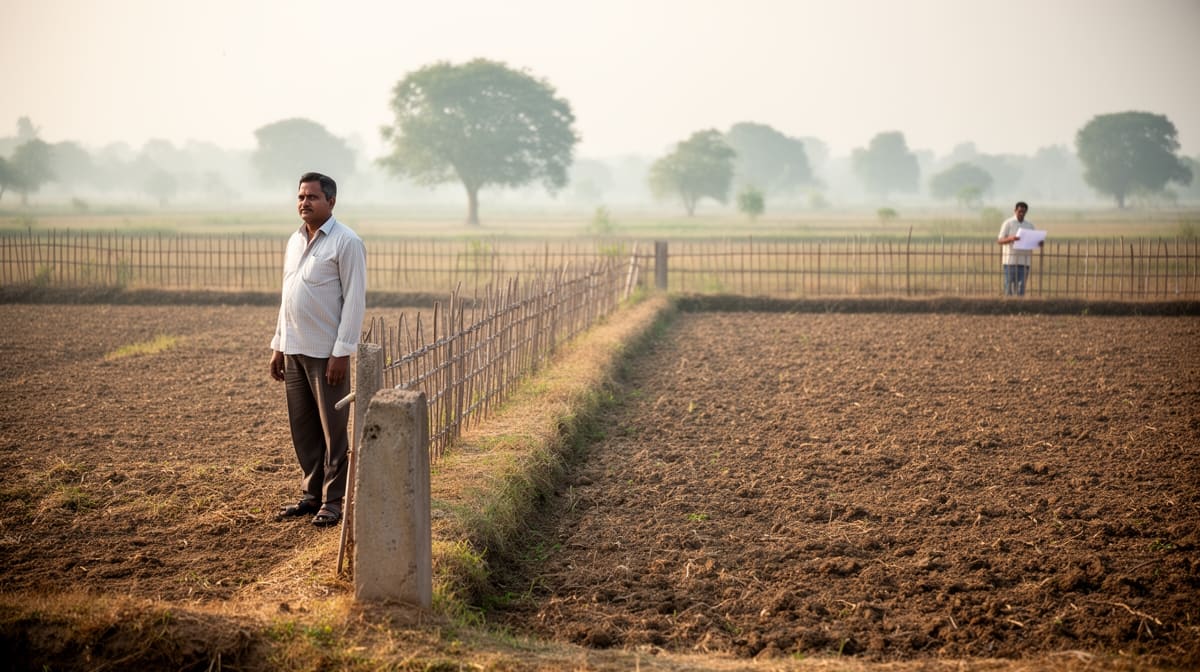
The petitioner, Pachiammal, claimed title by adverse possession over Government Poromboke land in Anjetti village, Krishnagiri district, alleging open, continuous, and uninterrupted enjoyment by her and her predecessors-in-title for over 60 years. The third respondent, the Tahsildar of Anjetty, issued a notice under Section 7 of the Tamil Nadu Land Encroachment Act, 1905 (Tamil Nadu Act No. III of 1905) calling upon the petitioner's husband to vacate the suit property. In response, the petitioner filed a plaint on June 2, 2023 seeking declaration of title by way of adverse possession and permanent injunction.
Key Facts
- The suit property is classified as Government Poromboke land located in Anjetti village, Krishnagiri district.
- The petitioner and her predecessors-in-title have allegedly been in possession for over 60 years openly, continuously, and uninterruptedly.
- The Tahsildar issued a notice dated February 7, 2023 under Section 7 of the Tamil Nadu Land Encroachment Act, 1905 to the petitioner's husband.
- The petitioner presented the plaint on June 2, 2023 before the District Munsif Court, Denkanikottai (Trial Court).
- The Trial Court returned the plaint on the same day, June 2, 2023, stating the suit was barred under Section 14 of the Tamil Nadu Land Encroachment Act, 1905.
- The petitioner re-presented the plaint on October 30, 2023 with citations to Addanki Adi Lakshmamma and Ors. vs. District Collector and Ors. (2007) and P. Ganesan vs. Commissioner and Ors. (Madurai Bench, Madras High Court, dated 04.10.2023) supporting maintainability.
- The Trial Court again returned the plaint on October 30, 2023, holding that proceedings had commenced under the 1905 Act as evidenced by the notice dated February 7, 2023, and jurisdiction of the Civil Court was specifically barred under Section 14.
- The Trial Court relied on The State of Tamilnadu vs. J. Venkatachalam (2018 LW (5) 234).
Procedural History
- June 2, 2023: Plaint presented in O.S. S.R. No. 1360 of 2023 before District Munsif Court, Denkanikottai; returned same day.
- October 30, 2023: Plaint re-presented with case law citations; returned again by docket order.
- 2023: Civil Revision Petition (CRP No. 4548 of 2023) filed under Article 227 of the Constitution before the Madras High Court.
- October 16, 2026: Matter reserved for orders.
- October 26, 2026: Judgment pronounced.
The Parties' Positions
For the Petitioner: The plaint sought declaration of title by adverse possession and permanent injunction. The petitioner did not challenge the notice issued under the 1905 Act or the proceedings initiated thereunder. The Trial Court erred in returning the plaint without numbering it, especially when re-presented with supporting case law.
For the Respondents: Paragraph 11 of the plaint admitted payment of penal charges (jz;lj;jPh;it), which meant the petitioner's possession was never adverse to the Government. The plaint was presented after issuance of notice under Section 7, and though not directly challenging the notice, the prayer for declaration and injunction effectively challenged it. The suit was therefore barred under Section 14 of the 1905 Act.
Relief Sought
The petitioner prayed for setting aside the docket order dated October 30, 2023 returning the unnumbered plaint, and a direction to the Trial Court to take the plaint on file and proceed with the suit.
The Legal Issue
The central question was whether a Civil Court can return an unnumbered plaint on the ground that the suit is barred by a special statute (Section 14 of the Tamil Nadu Land Encroachment Act, 1905) without first numbering the plaint and hearing the plaintiff on maintainability under Order VII Rule 11 CPC.
Arguments Presented
For the Petitioner
Learned Counsel submitted that the plaint did not assail the notice issued under the 1905 Act or the proceedings thereunder. The reliefs sought were declaration of title by adverse possession and permanent injunction, which are within the jurisdiction of a Civil Court. The Trial Court failed to consider this distinction and erred in returning the plaint without numbering it, particularly when the plaint was re-presented with judicial precedents supporting maintainability. Reliance was placed on the principle that a Court must register the suit and hear the plaintiff before rejecting the plaint.
For the Respondents
The Government Advocate contended that the petitioner's own admission of paying penal charges in Paragraph 11 of the plaint demonstrated that her possession was permissive, not adverse. The notice under Section 7 had been issued on February 7, 2023, initiating proceedings under the 1905 Act. Even though the plaint did not directly challenge the notice, the reliefs sought effectively contested the encroachment proceedings. Therefore, the Civil Court's jurisdiction was barred under Section 14 of the 1905 Act, and the Trial Court correctly returned the plaint.
The Court's Analysis
The Court examined the plaint prayer and found that the revision petitioner had not challenged the notice issued or the proceedings initiated under the Tamil Nadu Land Encroachment Act, 1905. Consequently, the bar under Section 14 of the said Act did not operate as an obstacle to numbering the plaint. The Court emphasized that even if the Trial Court held a prima facie view that the suit was not maintainable, the correct procedure was to number the plaint, register it in the Suit Register, and post the matter for hearing on maintainability.
"Further, if a Court on demurrer sees that the Suit is barred by limitation or by any law in force at the time of scrutinising the plaint, the Court shall assign Suit number to the plaint, register the same in the Suit Register and post the matter under the cause list caption 'for hearing on maintainability'. After hearing the plaintiffs' side in open court and after perusing the plaint and the plaint documents, if the Trial Court is not convinced, it may pass an Order under Order VII Rule 11 of CPC rejecting the plaint."
The Court relied on its decision in Government of Tamil Nadu vs. Ponnusamy (2026 SCC OnLine Mad 767), which elaborated on the procedural safeguards: numbering the plaint ensures a formal decree can be drawn upon rejection, enabling an appeal under Section 96 CPC; unnumbered suit files are susceptible to misplacement and tampering; and the E-Courts portal requires a suit number for status tracking. The Court held that the procedure adopted by the Trial Court - returning the plaint without numbering it, especially after it was re-presented with case law citations - was erroneous and not justifiable.
The Verdict
The petitioner succeeded. The Court set aside the Trial Court's docket order dated October 30, 2023 returning the unnumbered plaint in O.S. S.R. No. 1360 of 2023. The petitioner was directed to represent the plaint within 30 days from October 26, 2026. Upon representation, the Trial Court shall number the plaint, post the matter under the caption "for hearing on maintainability", hear the petitioner in open court on maintainability, and decide the issue on its own merits untrammelled by any observations of the High Court on the merits of the case. The Civil Revision Petition was allowed with no order as to costs. The Registry was directed to return the original plaint to the petitioner's counsel.
What This Means For Similar Cases
Plaint Registration Is Mandatory Before Rejection
Trial courts cannot bypass the statutory scheme of the CPC by returning plaints without numbering them. Order VII Rule 11 CPC contemplates a formal process: assign a suit number, register the suit, hear the plaintiff in open court, and then pass a reasoned order rejecting the plaint. This order constitutes a decree appealable under Section 96 CPC. Returning an unnumbered plaint deprives the plaintiff of appellate remedy and creates administrative opacity.
Jurisdictional Bars Require Adjudication, Not Summary Return
A plea that a suit is barred by a special statute (such as Section 14 of the Tamil Nadu Land Encroachment Act, 1905) is a matter of maintainability to be decided after hearing the plaintiff, not a ground for administrative return at the filing stage. The Court clarified that where the plaint does not directly challenge proceedings under the special statute, the jurisdictional bar does not automatically apply. Practitioners must ensure plaints are carefully drafted to avoid unnecessary jurisdictional challenges.
Procedural Compliance Protects Both Parties
The requirement to number plaints serves systemic integrity: it prevents misplacement or deliberate suppression of case records, enables tracking on the E-Courts portal, and ensures that rejection orders are formal decrees. Lawyers should insist on compliance with this procedure when trial courts attempt to return plaints without registration. If a court refuses, a revision under Article 227 lies to enforce the correct procedure.