The Bombay High Court has clarified that when determining whether a suit is barred by limitation under Order VII Rule 11 of the Code of Civil Procedure, 1908, courts must examine only the averments in the plaint, not the defendant’s contentions. The judgment underscores that a cause of action arising from subsequent events - such as the reconstruction of a property after destruction - cannot be dismissed on the basis of earlier litigation, particularly when the earlier suit was withdrawn without adjudication.
Background & Facts
The Dispute
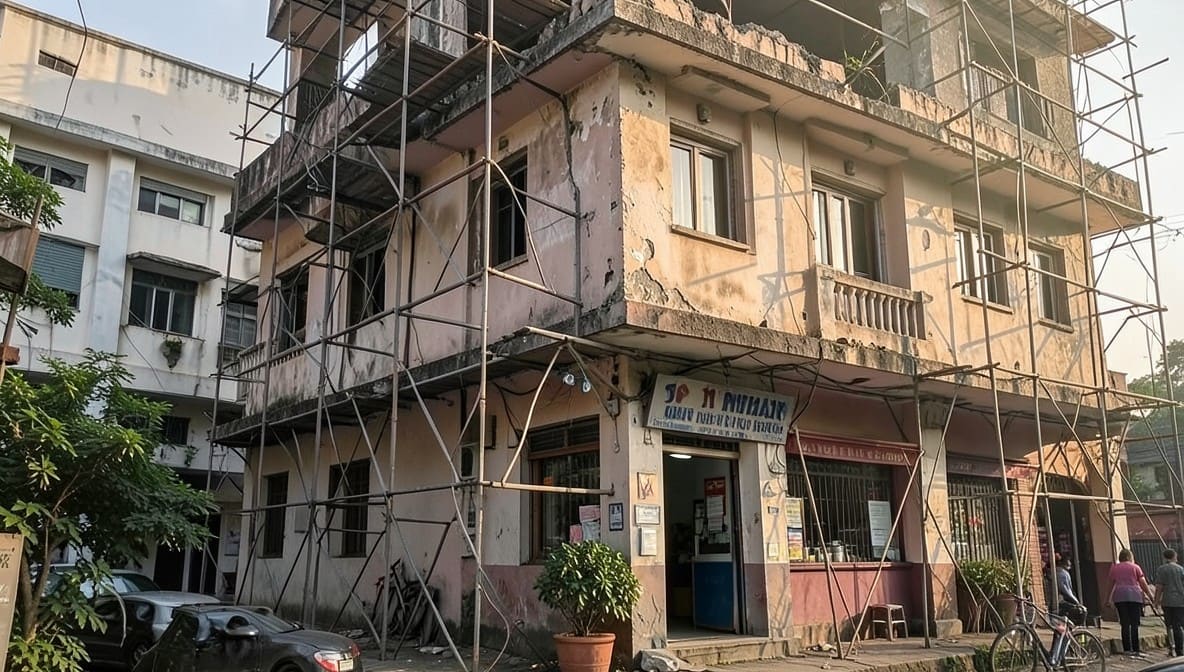
The petitioner, Mahe Alam Mehboob Ahmed Shaikh, a sole proprietor of M/s. M. A. Enterprises, was a tenant in Shop No. 4, Ismail Building, Mumbai. The respondents, Mr. Sabir Yasin Nirban and Mrs. Naseem Sabir Nirban, were the landlords of the premises. The dispute arose when the Ismail Building, which housed the suit premises, was destroyed by fire on 4th October, 2020. The respondents obtained necessary permissions from MHADA and MCGM to reconstruct the building, which was completed in 2023. Despite the petitioner’s requests, the respondents refused to hand over possession of the reconstructed premises, leading to the filing of the present suit.
Key Facts
- The respondents had earlier filed a suit for eviction (R.A.E. & R. Suit No. 247/401 of 2012) against the petitioner and his brother in 2012.
- The eviction suit was unconditionally withdrawn on 21st March, 2024.
- The Ismail Building, including the suit premises, was destroyed by fire on 4th October, 2020.
- The respondents obtained NOC from MHADA and MCGM for reconstruction, which was completed in 2023.
- The petitioner requested possession of the reconstructed premises but was denied by the respondents.
- The petitioner filed R.A.D. Suit No. 47 of 2024 on 21st June, 2023 in the Small Causes Court, seeking a declaration of tenancy and restoration of possession.
Procedural History
- 2012: Respondents filed R.A.E. & R. Suit No. 247/401 of 2012 for eviction.
- 21.03.2024: Eviction suit withdrawn unconditionally by the respondents.
- 21.06.2023: Petitioner filed R.A.D. Suit No. 47 of 2024 in the Small Causes Court.
- Exhibit-15: Respondents filed an application under Order VII Rule 11 CPC for rejection of the plaint on the ground of limitation.
- Trial Court: Rejected the respondents’ application, holding that the suit was not barred by limitation.
- Revision Application No. 290 of 2024: Filed by the respondents before the Appellate Bench of the Small Causes Court.
- Appellate Court: Allowed the revision application, dismissed the suit as barred by limitation, observing that the suit was filed in 2023, while the earlier eviction suit was pending since 2012.
- Present Petition: The petitioner challenged the Appellate Court’s order before the Bombay High Court.
Relief Sought
The petitioner sought:
- Quashing of the Appellate Court’s order dated 15th June, 2024 (as implied by the judgment).
- Restoration of R.A.D. Suit No. 47 of 2024 to its original position for adjudication on merits.
- A declaration that the suit was not barred by limitation.
The Legal Issue
The central question was whether a suit for declaration of tenancy, filed after the reconstruction of a property destroyed by fire, is barred by limitation under Order VII Rule 11 CPC, merely because an earlier eviction suit was pending since 2012 and withdrawn in 2024.
Arguments Presented
For the Petitioner
- The cause of action for the suit arose only in 2023, when the respondents failed to restore possession after reconstructing the building.
- The earlier eviction suit (R.A.E. & R. Suit No. 247/401 of 2012) was withdrawn unconditionally, which admitted the petitioner’s tenancy.
- The plaint must be read as a whole, and the averments therein clearly indicate that the cause of action arose post-reconstruction.
- The respondents’ termination of tenancy in 2011 was invalidated by the withdrawal of the eviction suit.
For the Respondents
- The petitioner ought to have filed a counter-claim in the earlier eviction suit (R.A.E. & R. Suit No. 247/401 of 2012) for declaration of tenancy.
- The present suit was clearly barred by limitation, as it was filed 11 years after the termination of tenancy.
- In the earlier suit, the respondents had denied the petitioner’s tenancy, and the withdrawal of the suit did not automatically admit tenancy.
The Court's Analysis
The Court relied on the Supreme Court’s decision in Srihari Hanumandas Totala v. Hemant Vithal Kamat and Others ((2021) 9 SCC 99), which laid down the principles for deciding an application under Order VII Rule 11(d) CPC (rejection of plaint on the ground of limitation). The key observations from the judgment were:
"18. It is clear that in order to consider Order 7 Rule 11, the court has to look into the averments in the plaint and the same can be exercised by the trial court at any stage of the suit. It is also clear that the averments in the written statement are immaterial and it is the duty of the Court to scrutinize the averments/pleas in the plaint. In other words, what needs to be looked into in deciding such an application are the averments in the plaint."
"20. On a perusal of the above authorities, the guiding principles for deciding an application under Order 7 Rule 11(d) can be summarized as follows: (i) To reject a plaint on the ground that the suit is barred by any law, only the averments in the plaint will have to be referred to; (ii) The defense made by the defendant in the suit must not be considered while deciding the merits of the application; (iii) To determine whether a suit is barred by res judicata, it is necessary that (i) the ‘previous suit’ is decided, (ii) the issues in the subsequent suit were directly and substantially in issue in the former suit; (iii) the former suit was between the same parties or parties through whom they claim, litigating under the same title; and (iv) that these issues were adjudicated and finally decided by a court competent to try the subsequent suit; and (iv) Since an adjudication of the plea of res judicata requires consideration of the pleadings, issues and decision in the ‘previous suit’, such a plea will be beyond the scope of Order 7 Rule 11 (d), where only the statements in the plaint will have to be perused."
Applying these principles, the Court held:
- The plaint must be read as a whole, and the averments therein clearly stated that the cause of action arose in 2023, not 2012.
- The withdrawal of the earlier eviction suit (R.A.E. & R. Suit No. 247/401 of 2012) invalidated the termination of tenancy, as there was no adjudication on merits.
- The destruction of the building by fire in 2020 and its reconstruction in 2023 were subsequent events that gave rise to a fresh cause of action.
- The respondents’ failure to restore possession after reconstruction triggered the petitioner’s right to seek a declaration.
- The Appellate Court erred in dismissing the suit on the ground of limitation, as it considered the defendant’s contentions rather than confining itself to the plaint averments.
The Verdict
The Bombay High Court set aside the impugned order passed by the Appellate Bench of the Small Causes Court in Revision Application No. 290 of 2024. The Court restored R.A.D. Suit No. 47 of 2024 to its original position for adjudication on merits. The findings in the judgment were prima facie and limited to the disposal of the petition, with the suit to be decided on its own merits. No order as to costs was passed.
What This Means For Similar Cases
Limitation Must Be Determined From Plaint Averments Alone
- Courts must strictly confine themselves to the plaint averments when deciding an application under Order VII Rule 11 CPC.
- Defendant’s contentions in the written statement or arguments cannot be considered for determining limitation.
- This principle applies even if the defendant raises a strong limitation defense based on earlier litigation.
Withdrawal of Suit Does Not Adjudicate Rights
- The unconditional withdrawal of a suit does not adjudicate the rights of the parties.
- If a landlord withdraws an eviction suit, it does not automatically terminate the tenancy, unless the withdrawal is expressly on merits.
- Tenants can rely on the withdrawal to argue that their possession stands confirmed.
Cause of Action Can Arise From Subsequent Events
- A cause of action can arise from subsequent events (e.g., destruction and reconstruction of property), even if earlier litigation was pending.
- Limitation does not run from the date of the earlier suit if the right to sue accrues later.
- Practitioners should plead subsequent events clearly in the plaint to avoid dismissal on limitation grounds.
Practical Implications for Property Disputes
- Tenants should document requests for possession after reconstruction to establish a fresh cause of action.
- Landlords must ensure that withdrawal of suits is on merits if they wish to terminate tenancy.
- Lower courts must scrutinize plaint averments carefully before dismissing suits on limitation grounds.