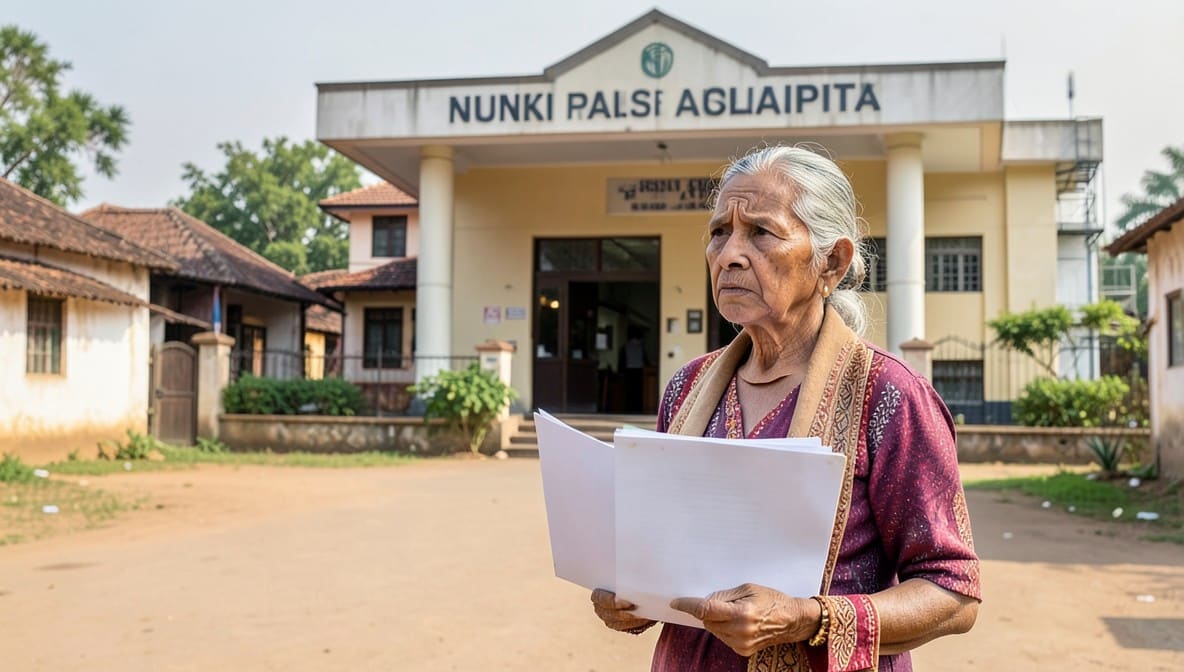
The Punjab High Court has reaffirmed that procedural technicalities must not defeat substantive justice, particularly when a revision petition has remained pending for over a decade and the legal heirs seek substitution without causing prejudice to the opposite party. In a significant ruling, the Court allowed the substitution of daughters as legal heirs of the deceased petitioner, condoning a delay of more than 12 years and setting aside any abatement, emphasizing that cases must be decided on merits.
Background & Facts
The Dispute
The present matter arises from C.R. No. 12 of 2012, a revision petition filed by Roop Bani against respondents No. 1 and 2. The petition was admitted on 13.06.2012. Roop Bani, the original petitioner, passed away on 06.06.2013. Her legal heirs, Smt. Gurpreet Kaur and Smt. Rasna Preet, her daughters, now seek to be substituted in her place. The application for substitution was filed in 2025, more than 12 years after the petitioner’s death and over a decade after the revision petition was admitted.
Key Facts
- The revision petition was admitted on 13.06.2012
- Petitioner Roop Bani died on 06.06.2013
- The applicants were unaware of the pendency of the litigation until approximately one month prior to filing the application in 2025
- The GPA (General Power of Attorney) holder who originally filed the petition on behalf of Roop Bani informed the applicants of the litigation and requested the death certificate
- The respondents were represented by the same GPA holder who had acted for Roop Bani during the pendency of the revision petition
- No application under Order 22 Rule 10-A of the Code of Civil Procedure was filed by the respondents to bring the death of the petitioner on record
- The revision petition has remained pending before the Court since 2012 without final adjudication
Procedural History
- 13.06.2012: Revision petition admitted by the Court
- 06.06.2013: Petitioner Roop Bani died
- 2025: Application for substitution filed by legal heirs
- 17.03.2026: Hearing before the Punjab High Court
- 28.04.2026: Listed for final consideration
The Parties' Positions
For the Applicants
The applicants submitted that they were unaware of the litigation due to lack of communication from the GPA holder. They sought substitution as legal heirs, praying for condonation of delay under Section 5 of the Limitation Act and setting aside of abatement. They emphasized that the same counsel and GPA holder continued to represent the deceased’s interest throughout, and no prejudice would arise from substitution.
For the Respondents
The respondents opposed the application on two grounds: first, that no separate application under Section 5 of the Limitation Act was filed to condone the delay of over 12 years; second, that the story of unawareness was frivolous and concocted. They argued that the application was not maintainable and that abatement had already occurred.
Relief Sought
The applicants sought:
- Substitution in place of the deceased petitioner Roop Bani
- Condonation of delay exceeding 12 years
- Setting aside of abatement, if any
- Permission to amend the memo of parties to reflect their names as parties
The Legal Issue
Whether the legal heirs of a deceased petitioner in a pending revision petition may be substituted after a delay of over 12 years, where no application under Order 22 Rule 10-A CPC was filed by the respondents to record the death, and no prejudice is caused to them?
Arguments Presented
For the Appellant/Petitioner
The applicants relied on the settled principle that litigation must be decided on merits and not on technicalities. They cited State of Punjab v. Baldev Singh and Rajinder Singh v. State of Punjab to argue that where the same representative continued to act on behalf of the deceased, and the respondents were aware of the petitioner’s death but failed to invoke Order 22 Rule 10-A CPC, substitution must be allowed. They emphasized that the delay was not deliberate and that the respondents suffered no prejudice.
For the Respondent/State
The respondents contended that the application was defective for not filing a separate application under Section 5 of the Limitation Act for condonation of delay. They argued that abatement had automatically occurred upon the death of the petitioner and that the delay of 12 years was inordinate and unexplained. They further alleged that the claim of unawareness was fabricated.
The Court's Analysis
The Court examined the procedural posture of the case and noted that the revision petition had been admitted in 2012 and remained pending for over a decade. Crucially, the respondents never filed an application under Order 22 Rule 10-A CPC to bring the death of the petitioner on record, despite being represented by the same GPA holder who had acted for Roop Bani.
"It is settled law that the cases should be decided on merits and not on technicalities."
The Court observed that the respondents had not suffered any prejudice, as the same representative had continued to act on behalf of the deceased petitioner throughout. The failure to invoke Order 22 Rule 10-A CPC was deemed a procedural lapse on their part, not a ground to deny justice to the legal heirs.
The Court further held that while Section 5 of the Limitation Act typically requires a separate application for condonation, its strict application is not mandatory where substitution is sought under Order 22 Rule 10-A CPC, particularly when the delay is explained and no prejudice is caused. The Court emphasized that the object of Order 22 Rule 10-A CPC is to ensure continuity of litigation, not to extinguish rights on procedural grounds.
The Court rejected the respondents’ allegation of fabrication, noting that the applicants’ explanation - that they were unaware of the litigation until recently - was plausible given the absence of formal communication from the respondents or the court.
The Verdict
The application for substitution was allowed. The Court condoned the delay of over 12 years and set aside any abatement. Smt. Gurpreet Kaur and Smt. Rasna Preet, daughters of the deceased petitioner Roop Bani, were ordered to be brought on record as legal heirs. The amended memo of parties was directed to be placed at an appropriate place. The revision petition was listed for final hearing on 28.04.2026.
What This Means For Similar Cases
Substitution Is Not Barred by Delay Alone
- Practitioners may apply for substitution of legal heirs even after long delays if the litigation has remained pending and no prejudice is caused to the opposite party
- The failure of respondents to invoke Order 22 Rule 10-A CPC waives their right to object to substitution on grounds of abatement
- Courts will prioritize substantive justice over procedural technicalities when the case has been pending for years
No Separate Section 5 Application Required in Substitution Matters
- A standalone application under Section 5 of the Limitation Act is not mandatory when substitution is sought under Order 22 Rule 10-A CPC
- Delay condonation may be inferred from the overall circumstances, including the conduct of the respondents and the nature of the pending proceeding
- Courts may treat the substitution application itself as sufficient to invoke equitable relief
Continuous Representation Preserves Litigation Continuity
- If the same counsel or representative continues to act for the deceased party, courts are more likely to allow substitution
- This principle protects heirs from being penalized due to the negligence or inaction of the original representative
- Practitioners should promptly file substitution applications upon learning of a party’s death, but delay alone will not defeat the claim if the case remains pending