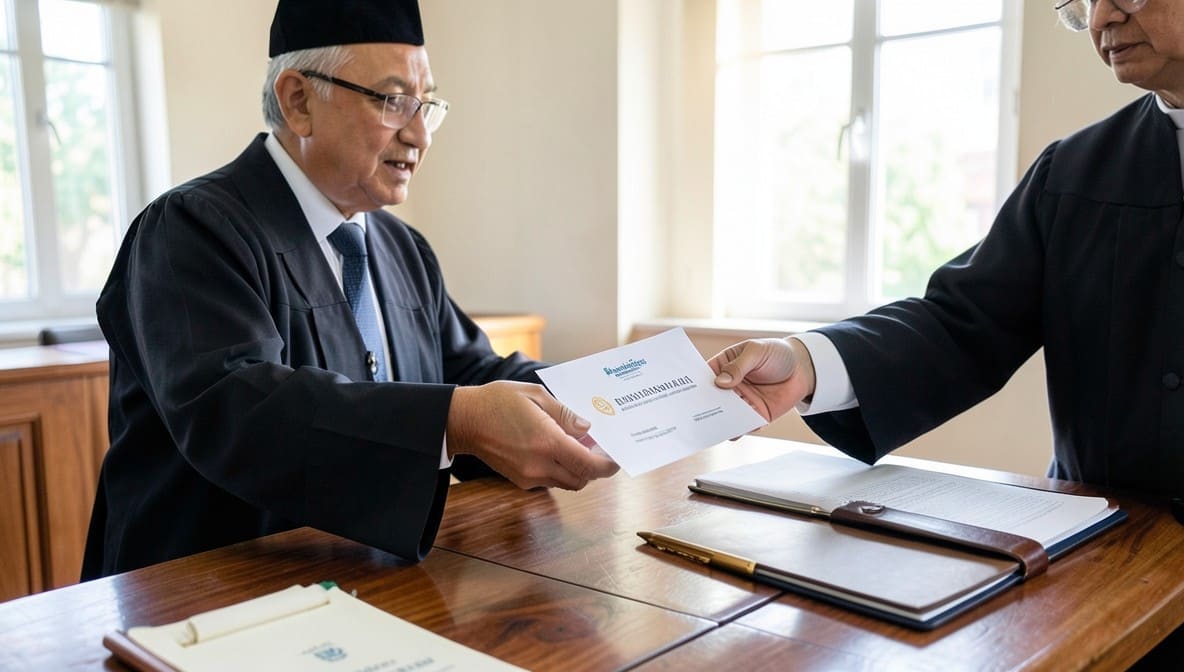
The Punjab & Haryana High Court has clarified that the doctrine of lis pendens does not automatically bar the impleadment of a transferee who purchases property during the pendency of a suit, provided the transferee’s presence is necessary for a complete adjudication. This ruling reinforces the discretionary power of civil courts under Order 1 Rule 10 CPC to ensure justice is not defeated by technicalities.
Background & Facts
The Dispute
The plaintiffs, Sukhwinder Kaur and others, filed Civil Suit No. 1836 of 2022 before the Civil Judge, Junior Division, Moga, seeking declaration of their ownership over ancestral joint Hindu family property. The defendants, including defendant No. 1, were alleged to be co-owners in equal shares. During the pendency of the suit, defendant No. 1 sold a share of the suit property to Gurpinder Kaur, respondent No. 5. Gurpinder Kaur subsequently applied under Order 1 Rule 10 CPC to be impleaded as a defendant, which was allowed by the trial court on 06.11.2025. The petitioners challenged this order before the High Court under Article 227, contending that the sale was void under the doctrine of lis pendens.
Key Facts
- The suit property is ancestral, coparcenary, joint Hindu family property held jointly by the parties.
- The suit was instituted in 2022 and was at an early stage, with defendant No. 1 having filed his written statement.
- Defendant No. 1 executed a registered sale deed in favour of Gurpinder Kaur during the pendency of the suit, without seeking court permission.
- Gurpinder Kaur filed an application for impleadment shortly after acquiring the property.
- The trial court relied on Yogesh Goyanka v. Goving & Ors. (2024(3) CCC 598) to allow the impleadment.
- The petitioners relied on Bibi Zubaida Khatoon v. Nabi Hassan Saheb and Amitchand Aggarwal v. Nabi Hasan to argue that the transfer was void and the transferee could not be added.
Procedural History
- 2022: Civil Suit No. 1836 of 2022 filed by plaintiffs against defendants, including defendant No. 1.
- During pendency (date unspecified): Defendant No. 1 sold a share of the suit property to Gurpinder Kaur.
- 06.11.2025: Civil Judge, Junior Division, Moga, allowed application under Order 1 Rule 10 CPC to implead Gurpinder Kaur as defendant.
- 12.03.2026: Petition under Article 227 filed before Punjab & Haryana High Court challenging the impleadment order.
Relief Sought
The petitioners sought quashing of the order dated 06.11.2025, arguing that the transferee should not be allowed to be impleaded as the sale was void under lis pendens, and that the trial court committed a manifest error.
The Legal Issue
The central question was whether a transferee who purchases property during the pendency of a suit, without court permission, can be impleaded as a defendant under Order 1 Rule 10 CPC, despite the doctrine of lis pendens, and whether such impleadment prejudices the plaintiff’s rights.
Arguments Presented
For the Petitioners
Learned counsel argued that the sale by defendant No. 1 during pendency of the suit was void under the doctrine of lis pendens, as per Section 52 of the Transfer of Property Act, 1882. Citing Bibi Zubaida Khatoon v. Nabi Hassan Saheb and Amitchand Aggarwal v. Nabi Hasan, they contended that transferees during litigation cannot be added as parties, especially when the sale is unapproved by court. They further argued that allowing impleadment would undermine the sanctity of pending litigation and enable collusive transfers.
For the Respondents
The respondents, through counsel, argued that Order 1 Rule 10 CPC grants wide discretionary power to courts to add necessary or proper parties at any stage. They relied on Sulthan Said Ibrahim v. Prakasan & Ors. (2025(3) RCR (Civil) 176) and Yogesh Goyanka v. Goving & Ors. (2024(3) CCC 598), emphasizing that the suit was still at an early stage and that Gurpinder Kaur’s presence was essential for complete adjudication. They distinguished Amitchand Aggarwal on grounds that the application in that case was filed at the fag end of litigation, unlike the present case.
The Court's Analysis
The Court examined the scope of Order 1 Rule 10 CPC, particularly sub-rule (2), which permits the court to add or strike out parties at any stage to ensure a just and complete adjudication. The Court emphasized that the power is discretionary and must be exercised in light of the facts and circumstances of each case.
"A necessary party is one without whom no effective decree can be passed, while a proper party is one whose presence is required for complete adjudication."
The Court held that the doctrine of lis pendens does not render a transfer void ab initio, but merely renders it subject to the outcome of the suit. It further clarified that the transferee does not acquire any independent right but merely steps into the shoes of the transferor. Therefore, impleading the transferee allows the court to adjudicate the entire dispute in one proceeding, avoiding multiplicity of litigation.
The Court distinguished Amitchand Aggarwal, noting that in that case, the application for impleadment was filed years after the suit commenced and at a late stage, causing prejudice. In contrast, here, the suit was in its infancy, the written statement of defendant No. 1 had already been filed, and the transferee sought impleadment promptly. The Court found no prejudice to the plaintiffs, as Gurpinder Kaur would be bound by the written statement already filed by defendant No. 1.
The Court also affirmed that the trial court’s decision was neither manifestly erroneous nor illegal, and that the exercise of discretion was well within the bounds of established precedent.
The Verdict
The petition was dismissed. The High Court upheld the order dated 06.11.2025 allowing the impleadment of Gurpinder Kaur as a defendant. It clarified that she shall be bound by the written statement already filed by defendant No. 1 and shall not be entitled to file a separate written statement unless permitted by the trial court. The Court emphasized that the transferee’s rights are derivative and subject to the final outcome of the suit.
What This Means For Similar Cases
Impleadment Is Permissible at Early Stages
- Practitioners may now confidently seek impleadment of transferees during the initial stages of a suit, provided the transfer occurred during litigation and the transferee’s presence is necessary for complete adjudication.
- Delayed applications for impleadment, especially near trial or judgment, remain vulnerable to rejection.
Lis Pendens Does Not Bar Party Addition
- A sale during pendency is not void; it is merely subject to the suit’s outcome.
- Courts will prioritize judicial economy and complete adjudication over rigid application of lis pendens.
Written Statement Binding on Transferee
-
A transferee impleaded under Order 1 Rule 10 CPC is bound by the existing written statement of the transferor unless permitted to file a separate one.
-
This prevents dilution of the defendant’s defence and ensures procedural fairness.
-
Always file impleadment applications promptly after acquisition of interest.
-
Cite Yogesh Goyanka and Sulthan Said Ibrahim to support early-stage impleadment.
-
Avoid relying on Amitchand Aggarwal unless the application is delayed or prejudicial.