The High Court of Himachal Pradesh dismissed an appeal against acquittal under Section 138 of the Negotiable Instruments Act, holding that the complainant’s notice failed to mention the cheque amount, a mandatory ingredient, and that the alleged material alteration was initialled by the accused, thus not vitiating the instrument. The Court affirmed the trial court’s acquittal, emphasizing the limited scope of interference with acquittals in NI Act cases.
Background & Facts
The Dispute
The dispute arose from a complaint filed under Section 138 of the Negotiable Instruments Act, 1881, alleging that the accused issued a dishonoured cheque for ₹45,000 after borrowing the sum from the complainant in June 2013.
Key Facts
- In the first week of June 2013, the accused approached the complainant and demanded ₹45,000, agreeing to repay the amount on or before 11 August 2013.
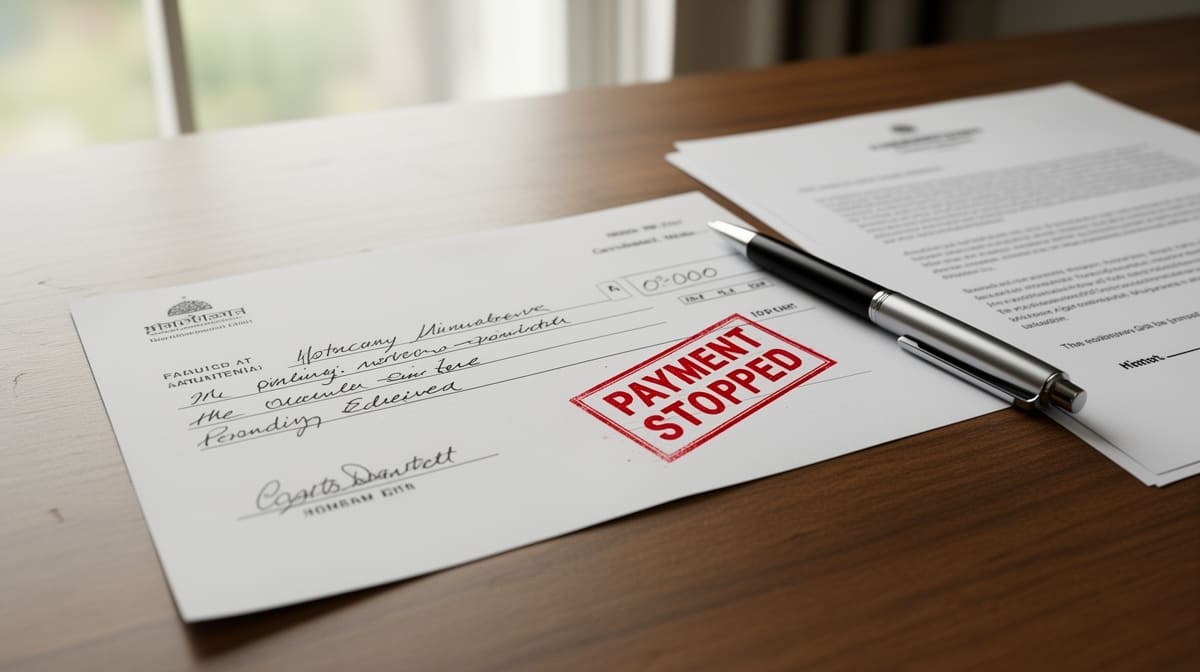
- The complainant paid ₹45,000 to the accused, who issued a cheque bearing the date 11 March 2006, later altered to 11 August 2013; the alteration was initialled by the accused.
- The cheque was presented to the H.P. State Cooperative Bank and returned unpaid with the endorsement “insufficient funds”.
- The complainant issued a notice to the accused on 26 October 2013 demanding payment; the notice did not specify the amount to be paid.
- Despite service of the notice, the accused failed to make payment within the statutory period.
- The complaint was filed before the learned Judicial Magistrate First Class, Karsog, leading to trial.
- The trial court acquitted the accused on 3 June 2015, holding that the date alteration constituted a material alteration vitiating the cheque and that the notice was defective for omitting the amount.
- The complainant appealed the acquittal to the High Court of Himachal Pradesh (Cr. Appeal No. 289 of 2015).
Procedural History
- June 2013 (first week): Accused demanded ₹45,000 from complainant; agreed to repay by 11.08.2013.
- 11.03.2006 (original cheque date): Cheque allegedly issued; date later altered to 11.08.2013 with accused’s initials.
- 26.10.2013: Complaint notice issued by complainant (no amount mentioned).
- 03.06.2015: Trial court judgment of acquittal delivered by Judicial Magistrate First Class, Karsog.
- 2015: Criminal appeal filed (Cr. Appeal No. 289 of 2015) challenging the acquittal.
- 07.10.2026: Matter reserved for judgment.
- 15.10.2026: Date of decision; appeal dismissed.
Relief Sought
The appellant sought to set aside the trial court’s acquittal, secure a conviction under Section 138 NI Act, and obtain direction for payment of ₹45,000 with interest and costs.
The Legal Issue
The central question was whether the High Court could interfere with the trial court’s acquittal under Section 138 NI Act when (i) the cheque bore a date alteration initialled by the accused, and (ii) the statutory notice failed to mention the cheque amount, thereby allegedly lacking an essential ingredient of the offence. The Court had to determine if the acquittal was impossible, perverse, wholly unsustainable or manifestly illegal, considering the Supreme Court’s relaxed interference standard for NI Act cases.
Arguments Presented
For the Appellant/Petitioner
The appellant contended that the date alteration on the cheque was initialled by the accused, indicating his consent, and therefore did not render the instrument void under Section 138 NI Act. He argued that the trial court erred in treating the alteration as material without considering the accused’s initials, which rebutted the presumption of lack of consent. Regarding the notice, the appellant maintained that although the notice did not expressly state the amount, the cheque itself specified ₹45,000, allowing the amount to be inferred, and that the requirement under the proviso to Section 138 is satisfied when the amount can be ascertained from the instrument. He relied on Supreme Court precedents holding that a notice need not repeat the cheque amount if the cheque clearly indicates the sum due, and that the burden shifts to the accused to disprove liability once the ingredients are prima facie made out.
For the Respondent/State
The respondent submitted that the notice issued on 26 October 2013 was fatally defective because it omitted the amount required to be paid, a condition precedent for prosecution under Section 138 NI Act as clarified in Kaveri Plastics v. Mahdoom Bawa Bahrudeen Noorul. He argued that the alteration of the cheque date, even if initialled, constituted a material alteration that vitiated the instrument, rendering it incapable of founding a criminal complaint. The respondent further contended that the trial court correctly appreciated the evidence, noting that the accused offered no explanation for the alteration beyond his bare statement, and that the acquittal was based on a sound application of the law. He urged the High Court to dismiss the appeal, upholding the acquittal as neither perverse nor illegal.
The Court's Analysis
The Court first examined the scope of interference with an acquittal, noting the principles laid down in Sanjay Kumar v. State of Bihar (2026 SCC OnLine SC 1373) and reiterated in Kali Ram v. State of Himachal Pradesh (1973) 2 SCC 808, Ghurey Lal v. State of Uttar Pradesh (2008) 10 SCC 450, Chandrappa v. State of Karnataka (2007) 4 SCC 415 and Mrinal Das v. State of Tripura (2011) 9 SCC 479. It held that an appellate court may overturn an acquittal only if the judgment is impossible, perverse, wholly unsustainable or manifestly illegal, and that where two reasonable views are possible on the evidence, the view favourable to the accused must prevail.
"Where such acquittal is affirmed by the High Court, the caution to be exercised by this Court under Article 136 is even greater."
Turning to the specifics of Section 138 NI Act, the Court observed that the offence attracts a presumption that the holder of a dishonoured cheque received it for consideration to discharge a debt or liability, as stated in Rohitbhai Jivanlal Patel v. State of Gujarat (2019) 18 SCC 106. This presumption shifts the evidential burden to the accused to rebut the liability by showing that the cheque was issued for a purpose other than debt discharge or that he made payment after the notice.
The Court then analysed the two alleged defects. First, regarding the notice, it relied on Kaveri Plastics v. Mahdoom Bawa Bahrudeen Noorul (2025) 259 Comp Cas 658: 2025 SCC OnLine SC 2019, which mandates that the notice under the proviso to Section 138 must mention the exact amount of the cheque. The notice Ext.CW1/D issued on 26 October 2013 failed to specify any amount, rendering it non-compliant with the statutory requirement. The Court emphasized that the condition is technical and admits no elasticity; even a typographical error would be fatal.
Second, on the alleged material alteration, the Court noted that the cheque bore an original date of 11 March 2006 altered to 11 August 2013, with the alteration initialled by the accused. Citing the trial court’s own observation and the accused’s admission under Section 313 CrPC, the Court found that the alteration was made with the drawer’s consent, as evidenced by the initials. Consequently, the alteration did not vitiate the cheque; the instrument remained capable of founding a complaint under Section 138.
Having found that the notice lacked a mandatory ingredient and that the alteration was not fatal, the Court concluded that the trial court’s acquittal could not be characterised as impossible, perverse, wholly unsustainable or manifestly illegal. The acquittal rested on a plausible view of the evidence - namely, that the notice was defective and the alteration, though initialled, raised doubt about the cheque’s authenticity. In such a scenario, the benefit of doubt must be given to the accused, and the appellate court must refrain from disturbing the acquittal.
The Court further noted that the accused had not adduced any evidence to explain the alteration beyond his bare statement, but the presence of his initials negated the inference of lack of consent. Accordingly, the appeal was dismissed.
The Verdict
The High Court dismissed the appeal, upholding the trial court’s acquittal of the accused under Section 138 NI Act. The Court directed the respondent to furnish a bail bond of ₹50,000 with one surety, effective for six months, and to appear before the Supreme Court if a Special Leave Petition is filed against this judgment. A copy of the judgment, together with the trial court record, was ordered to be sent back forthwith.
What This Means For Similar Cases
Notice Must Specify Exact Cheque Amount
The judgment reaffirms that a notice under the proviso to Section 138 NI Act must expressly state the cheque amount. Any omission, irrespective of whether the amount can be inferred from the cheque, renders the notice defective and bars prosecution. Practitioners must ensure that statutory notices contain the precise sum demanded, failing which the proceedings are liable to collapse.
Material Alteration Initialled by Drawer Does Not Vitiate the Instrument
Where an alteration on a cheque is initialled by the accused, it indicates consent and does not constitute a material voiding of the instrument. The burden remains on the prosecution to prove lack of consent; mere allegations of alteration without evidence of non-consent are insufficient to sustain a complaint under Section 138.
Limited Scope of Interference with Acquittal in NI Act Cases
Even though Section 138 attracts a presumption in favour of the complainant, the appellate standard for overturning an acquittal remains high. The Court will interfere only when the acquittal is impossible, perverse, wholly unsustainable or manifestly illegal. Where two reasonable views are possible, the view favourable to the accused must prevail, and the benefit of doubt must be given to the accused.