The Madhya Pradesh High Court at Gwalior has invalidated the recovery of Rs. 1,13,861 from a retired constable’s pension, establishing that such deductions are unlawful when made without voluntary consent, after a prolonged delay, and against non-gazetted employees. The judgment reinforces protections for low-ranking government servants against arbitrary financial clawbacks.
Background & Facts
The Dispute
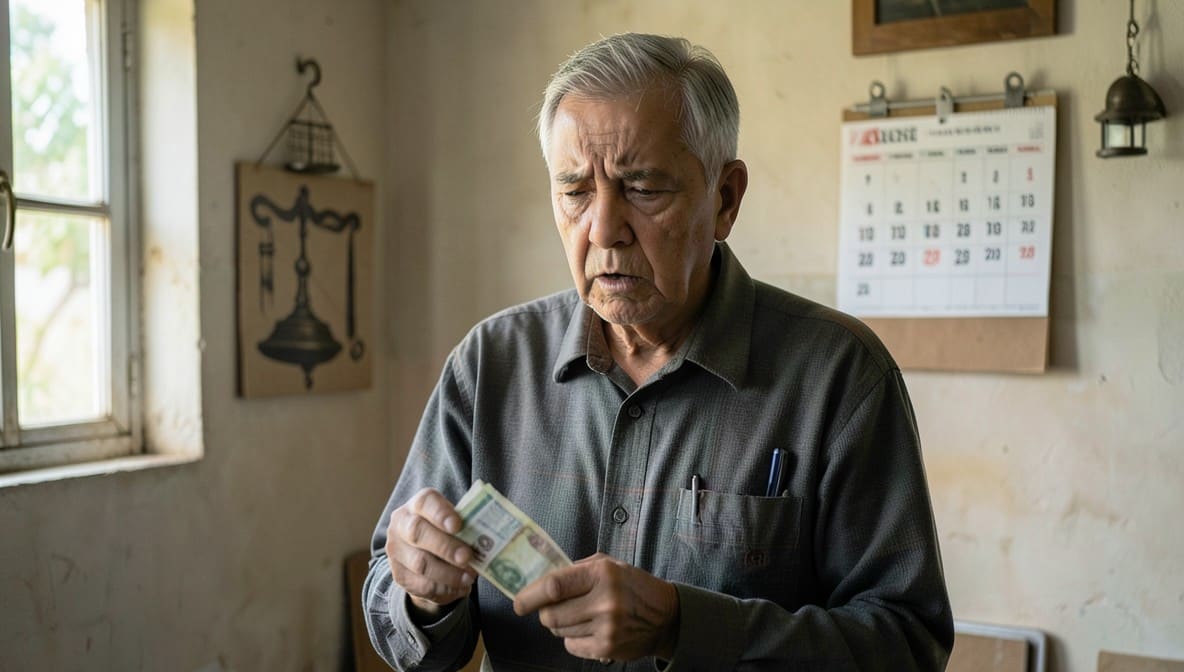
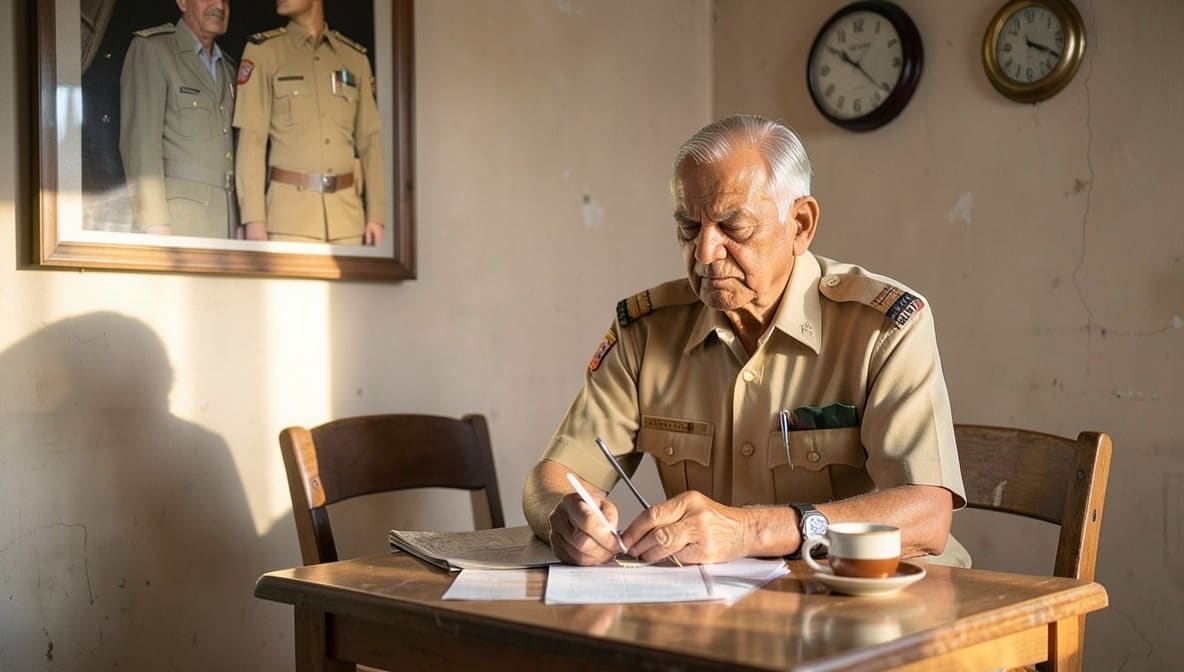
The petitioner, Babu Lal Jatav, was appointed as a Constable in the Madhya Pradesh Police on 02.05.1979. He was promoted to the post of Head Constable with effect from 27.07.2012. During his service, his pay was revised on multiple occasions, and he was granted the benefit of Kramonnati (incremental pay revision). He retired on superannuation on 31.08.2017 from a Class-III post.
Key Facts
- The petitioner’s pay was erroneously fixed with effect from 01.01.2006, resulting in excess payments over a period of more than eleven years.
- No show-cause notice was issued to the petitioner at any stage prior to the recovery.
- No opportunity of hearing was granted before the recovery order was passed.
- The petitioner did not furnish any undertaking at the time of the erroneous pay fixation in January 2006.
- An undertaking (Annexure R-1) was submitted by the petitioner only after his retirement, in connection with the processing of his retiral dues.
- The recovery of Rs. 1,13,861 was made from his pension and other retiral benefits without any prior notice or hearing.
- The petitioner had no role in the erroneous fixation; the mistake was attributable to the department.
Procedural History
- 01.01.2006: Erroneous pay fixation initiated by the department.
- 27.07.2012: Petitioner promoted to Head Constable.
- 31.08.2017: Petitioner retired from service.
- Between 2017 and 2018: Department initiated recovery of excess pay without notice or hearing.
- 2018: Writ Petition No. 18190 of 2018 filed before the High Court of Madhya Pradesh at Gwalior.
- 13.05.2026: Judgment delivered by the Hon’ble Justice Anand Singh Bahrawat.
The Parties' Positions
For the Petitioner: Argued that the recovery was illegal because:
- No undertaking was given at the time of the erroneous payment in 2006.
- The undertaking produced (Annexure R-1) was obtained post-retirement and was not voluntary.
- No show-cause notice or hearing was granted.
- The recovery was made after more than five years of the excess payment.
- The petitioner was a Class-III employee, and recovery from such employees is barred under Rafiq Masih.
For the Respondent/State: Contended that:
- The petitioner had submitted an undertaking (Annexure R-1) agreeing to repay excess amounts.
- The recovery was lawful as it pertained to public funds.
- The judgment in State of Punjab v. Rafiq Masih was distinguishable.
Relief Sought
The petitioner sought:
- Quashing of the recovery order of Rs. 1,13,861.
- Recalculation of pension and revision of pension payment order.
- Refund of the recovered amount with market rate of interest.
- Costs and any other relief deemed fit.
The Legal Issue
The central question was whether the recovery of excess pay from a retired Class-III government servant is lawful when the excess payment occurred over eleven years prior, no undertaking was given at the time of payment, no opportunity of hearing was granted, and the undertaking produced was submitted only after retirement.
Arguments Presented
For the Petitioner
The petitioner relied on the Supreme Court’s judgment in Rafiq Masih (White Washer) v. State of Punjab (2015) 4 SCC 334, which prohibits recovery from Class-III employees where excess payment has been made for more than five years. He also cited Jogeswar Sahoo v. District Judge, Cuttack (2025) 3 M.P.L.J. (S.C.) 25, which held that recovery is unsustainable when no hearing is granted and the employee has retired. He emphasized that the undertaking produced was not given at the time of the erroneous pay fixation in 2006, but only after retirement, and therefore could not validate the recovery. He further invoked the Full Bench decision in State of Madhya Pradesh v. Jagdish Prasad Dubey (2024) 2 M.P.L.J. 198, which held that post-retirement undertakings are not enforceable unless voluntary.
For the Respondent/State
The State argued that the undertaking (Annexure R-1) signed by the petitioner constituted a binding agreement to repay excess amounts. It contended that the recovery was justified to protect public funds and that the petitioner had tacitly accepted liability by signing the undertaking. It sought to distinguish Rafiq Masih on the ground that the petitioner had agreed to repayment, thereby waiving his rights.
The Court's Analysis
The Court undertook a detailed analysis of the legal principles laid down in Rafiq Masih, Jogeswar Sahoo, and the Full Bench decision in Jagdish Prasad Dubey. It held that the undertaking produced by the State was not given at the time of the erroneous pay fixation in January 2006, but only after the petitioner’s retirement. The Court observed:
"The undertaking furnished by petitioner at the time of his retirement cannot be said to be an undertaking for which recovery of excess payment which has been made long back would become effective."
It further held that such post-retirement undertakings, especially when obtained without independent legal advice or bargaining power, are inherently coercive and cannot be treated as voluntary. The Court relied on Central Inland Water Transport Corporation Ltd. v. Brojo Nath Ganguly (1986) 3 SCC 136, which invalidated contracts of adhesion where one party is in a position of dominance.
The Court also noted that the recovery was initiated after more than eleven years of the erroneous payment, far exceeding the five-year limit prescribed in Rafiq Masih. The absence of any show-cause notice or opportunity of hearing violated the principles of natural justice. The petitioner’s status as a Class-III employee further barred recovery under the Supreme Court’s categorical prohibition.
The Court rejected the State’s argument that public funds must be recovered at all costs, stating:
"Recovery in cases where the employee has no fault, has retired, and the delay is excessive, becomes iniquitous, harsh and arbitrary, far outweighing the State’s equitable claim."
The Verdict
The petitioner succeeded. The Court set aside the recovery of Rs. 1,13,861 from the petitioner’s pension and retiral benefits. The State was directed to refund the entire amount of Rs. 1,13,861 to the petitioner with interest at 6% per annum, calculated from the date of retirement, 31.08.2017, until actual payment. The refund and interest payment must be completed within 90 days of the certified copy of this order being submitted to the authorities.
What This Means For Similar Cases
Recovery from Class-III Employees Is Presumptively Illegal
- Practitioners representing retired Class-III or Group-C/D employees must immediately challenge any recovery of excess pay if the payment span exceeds five years.
- The burden shifts to the State to prove that the employee acted fraudulently or that the undertaking was truly voluntary.
- Recovery cannot be justified merely on the ground that public funds were involved.
Post-Retirement Undertakings Are Not Enforceable
- Any undertaking signed after retirement, especially during retiral processing, is presumed to be coerced and invalid.
- Employers must obtain voluntary, contemporaneous undertakings at the time of pay revision - not after service ends.
- Courts will scrutinize the timing, context, and bargaining power surrounding any such undertaking.
Procedural Compliance Is Non-Negotiable
- No recovery can be made without issuing a show-cause notice and granting a hearing.
- Failure to follow these steps renders the recovery void ab initio, regardless of the merits of the claim.
- Departments must maintain clear records of pay revisions and employee acknowledgments at the time of implementation.