The Madhya Pradesh High Court has ruled that the School Education Department must align its earned leave encashment policy with the State Finance Department's circulars, allowing employees to encash up to 300 days of earned leave. The Court set aside the department's restrictive policy and directed payment of arrears with interest for non-compliance.
Background & Facts
The Genesis
The petitioner, Mataprasad Khandelwal, was appointed as an Upper Division Teacher on 23.08.1979 and retired with 289 days of earned leave to his credit. His service record (Annexure P/4) confirmed the accumulation of earned leave.
Key Facts
- The petitioner's earned leave balance stood at 289 days at retirement.
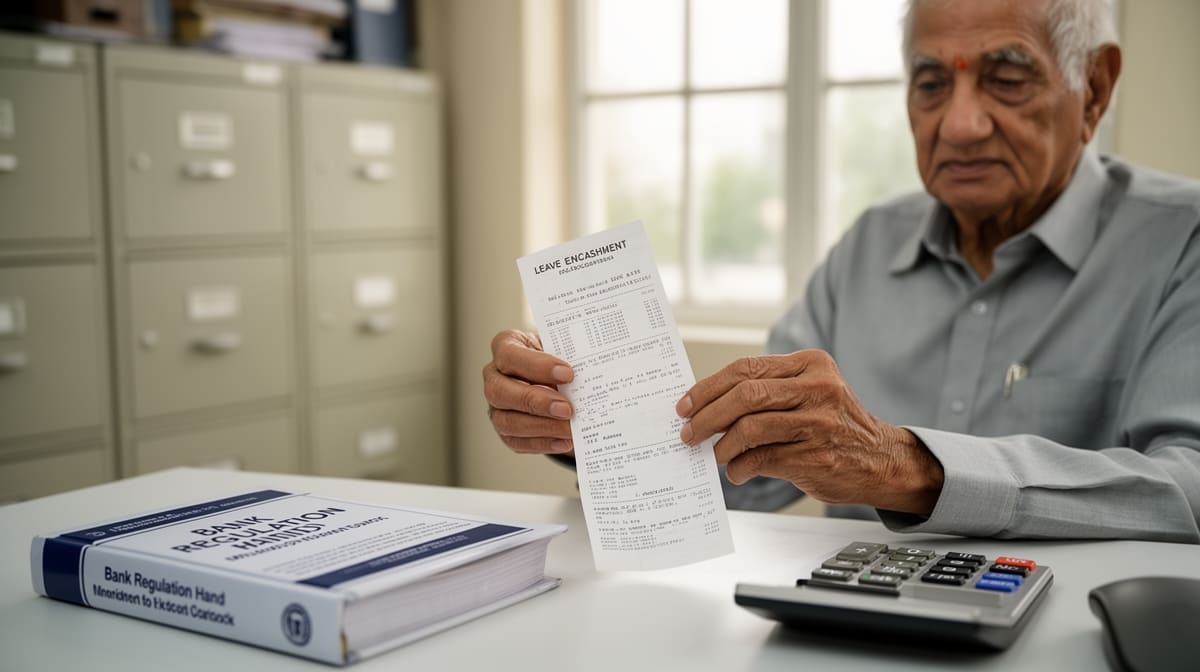
- The School Education Department granted encashment for only 20 days, citing a circular dated 16.06.2022 issued by the Commissioner, Treasury and Accounts.
- The Finance Department had issued two circulars: dated 06.08.2018 and 08.03.2019, clarifying that earned leave encashment is admissible up to 300 days instead of 240 days.
- Rule 25 of the Civil Services (Leave) Rules, 1977 explicitly provides for payment of earned leave up to 300 days.
- The circular dated 16.06.2022 relied upon by the School Education Department predated the Finance Department's circular dated 08.03.2019 and did not account for the latter's policy change.
Procedural History
- The petitioner's claim for full encashment was rejected by the School Education Department.
- The Principal recommended payment of leave encashment for 289 days in light of the Finance Department's circulars.
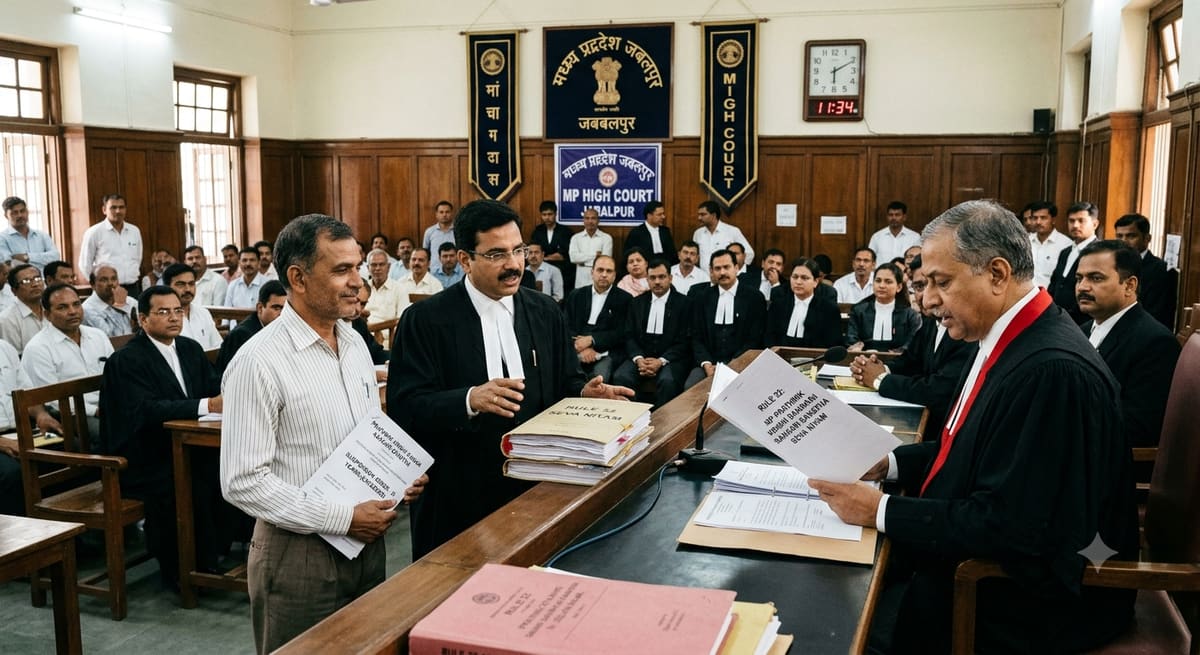
- The petitioner approached the High Court via Writ Petition No. 8551 of 2025.
Relief Sought
The petitioner sought:
- Quashing of the impugned order dated 18.09.2024.
- Direction to respondent no. 3 to pay earned leave encashment for 289 days with interest at 18% per annum.
- Other consequential reliefs.
The Legal Issue
The central question was whether the School Education Department could restrict earned leave encashment to 240 days despite the Finance Department's circulars and Rule 25 of the Civil Services (Leave) Rules, 1977, which permit encashment up to 300 days.
Arguments Presented
For the Petitioner
- Relied on Rule 25 of the Civil Services (Leave) Rules, 1977, which permits encashment up to 300 days.
- Cited Finance Department circulars dated 06.08.2018 and 08.03.2019, which clarified the 300-day limit.
- Argued that the circular dated 16.06.2022 issued by the Commissioner, Treasury and Accounts was contrary to the Finance Department's policy and could not override it.
- Pointed out that other departments had already implemented the 300-day limit.
For the Respondent
- The State Government Advocate opposed the petition, stating that the petitioner had already been granted encashment for 20 days.
The Court's Analysis
The Court examined the interplay between the Finance Department's circulars and the School Education Department's policy. It noted that the circular dated 08.03.2019 explicitly provided for leave encashment up to 300 days for all State Government employees, including those in the School Education Department. The Court observed:
"The Finance Department of the State of Madhya Pradesh issued a circular dated 08.03.2019 providing for leave encashment up to 300 days for State Government employees. Therefore, the said circular is applicable to all departments of the State Government, including the School Education Department."
The Court further noted that the circular dated 16.06.2022, relied upon by the School Education Department, did not account for the subsequent circular dated 08.03.2019. The Court held that the School Education Department's policy was contrary to the State Government's policy decision and could not override it.
The Court also relied on prior precedents, including Virendra Kiledar v. State of M.P. and Prakash Babu Raghuvanshi v. State of M.P., which had affirmed the 300-day limit for earned leave encashment.
The Verdict
The Court allowed the petition. It directed the respondents to grant the benefit of remaining leave encashment for 269 days (20 days already granted) by recalculating the amount within three months of receipt of the certified copy of the order. If the respondents failed to comply, they were directed to pay the entire leave encashment amount along with interest at 6% per annum from the date of entitlement until actual payment.
What This Means For Similar Cases
State Policy Overrides Departmental Circulars
- Departments cannot rely on outdated circulars that contradict State Government policy.
- Rule 25 of the Civil Services (Leave) Rules, 1977 and Finance Department circulars must be harmonized.
- Employees in all departments are entitled to the same benefits unless a specific exemption is provided.
Consistency in Leave Encashment Policies
- The Court's ruling ensures uniformity in leave encashment policies across all State Government departments.
- Employees can now rely on Finance Department circulars to claim their entitled benefits.
- Departments must update their policies to align with State Government directives.
Interest on Delayed Payments
- Non-compliance with the Court's order attracts interest at 6% per annum from the date of entitlement.
- This serves as a deterrent against arbitrary delays in disbursing entitled benefits.