The Supreme Court has definitively held that compensation awarded under the Motor Vehicles Act, 1988 cannot be reduced by the amount received by claimants through employer-provided group insurance. This ruling reinforces the principle that statutory compensation for death or injury in motor accidents is independent of contractual benefits and must be paid in full to ensure just reparation.
Background & Facts
The Dispute
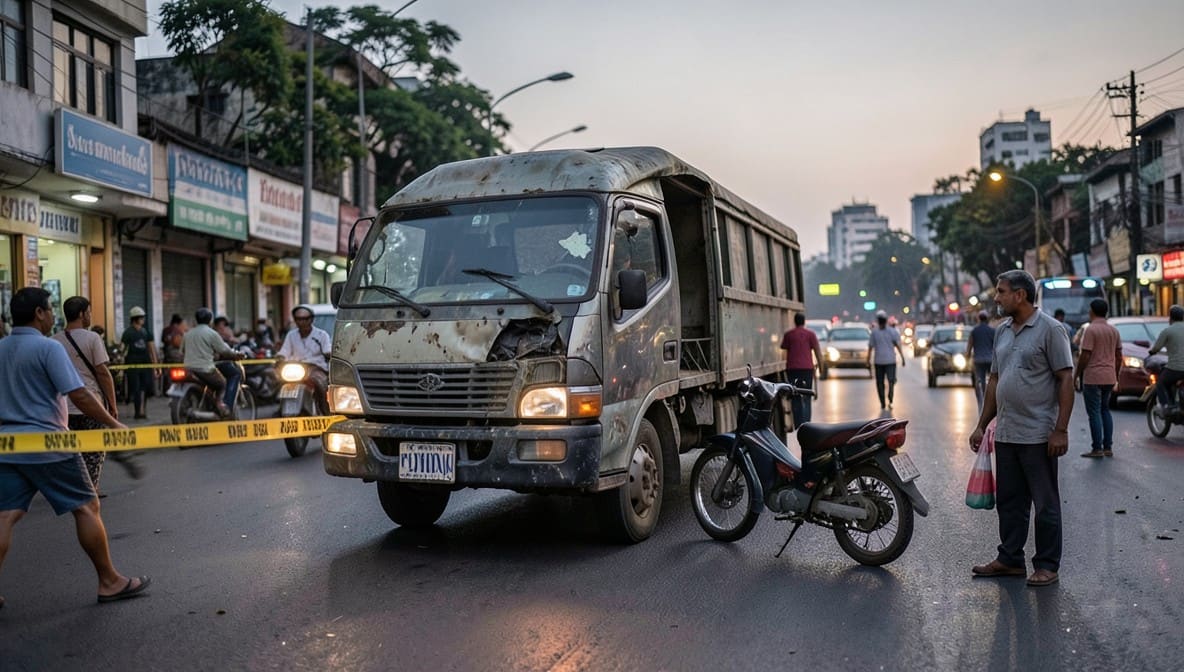
These appeals arise from two separate motor vehicle accidents in Karnataka, both involving KSRTC buses. In each case, the deceased was a wage-earning individual whose legal representatives filed claims under Section 166 of the Motor Vehicles Act, 1988 before the Motor Accident Claims Tribunal (MACT). The central issue in both appeals was whether the compensation awarded by the Tribunal should be reduced by the amount received by the claimants under an employer-sponsored group insurance scheme.
Key Facts
-
Civil Appeal Nos. 5490-5491 of 2025:
- Date of accident: 30.07.2018
- Deceased: P. Visweswar, aged 34 years
- Occupation: Team Manager at Accenture, Bangalore
- Monthly income: ₹70,000
- Vehicle involved: KSRTC bus bearing registration KA-06-F-1126
- Incident: Bus collided with deceased’s motorcycle on the wrong side
- Claim filed: MVC No. 4788/2018 before MACT, Bengaluru
- Claim amount sought: ₹1,00,00,000
- Group insurance received: ₹35,48,000
-
Civil Appeal Nos. 5492-5493 of 2025:
- Date of accident: 20.01.2015 at 7:30 p.m.
- Deceased: Celestine Dsouza, aged 47 years
- Occupation: Assistant Manager at M/s Cox and King Ltd.
- Monthly income: ₹47,000
- Vehicle involved: KSRTC bus bearing registration KA-22/B-7817
- Incident: Bus ran over deceased’s scooter from behind
- Claim filed: MVC No. 1178/2015 before MACT, Bengaluru
- Claim amount sought: ₹75,00,000
- Group insurance received: ₹10,00,000
Procedural History
-
Civil Appeal Nos. 5490-5491:
- 10.06.2021: High Court of Karnataka, in MFA No. 2593/2020 c/w MFA No. 3299/2020, set aside the Tribunal’s deduction of ₹35,48,000 and awarded full compensation of ₹69,07,710 with 6% interest
- 12.06.2018: Claim petition filed before MACT
- Prior to 10.06.2021: MACT awarded ₹33,59,710 after deducting group insurance amount
- 28.03.2023: KSRTC filed Civil Appeals before Supreme Court
-
Civil Appeal Nos. 5492-5493:
- 17.11.2020: High Court of Karnataka, in MFA No. 9538/2017, set aside the Tribunal’s deduction of ₹10,00,000 and awarded ₹59,95,944 with 6% interest
- 20.01.2015: Accident occurred
- 11.07.2015: Claim petition filed before MACT
- Prior to 17.11.2020: MACT awarded ₹53,04,878 after deducting group insurance
- 28.03.2023: KSRTC filed Civil Appeals before Supreme Court
The Parties' Positions
- Appellants (KSRTC): Argued that group insurance payouts were pecuniary advantages arising from the same accident and should be deducted to prevent double recovery. Also contended contributory negligence by the deceased in both cases.
- Respondents (Legal Representatives): Contended that group insurance benefits were contractual, independent of the statutory claim under the Motor Vehicles Act, and had no nexus with the accident beyond being triggered by it.
Relief Sought
The appellants sought to restore the Tribunal’s original awards, which included deductions of ₹35,48,000 and ₹10,00,000 respectively. The respondents sought affirmation of the High Court’s orders granting full compensation without any deduction.
The Legal Issue
The central question was whether amounts received by claimants under employer-provided group insurance schemes, where the employee made no contribution, can be deducted from compensation awarded under Section 166 of the Motor Vehicles Act, 1988.
Arguments Presented
For the Appellant
Learned counsel for KSRTC relied on the principle of preventing double recovery, arguing that group insurance payouts were a direct financial benefit arising from the same incident. They cited the doctrine of balancing loss and gain, contending that allowing full compensation alongside insurance proceeds would unjustly enrich the claimants. They further argued that the deceased’s contributory negligence, evidenced by accident reports, warranted reduction in compensation.
For the Respondent
Learned counsel for the claimants emphasized that group insurance was a contractual benefit earned by the deceased during employment, funded entirely by the employer. They argued that such benefits were not linked to the statutory liability under the Motor Vehicles Act and were not intended as a substitute for compensation. They relied on settled precedents that such payments are independent and cannot be offset.
The Court's Analysis
The Court undertook a comprehensive review of its prior jurisprudence on the subject, particularly Helen C. Rebello & Ors. v. Maharashtra State Road Transport Corporation, United India Insurance Co. Ltd. v. Patricia Jean Mahajan & Ors., and Sebastiani Lakra v. National Insurance Co. Ltd. The Court emphasized that the Motor Vehicles Act is a social welfare legislation designed to provide just compensation to victims of motor accidents, irrespective of fault.
"The amount receivable as compensation under the Act is on account of the injury or death without making any contribution towards it. Then how can the fruits of an amount received through contributions of the insured be deducted out of the amount receivable under the Motor Vehicles Act. The amount under this Act he receives without any contribution."
The Court clarified that the principle of avoiding double recovery applies only where the benefit received has a direct nexus with the statutory liability. Group insurance, even if triggered by death, arises from an independent contractual relationship between the employer and employee. The deceased earned this benefit through service, not through the accident.
"The claimants/dependants are entitled to 'just compensation' under the Motor Vehicles Act as a result of the death of the deceased in a motor vehicle accident. Therefore, the natural corollary is that the advantage which accrues to the estate of the deceased or to his dependants as a result of some contract or act which the deceased performed in his lifetime cannot be said to be the outcome or result of the death of the deceased."
The Court rejected the argument of contributory negligence, noting that the High Courts had already examined the evidence - including FIRs, charge sheets, and spot sketches - and found the bus drivers solely negligent. The Court declined to interfere with these factual findings.
The Court further held that procedural objections, such as non-joinder of the driver, were rightly dismissed by the High Court, as the summary nature of MACT proceedings must not be burdened by rigid procedural formalities.
The Verdict
The appeals were dismissed. The Supreme Court affirmed the judgments of the High Court of Karnataka in MFA No. 2593 of 2020 c/w MFA No. 3299 of 2020 and MFA No. 9538 of 2017. The appellants are directed to deposit the full compensation amounts awarded by the High Court - ₹69,07,710 in the first case and ₹59,95,944 in the second - within six weeks from the date of this judgment. Both awards carry 6% interest per annum from the date of filing of the claim petitions. There shall be no order as to costs.
What This Means For Similar Cases
Group Insurance Is Not a Set-Off
- Practitioners must now argue that any employer-provided insurance payout, even if paid to legal heirs, cannot be deducted from statutory compensation under the Motor Vehicles Act
- This applies regardless of whether the employer or employee contributed to the premium
- The benefit must be treated as a separate contractual entitlement, not a substitute for statutory liability
Just Compensation Is Non-Negotiable
- Courts must reject arguments seeking to reduce compensation on grounds of ‘double recovery’ from independent sources
- The principle of ‘just compensation’ under Section 166 is absolute and must be calculated without reference to insurance, gratuity, pension, or other employment benefits
- Claimants are entitled to both the insurance payout and full statutory compensation
Procedural Flexibility in MACT Cases
- Minor procedural lapses, such as non-joinder of the driver, cannot be used to defeat claims under the Motor Vehicles Act
- The summary nature of MACT proceedings requires courts to prioritize substantive justice over technicalities
- Legal representatives should not be deterred from filing claims due to perceived procedural defects