The Punjab and Haryana High Court has significantly clarified the methodology for calculating compensation in motor accident claims where the deceased’s income is undocumented. In a judgment that reinforces judicial restraint in income estimation and prioritizes equitable dependency assessment, the Court applied the unit method to apportion compensation among five dependants, setting a clear precedent for tribunals across the state.
Background & Facts
The Dispute
The appellants, parents of Ravi Kumar, a 23-year-old mason who died in a motor accident on 6 November 2016, challenged the Motor Accident Claims Tribunal’s award of Rs. 19,97,800. The Tribunal had assessed the deceased’s monthly income at Rs. 8,500, applied a multiplier of 18, and apportioned compensation as 40% to the widow, 15% each to the two minor sons, and 15% each to the parents.
Procedural History
- 6 November 2016: Motor accident resulting in death of Ravi Kumar
- 2021: Tribunal awarded Rs. 19,97,800 with 9% interest
- 2021: Appeal filed before Punjab and Haryana High Court challenging quantum and apportionment
- 10 March 2026: Judgment delivered by Justice Harkesh Manuja
Relief Sought
The appellants sought enhancement of compensation on three grounds: (1) higher income assessment based on mason’s earning potential, (2) increased conventional heads, and (3) equal apportionment of 20% each to all five claimants.
The Legal Issue
The central question was whether the unit method must be applied to calculate dependency when the deceased’s income is undocumented and the family structure includes multiple dependants, and whether a fixed percentage deduction for personal expenses is mandatory under Sarla Verma’s case.
Arguments Presented
For the Appellant
Learned counsel argued that the deceased, as a mason, earned Rs. 24,000 per month and that the Tribunal’s assessment of Rs. 8,500 was arbitrary. They contended that the apportionment was inequitable, as all five dependants were wholly dependent, and that the deduction of personal expenses should not exceed one-fourth as per Sarla Verma. They relied on U.P. State Road Transport Corporation v. Trilok Chandra to support equal unit allocation.
For the Respondent/Insurance Company
The insurer did not dispute the accident or negligence but defended the Tribunal’s award as reasonable. It argued that without documentary proof of income, a conservative estimate of Rs. 8,500 was justified and that the apportionment reflected the widow’s primary caregiving role.
The Court's Analysis
The Court rejected both the claimant’s inflated income figure and the Tribunal’s low estimate. It emphasized that in professions like masonry, where income is irregular and undocumented, courts must avoid speculative assessments. Citing Rajesh Chakrawarti v. Dinesh Kumar Yadav, the Court noted that income must be fair and grounded in reality.
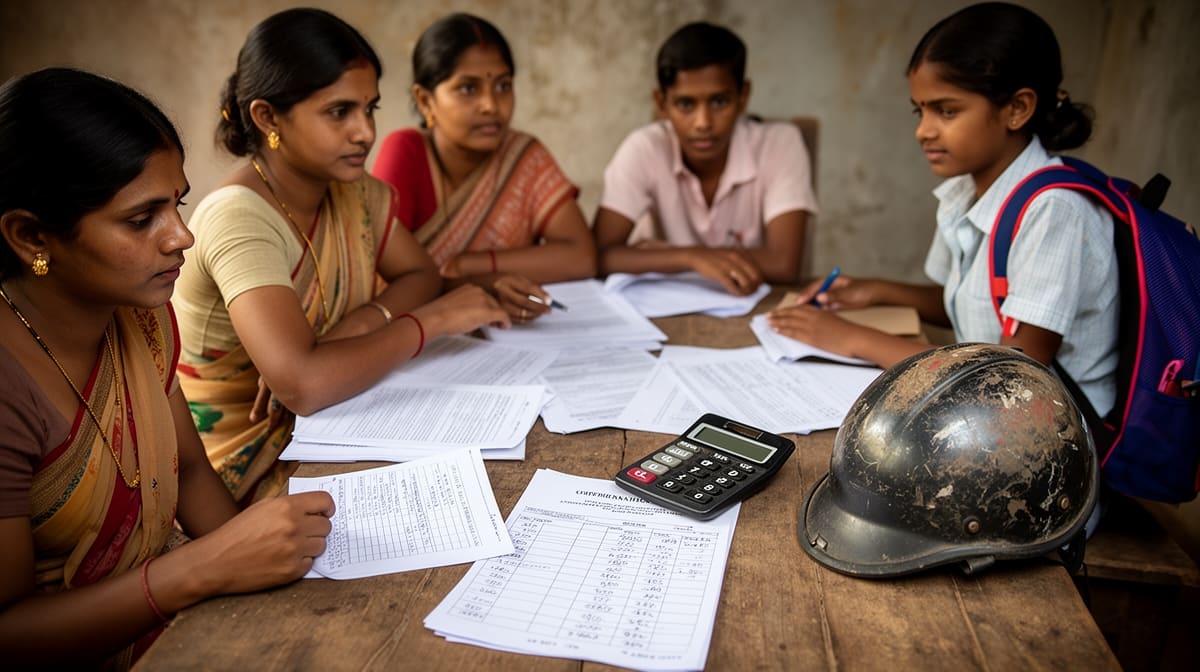
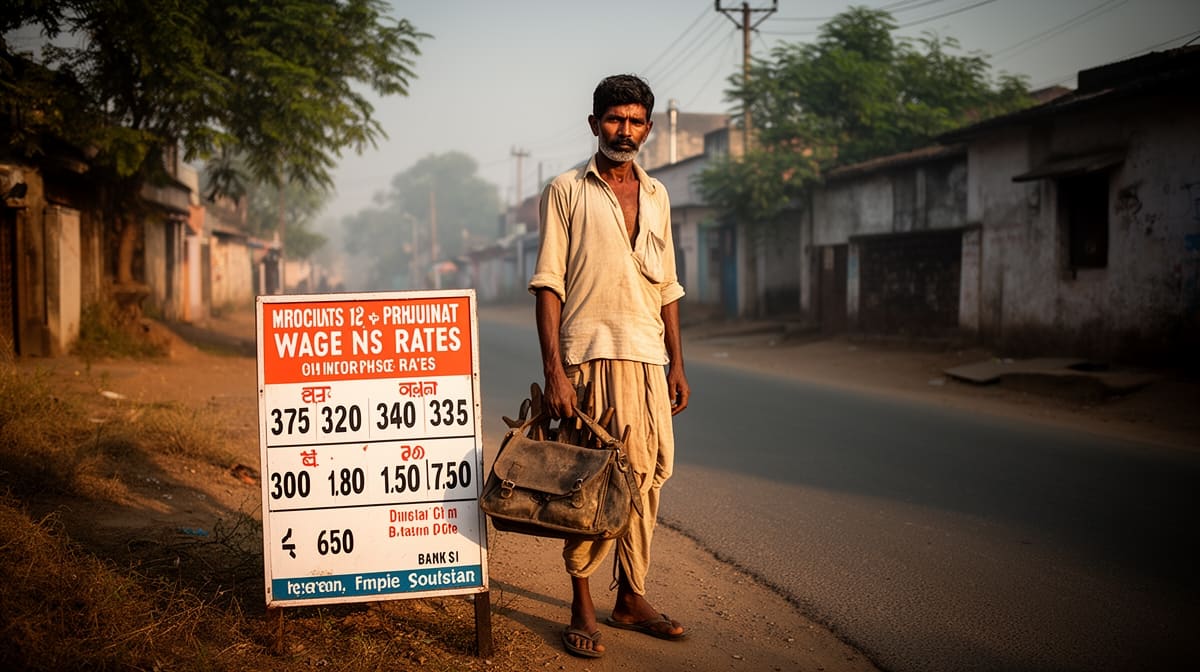
The Court turned to Labour Bureau data for Haryana (2016), which showed masons earned ₹550 - ₹560 per day. Factoring in non-working days and seasonal unemployment, it fixed the monthly income at ₹12,000.
On the critical issue of personal expenses, the Court explicitly rejected a rigid one-fourth deduction. It reaffirmed the unit method from Trilok Chandra, which allocates two units per adult and one per minor. With five dependants (widow, two minor children, two parents), the family was divided into 10 units. The deceased’s two units translated to ₹2,400 monthly personal expenses - a method the Supreme Court has repeatedly upheld as a "rough and ready" standard in absence of evidence.
"It must be realised that the Tribunal/Court has to determine a fair amount of compensation... The two English decisions... provide the guidelines for assessing the loss occasioned to the victims."
The Court also upheld the 40% future prospects addition and multiplier of 18, consistent with Sarla Verma and Pranay Sethi. For conventional heads, it awarded Rs. 18,000 each for funeral and loss of estate, and Rs. 2,40,000 for loss of consortium, calculated as Rs. 48,000 per claimant.
On apportionment, the Court declined to equalize shares, recognizing the widow’s ongoing responsibility for minor children and the long-term dependency of minors over parents.
The Verdict
The appellants succeeded in enhancing compensation. The Court held that the unit method is the preferred and legally sound approach for calculating dependency in cases of undocumented income, and that fixed percentage deductions for personal expenses are merely guidelines, not inflexible rules. Compensation was enhanced to Rs. 31,79,040, with interest adjusted as directed.
What This Means For Similar Cases
The Unit Method Is Mandatory in Absence of Evidence
- Practitioners must apply the unit method (2 units/adult, 1 unit/minor) when income is undocumented and multiple dependants exist
- Avoid arguing for fixed deductions (e.g., 1/3rd or 1/4th) unless supported by specific evidence of household expenditure
- The method is not outdated - it remains the Supreme Court’s preferred default under Trilok Chandra
Income Estimation Must Be Grounded in Data, Not Speculation
- Use official wage data (Labour Bureau, NSSO) to justify income estimates for informal sector workers
- Do not rely on oral assertions of earnings without corroborative documents
- Courts will reject inflated claims even if made in good faith - realism trumps sympathy
Apportionment Reflects Functional Dependency, Not Equality
- Equal shares are not mandated; apportionment must reflect actual caregiving roles
- Widows with minor children may legitimately receive larger shares
- Parents’ claims remain valid but are not equivalent to the lifelong dependency of children