The Customs, Excise & Service Tax Appellate Tribunal (CESTAT) Allahabad has clarified that minor excess in imported quantity, coupled with a plausible trade explanation, does not amount to misdeclaration, and that barebone computer systems lacking a CPU cannot be classified as incomplete computer systems for valuation or confiscation purposes. This ruling reinforces the requirement for concrete evidence in customs adjudication and sets a critical precedent for importers facing arbitrary reclassification or valuation.
Background & Facts
The Dispute
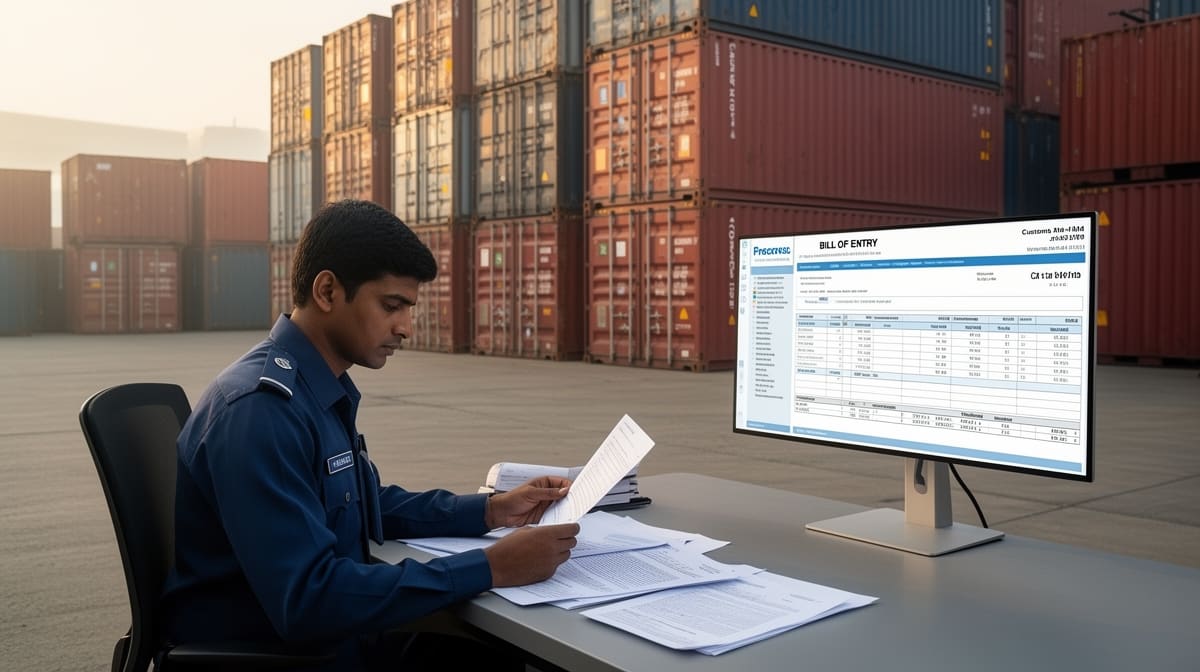
M/s Daya Exports, the appellant, imported a consignment of Computer Cabinet Cases under Bill of Entry No. 4934832 dated 07.08.2024. The declared quantity was 4,320 pieces at a declared value of USD 7 per piece. Upon examination by customs officers on 12.08.2024, 4,431 pieces were found - 111 pieces in excess. The customs authorities alleged misdeclaration of quantity and undervaluation, and further classified the goods as "incomplete computer systems" under a higher duty tariff.
Key Facts
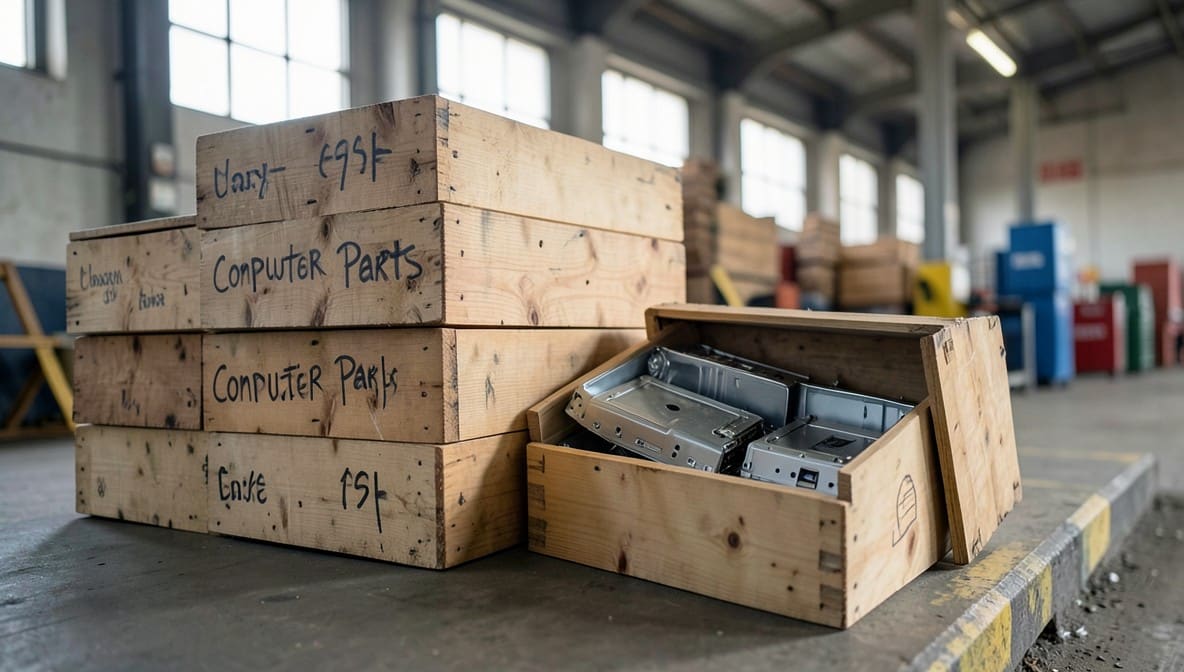
- The imported goods were described by the appellant as "Computer Cabinet Cases" - empty enclosures designed to house desktop computer components.
- The foreign supplier provided a clarification stating that the 111 extra pieces were supplied as a buffer to compensate for potential damage during transit, a common industry practice.
- A Chartered Engineer’s report dated 27.08.2024 described the items as "Computer Cabinet Cases (Bare Bone Systems)" and estimated a reasonable price of USD 12 per piece.
- The report noted the presence of motherboard, power supply, and fan in each unit, but explicitly did not identify the presence of a Central Processing Unit (CPU).
- The appellant had waived issuance of a show cause notice to avoid demurrage and detention charges, but did not admit liability.
- The Additional Commissioner, by Order-in-Original dated 23.09.2024, rejected the declared value, revalued the goods at USD 12 per piece (total value Rs. 44,98,351), ordered confiscation, imposed a redemption fine of Rs. 3,60,000, and levied a penalty of Rs. 34,000.
- The Commissioner (Appeals) upheld this order on 18.12.2025.
Procedural History
- 07.08.2024: Import of consignment under Bill of Entry No. 4934832
- 12.08.2024: Customs examination reveals 4,431 pieces (111 excess)
- 27.08.2024: Chartered Engineer’s report submitted
- 23.09.2024: Additional Commissioner issues Order-in-Original
- 18.12.2025: Commissioner (Appeals) upholds the order
- 24.03.2026: CESTAT Allahabad delivers final order on Customs Appeal No. 70067 of 2026
Relief Sought
The appellant sought setting aside of the impugned orders dated 23.09.2024 and 18.12.2025, cancellation of confiscation, redemption fine, and penalty, and restoration of the declared value of USD 7 per piece.
The Legal Issue
The central questions were: (1) Whether the presence of 111 extra pieces constitutes misdeclaration of quantity with intent to evade duty; (2) Whether the goods, lacking a CPU, can be classified as incomplete computer systems; and (3) Whether the revenue’s revaluation at USD 12 per piece is legally sustainable without evidence of actual transaction value or comparable imports.
Arguments Presented
For the Appellant
The appellant’s counsel argued that the 111-piece excess was negligible (2.57% of total) and explained by standard trade practice of supplying spares to offset transit damage. He emphasized that waiver of a show cause notice was a procedural concession to avoid commercial losses, not an admission of guilt. He contended that the goods were merely cabinet cases, not computer systems, as they lacked a CPU - the essential component defining a computer. He challenged the valuation, noting the Chartered Engineer’s report lacked supporting data, and the revenue failed to prove any payment beyond the invoice value, as required under Rule 12 of the Customs Valuation Rules, 2007.
For the Respondent
The authorized representative reiterated the findings of the lower authorities, asserting that the presence of motherboard, fan, and power supply rendered the goods as incomplete computer systems under Chapter 84 of the Customs Tariff. He maintained that the USD 12 valuation was reasonable based on the expert’s opinion and that the excess quantity indicated deliberate undervaluation and misdeclaration.
The Court's Analysis
The Tribunal conducted a meticulous review of the evidence and legal framework under the Customs Act, 1962, and the Customs Valuation Rules, 2007. It held that the concept of misdeclaration requires proof of intent to evade duty, which was absent here. The Tribunal noted that the foreign supplier’s explanation was credible and aligned with common international trade practices.
"Looking into the quantity of the cabinet systems imported we find that 111 pcs is an insignificantly small number. Looking into the general trade practice, where a few pcs are added to compensate for the damages and the clarification issued by foreign supplier, we are of the considered opinion that there is no mis-declaration of quantity with intent to evade payment of duty."
On valuation, the Tribunal rejected the USD 12 valuation, observing that the Chartered Engineer’s report was speculative and unsupported by data on comparable imports or actual transaction values. The revenue failed to discharge its burden under Rule 12(1) to prove that the declared value was not acceptable.
"There is no evidence put forth by the revenue that the similar/identical items are imported at the price comparable to the value being adopted. We also find that it is not the case of the department that the importer has paid the foreign supplier in excess of the price shown in the invoices."
Regarding classification, the Tribunal emphasized that the absence of a CPU rendered the goods incapable of functioning as a computer. The term "barebone system," as used by the engineer, was not a technical classification but a commercial descriptor. The Tribunal held that the lower authorities had failed to provide any technical reasoning for reclassifying the goods, and the engineer’s own terminology supported the appellant’s position.
"We find that without Central Processing Unit (CPU) the system cannot be said to have attained the essential character of a computer. Therefore, just a computer cabinet case for a computer system without CPU cannot be held to an incomplete or unfinished computer system."
The Tribunal further noted that confiscation and penalty require a clear violation of law, which was not established.
The Verdict
The appeal was allowed. The orders dated 23.09.2024 and 18.12.2025 were set aside. The declared value of USD 7 per piece was restored. The confiscation order, redemption fine of Rs. 3,60,000, and penalty of Rs. 34,000 were cancelled. The revenue was directed to assess and recover applicable duty on the 111 excess pieces at the declared rate of USD 7 per piece, within 4 weeks of the order.
What This Means For Similar Cases
Minor Quantity Variations Do Not Equate to Misdeclaration
- Practitioners must argue that deviations under 5% of declared quantity, supported by supplier clarification and industry practice, cannot trigger confiscation or penalty.
- Waiver of show cause notice is a procedural convenience, not a waiver of substantive rights to appeal.
- Revenue must prove intent to evade duty - mere excess quantity is insufficient.
Classification Must Be Technically Sound, Not Assumed
- Goods lacking essential functional components (e.g., CPU in computers) cannot be classified as complete or incomplete systems under tariff headings requiring functionality.
- Expert reports must be substantiated with technical reasoning; mere labels like "barebone" are not conclusive.
- Importers should insist on technical opinions from recognized authorities when classification is disputed.
Valuation Requires Concrete Evidence, Not Speculation
- Revaluation under Rule 12 requires proof of transaction value deviation or comparable imports.
- Revenue cannot rely on uncorroborated expert opinions to override declared values.
- Invoices and payment records remain the primary basis for valuation unless rebutted by credible evidence.