The Punjab & Haryana High Court held that a prospectus governing MBBS admissions under the UT Chandigarh Pool cannot be altered after the admission process has commenced, and that a Scheduled Caste certificate labelled “migrant” does not disqualify a candidate from reservation. The Court quashed the revised provisional merit list of 20/21.08.2026 and directed the respondents to prepare a fresh merit list in strict accordance with the prospectus within ten days of uploading the order.
Background & Facts
The Dispute
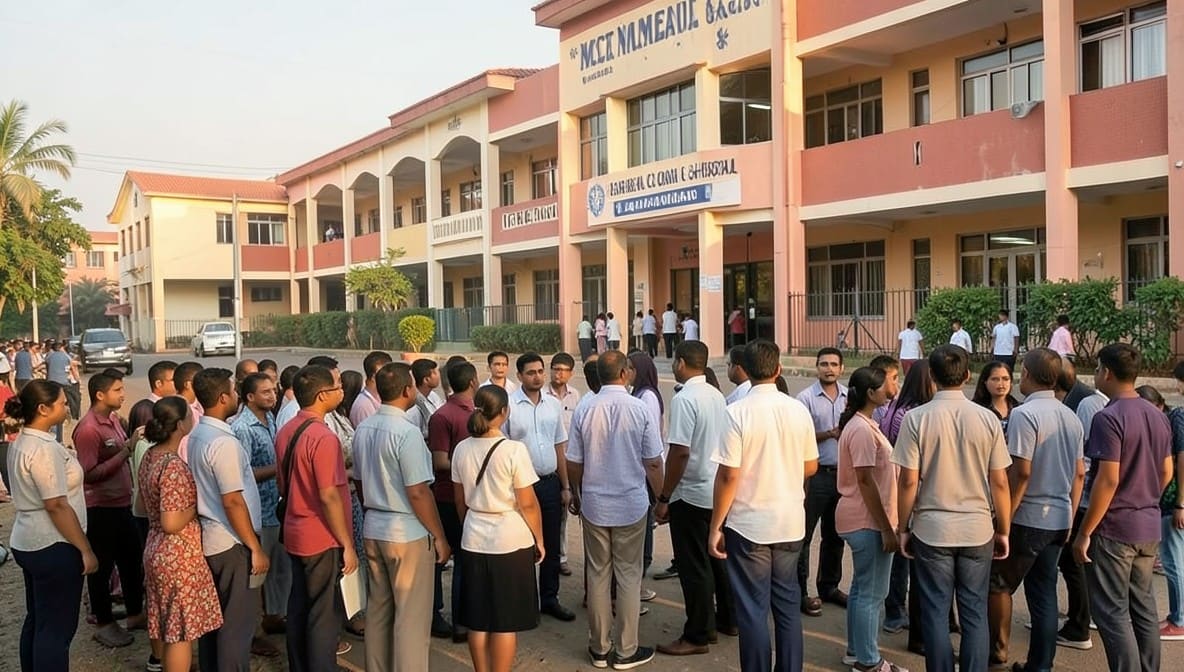
The petitioner, Japuji Kaur Bains, a resident of Chandigarh belonging to the Ramdasia community (a notified Scheduled Caste), cleared the NEET UG 2026 examination as a Scheduled Caste candidate and applied for admission to the MBBS course under the UT Chandigarh Pool at Government Medical College & Hospital, Sector 32, Chandigarh. She submitted a Scheduled Caste certificate issued by the Sub Divisional Magistrate, Chandigarh, which described her as a “migrant” Scheduled Caste. The respondents rejected her candidature for the Scheduled Caste category, stating that her migrant certificate made her ineligible for reservation and that she would be considered only in the General category.
Key Facts
- The petitioner was born at Chandigarh on 30.04.2008 and completed her schooling there.
- She cleared the NEET UG 2026 examination as a Scheduled Caste candidate.
- The prospectus for admission to MBBS under the UT Chandigarh Pool (Annexure P)7) was issued vide Notification No. 4486/E-134842/F-II(GMCH)/2023/10399 dated 15.07.2022.
- Clause A-3 of the prospectus lays down the general eligibility criteria for UT Chandigarh Pool seats: (1) candidates who completed 10th, 10+1 and 10+2 from schools recognised by the Chandigarh Administration and situated in the UT as regular students; OR (2) candidates whose parents have been residents of Chandigarh for the past 05 years immediately preceding the date of application, even if they do not satisfy condition 1, with a residence certificate from the Office of the Deputy Commissioner, UT Chandigarh as proof.
- Clause A-4 governs eligibility for Scheduled Caste reservation: (1) candidates must fulfil the eligibility criteria for UT Chandigarh Pool seats under Clause A-3; (2) they must have claimed their Scheduled Caste eligibility while applying for NEET UG 2026; (3) they must submit a Scheduled Caste certificate issued by the Tehsildar/Magistrate 1st Class/Deputy Commissioner, UT Chandigarh bearing the seal and signature of the issuing authority; (4) a certificate not bearing the seal of the competent authority will not be accepted; (5) Scheduled Caste candidates who otherwise fulfil the eligibility criteria for the UT Chandigarh Pool but submit a Scheduled Caste certificate issued by any State/UT other than UT Chandigarh will not be considered eligible for admission against seats reserved for Scheduled Caste candidates in the UT Chandigarh Pool and will be considered only for the General category.
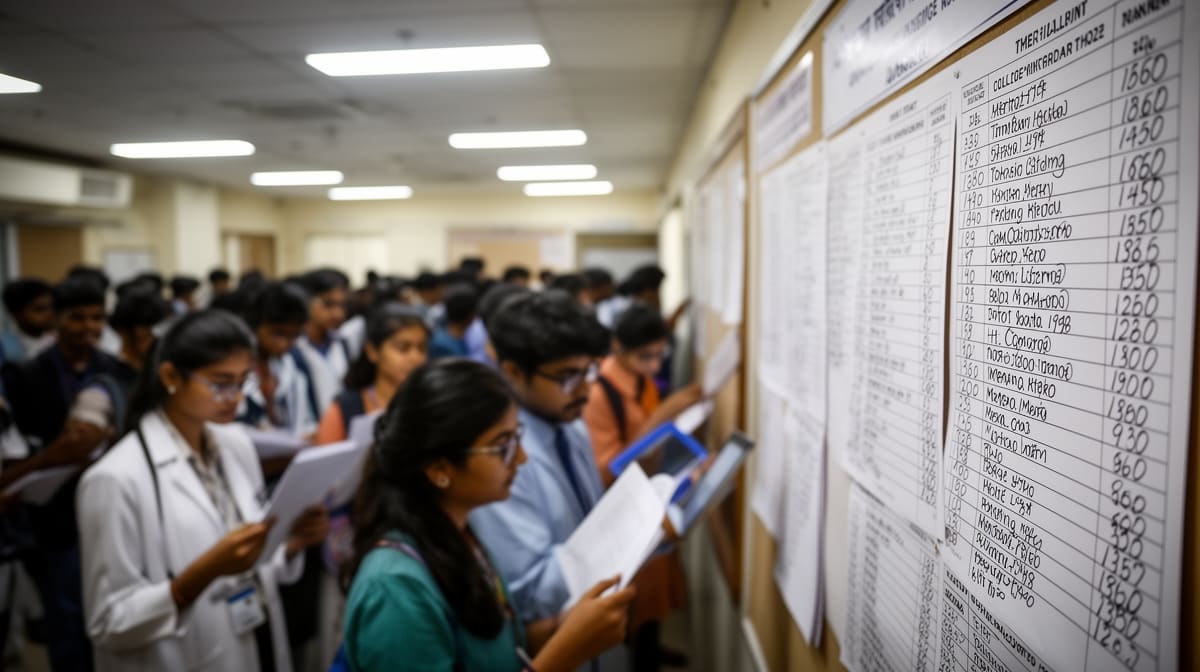
- On 20/21.08.2026, a provisional revised combined merit list (Annexure P)12) was uploaded for admission to the MBBS course. Against the petitioner’s name at Sr. No. 297, the remark read: “SC)Migrant certificate. not eligible for SC category, hence, will be considered in General category”.
- The petitioner challenged this rejection by filing the present writ petition.
Procedural History
- The writ petition CWP-27499-2026 was filed before the High Court of Punjab & Haryana at Chandigarh (exact filing date not specified in the judgment).
- The judgment was reserved on 11.09.2026, pronounced on 16.09.2026, and uploaded on 16.09.2026.
Relief Sought
The petitioner sought a writ of certiorari to quash the provisional revised combined merit list dated 20/21.08.2026 to the extent her candidature as a Scheduled Caste category candidate was rejected, and a writ of mandamus to direct the respondents to consider her for admission to the MBBS course under the UT Chandigarh Pool.
The Legal Issue
The central question was whether the respondents could impose an additional eligibility criterion distinguishing “SC)bona fide resident” from “SC)migrant” after the commencement of the admission process, when such a distinction is absent in the prospectus governing MBBS admissions under the UT Chandigarh Pool.
Arguments Presented
For the Petitioner
The petitioner argued that the prospectus has the force of law and cannot be altered after the admission process begins, relying on the Full Bench judgments of this Court in Amandeep Singh Sahota v. State of Punjab (1993) 2 PLR 212, Raj Singh v. Maharishi Dayanand University (1994) 4 RSJ 289 (FB), Rahul Prabhakar v. Punjab Technical University (1997) 3 SCT 526, and Indu Gupta v. Director, Sports Punjab (1999) 4 SCT 113, as well as the Supreme Court decision in Adarsh Dinkar Sontakke v. Navodaya Vidyalaya Samiti (Law Finder Doc ID # 2961508). She contended that the prospectus contains no requirement that a Scheduled Caste certificate must be issued by the UT Chandigarh authority, nor does it bar a certificate labelled “migrant”. Therefore, the respondents’ attempt to exclude her on the basis of a migrant certificate amounted to introducing an additional eligibility condition after the selection process had begun, which is impermissible.
For the Respondent
The respondents maintained that Scheduled Caste status is territorial and that a candidate possessing a Scheduled Caste certificate issued in another State/UT becomes a “migrant” Scheduled Caste and cannot claim reservation benefits in the migrated State/UT. They relied on Government of India instructions dated 22.02.2018, which reiterate that a Scheduled Caste person migrating from one State/UT to another retains the status in the State/UT of origin and cannot claim corresponding benefits in the migrated State/UT, and on an earlier clarification dated 22.03.1977. They also invoked Article 341 of the Constitution of India and the Supreme Court judgments in Marri Chandra Shekhar Rao v. Dean, Seth G.S. Medical College (1990) 3 SCC 130 and Action Committee v. Union of India (1994) 5 SCC 244 to argue that the benefit of reservation is restricted to the original State or UT unless specifically notified by Parliament.
The Court's Analysis
The Court first reiterated the well-settled principle that a prospectus issued for admission to an educational institution has the force of law and binds both the candidates and the admitting authority, as held in Amandeep Singh Sahota v. State of Punjab and subsequent Full Bench decisions. It noted that eligibility for admission must be determined according to the prospectus governing the admission process, and that neither side may be permitted to depart from the notified conditions.
The Court then examined the relevant clauses of the prospectus (Annexure P)7). It observed that Clause A-3 contains no requirement that a candidate must prove that his/her father, grandfather or forefather resided in Chandigarh before a certain date, and Clause A-4 does not stipulate that a candidate whose certificate bears the expression “migrant” would automatically be treated as a General Category candidate, nor does it bar such a certificate from being valid for admission. The Court emphasized that if the respondents intended to confine the benefit of reservation to Scheduled Caste candidates of Chandigarh origin, it was required to be categorically mentioned in the prospectus, which it was not.
The Court further held that the Government of India instructions dated 22.02.2018 cannot be read into the prospectus as an integral part thereof, because doing so would modify the prospectus and introduce an additional eligibility condition after the commencement of the admission process. Such a modification is impermissible under the principle that eligibility criteria cannot be altered in the middle or after the process of selection has begun, as affirmed by the Full Benches of this Court and the Supreme Court in Adarsh Dinkar Sontakke v. Navodaya Vidyalaya Samiti.
Consequently, the Court answered the core question in the negative: respondents cannot exclude an otherwise eligible Scheduled Caste candidate from the UT Chandigarh Pool by labelling him/her as a “migrant”. The provisional revised merit list dated 20/21.08.2026, which was prepared on the basis of this impermissible distinction, was therefore quashed.
The Verdict
The petitioner succeeded. The Court quashed the provisional revised combined merit list dated 20/21.08.2026 and directed the respondents to prepare a fresh merit list of Scheduled Caste candidates for admission to the MBBS course under the UT Chandigarh Pool strictly in accordance with the eligibility conditions contained in Clauses A-3 and A-4 of the prospectus, Annexure P)7). This exercise is to be completed as expeditiously as possible, preferably within a period of ten days from the date of uploading of a copy of the order on the website of the Court (i.e., by approximately 26.09.2026). All writ petitions are disposed of.
What This Means For Similar Cases
Prospectus Governs the Admission Process
The prospectus is not a mere guideline but has the force of law. Any eligibility condition not expressly contained therein cannot be imposed after the admission process has commenced. Practitioners must scrutinize the prospectus carefully and challenge any post-hoc criteria that seek to alter the notified conditions.
Territorial Restriction Requires Express Provision
A claim that Scheduled Caste reservation is limited to candidates of a particular origin must be grounded in the prospectus or a statutory provision. In the absence of an express provision, such a restriction cannot be enforced, and candidates possessing valid Scheduled Caste certificates from any State/UT are entitled to consideration for reservation.
No Retrospective Application of New Criteria
Eligibility criteria introduced during or after the selection process cannot apply to candidates who have already participated on the basis of the originally notified norms. New criteria may be prescribed for future admission cycles but cannot disturb ongoing processes.