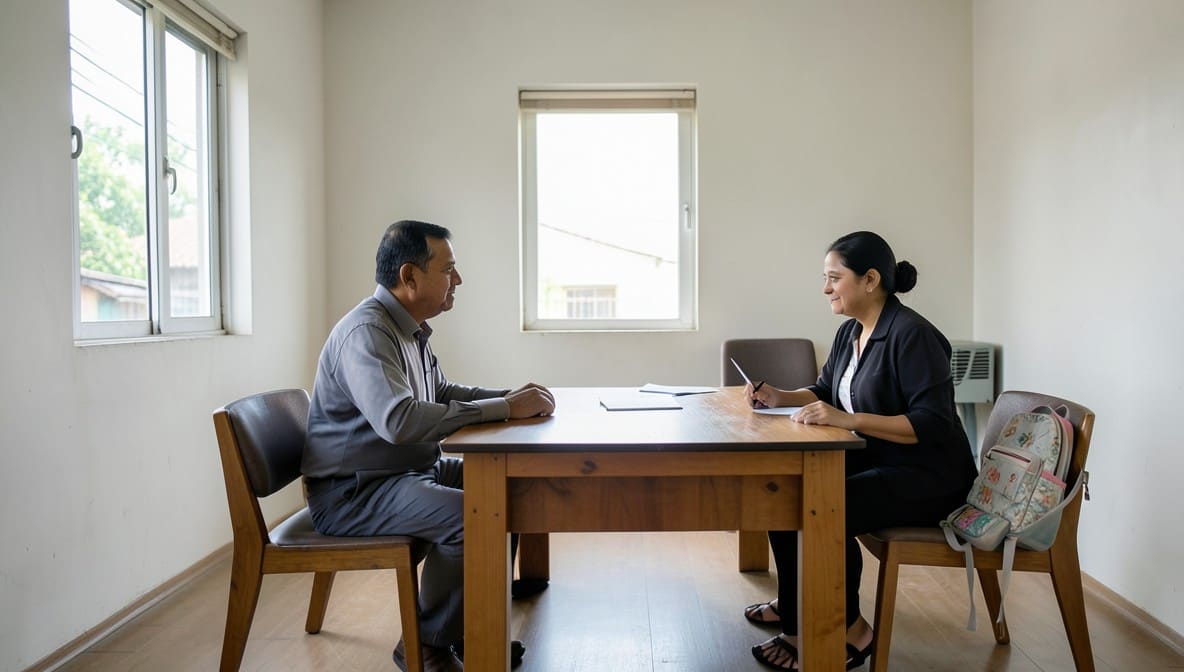
In a significant procedural intervention, the Madras High Court has prioritized the welfare of a minor child over adversarial litigation by referring a guardianship dispute to a structured mediation and counselling process. This approach underscores the judiciary’s evolving role in facilitating child-centric resolutions in custody matters, moving beyond rigid legal formalities to embrace collaborative dispute resolution.
Background & Facts
The Dispute
The petitioner, M. Govendhan, has filed an Original Petition under Sections 3, 7, 8, 9, 10 and 25 of the Guardians and Wards Act, 1890, read with Order XXI Rules 2 and 3 of the Code of Civil Procedure, seeking to be appointed as the guardian of the person of his minor child, Dhananjayan Govendhan, born on 26.07.2019. The petitioner seeks permanent custody of the child, indicating a dispute over parental care and responsibility between the petitioner and the respondents.
Key Facts
- The minor child, Dhananjayan Govendhan, was born on 26.07.2019.
- The petitioner is the biological father of the child.
- The respondents are the mother and/or other persons claiming rights over the child’s custody.
- No detailed allegations of neglect, abuse, or misconduct by either party are articulated in the judgment text.
- The petition was filed without any prior interim custody order being referenced as having been previously granted.
Procedural History
- 07.04.2026: Original Petition No. 431 of 2022 heard before the Hon’ble Dr. Justice A.D. Maria Clete at the Madras High Court.
- 07.04.2026: Court, without adjudicating merits, ordered referral to mediation and counselling.
- 17.04.2026: Mandatory first appearance before Mediation Centre and Court scheduled.
- 17.04.2026: Parties directed to appear before the Court at 1.30 p.m. prior to mediation session.
Relief Sought
The petitioner seeks to be appointed as the guardian of the person of the minor child and to be granted permanent custody, without specifying any interim relief sought or existing arrangement.
The Legal Issue
The central question before the Court was not whether the petitioner is entitled to guardianship, but whether the dispute over custody of a minor child should be resolved through adversarial litigation or through a structured, child-focused mediation and counselling process under the principles of the best interests of the child.
Arguments Presented
For the Petitioner
The petitioner’s advocate, Mr. A. Ashok Kumar, sought appointment as guardian and permanent custody, invoking the Guardians and Wards Act, 1890. No specific statutory or case law arguments were detailed in the judgment text.
For the Respondent
The respondents, represented by Ms. Geetha Ramaseshan for Mr. S. Ramesh Umapathy, did not file any written submissions or counter-arguments that were recorded in the order. The Court proceeded without opposition being formally articulated.
The Court's Analysis
The Court did not engage in a substantive analysis of the merits of the guardianship claim. Instead, it focused on the procedural mechanism best suited to resolve disputes concerning minors. The Court emphasized that the welfare of the child is the paramount consideration under the Guardians and Wards Act, 1890, and that adversarial litigation often exacerbates emotional harm to children.
"This Court considers it appropriate to refer the matter for a combined mediator-counsellor session to explore an amicable parenting arrangement and obtain child-focused assistance on interim parenting issues."
The Court recognized the distinct roles of the mediator and counsellor: the former to facilitate consensual settlement, and the latter to develop a practical, child-centric parenting plan. It imposed strict confidentiality on all mediation communications, ensuring that offers, concessions, or admissions made during the process cannot be used in court. The counsellor’s report, if submitted, is limited strictly to the child’s needs and parenting logistics, excluding any settlement-related disclosures.
The Court also ensured procedural fairness by requiring both parties to appear before it on the same day before proceeding to mediation, to facilitate direct dialogue and encourage settlement mindset.
The Verdict
The Court referred the matter to the Tamil Nadu Mediation and Conciliation Centre, with Ms. Bala Natarajan as mediator and Mr. Suchit Anant Palande as counsellor. The parties and the child are directed to appear on 17.04.2026 at 1.30 p.m. before the Court, followed by mediation. The initial fee for the counsellor is to be borne by the parties, subject to future court order. Upon conclusion, the Mediation Centre shall submit either a signed parenting plan or a limited counselling note focused solely on the child’s welfare. Until further orders, any existing interim arrangement shall continue. No custody decision or guardianship appointment has been made.
What This Means For Similar Cases
Mediation Is Now Presumptively Preferred in Custody Disputes
- Practitioners must now advise clients that courts in Tamil Nadu will routinely refer custody disputes to mediation before adjudication.
- Failure to participate in good faith may be viewed adversely in subsequent proceedings.
Counsellor Reports Are Admissible, But Heavily Restricted
- Counsellor submissions may be filed with the Court, but only on child welfare, daily care routines, school arrangements, and visitation logistics.
- Any mention of settlement offers, admissions, or blame will render the report inadmissible.
Confidentiality Is Absolute and Judicially Enforced
- All mediation communications are protected from disclosure under the Court’s order, reinforcing the integrity of the process.
- Lawyers must ensure clients understand that statements made in mediation cannot be used later in court, even if settlement fails.