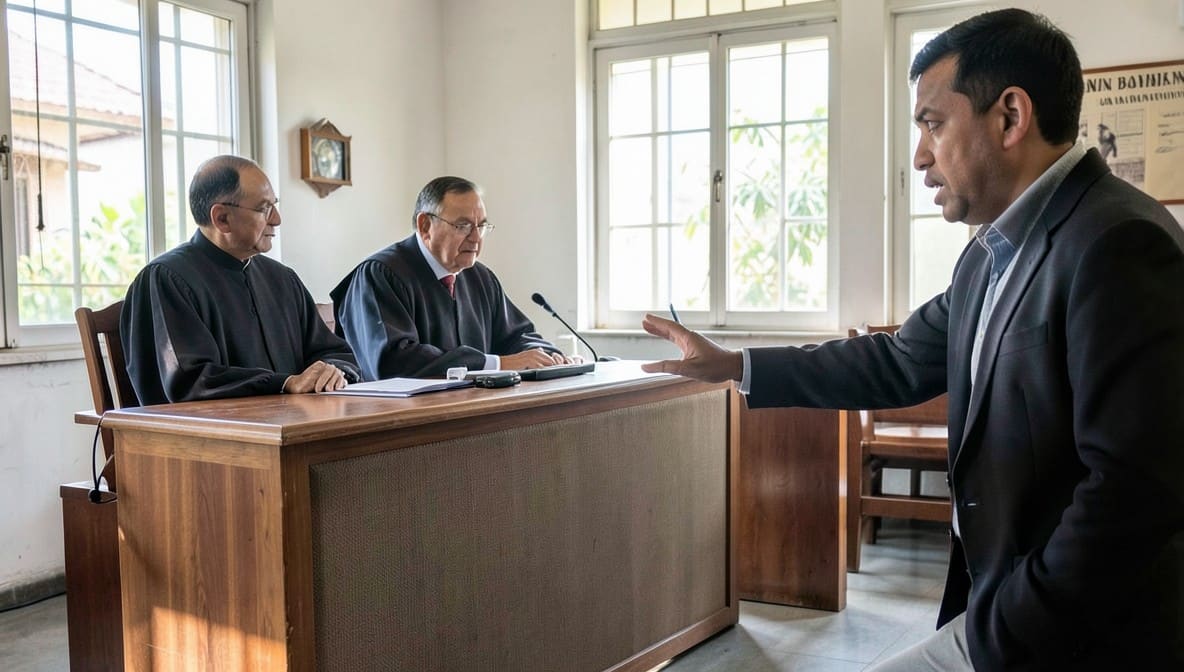
The Bombay High Court has set aside an externment order under the Maharashtra Police Act, reinforcing that externment cannot be justified without a live link between the offences and the need for preventive action. The judgment underscores that pending investigations and personal disputes cannot form the basis for externment, ensuring procedural fairness in preventive detention cases.
Background & Facts
The Dispute
The petitioner, Shaibaz Shabbir Lokhande, a resident of Vangi, Mohalla, Goregaon, Taluka Mangaon, District Raigad, was externed from Raigad District for a period of two months by an order dated 8th November, 2024 passed by the Sub-Divisional Executive Magistrate, Mangaon. The externment was challenged under Article 227 of the Constitution of India before the Bombay High Court.
Key Facts
- The petitioner was externed based on three criminal cases registered against him:
- C.R. No. 13 of 2019: Pending before the court, incident dated 2014
- F.I.R. No. 108/2024: Registered at Goregaon Police Station, under investigation
- F.I.R. No. 110/2024: Registered at Goregaon Police Station, under investigation
- The petitioner contended that F.I.R. No. 108/2024 and F.I.R. No. 110/2024 were lodged by his near relatives due to personal disputes, rendering the externment order mala fide.
- The externment order was appealed before the Divisional Commissioner, Konkan Region, which dismissed the appeal on 25th September, 2025.
Procedural History
- 08.11.2024: Externment order passed by Sub-Divisional Executive Magistrate, Mangaon
- 25.09.2025: Appeal dismissed by Divisional Commissioner, Konkan Region
- 2026: Writ Petition (WP No. 2414/2026) filed before Bombay High Court
- 15.06.2026: Judgment delivered by Bombay High Court
Relief Sought
The petitioner sought quashing of the externment order dated 8th November, 2024 and the appellate order dated 25th September, 2025, on the grounds that:
- There was no live link between the offences and the externment order
- The offences under investigation could not justify externment
- The externment was motivated by personal disputes
The Legal Issue
The central question was whether an externment order under the Maharashtra Police Act can be sustained when:
- The offences relied upon are either stale (incident from 2014) or still under investigation
- The offences are alleged to have been registered due to personal disputes between the petitioner and his relatives
Arguments Presented
For the Petitioner
- No Live Link: The externment order was based on C.R. No. 13 of 2019, an offence from 2014, which had no live link to the present circumstances. Additionally, F.I.R. No. 108/2024 and F.I.R. No. 110/2024 were still under investigation and could not justify externment.
- Mala Fide Action: The offences registered by the petitioner’s relatives were motivated by personal disputes, rendering the externment order mala fide.
- Procedural Illegality: The externing authority erred in considering offences still under investigation, violating principles of natural justice.
For the Respondent/State
- Preventive Action: The State contended that the externment was justified as a preventive measure, given the three offences registered against the petitioner.
- Short Duration: The externment was for only two months, and the period had already expired, warranting no interference.
- Discretion of Authority: The externing authority had exercised its discretion based on the material on record, and the court should not interfere lightly.
The Court's Analysis
The Court examined the principles governing externment under the Maharashtra Police Act and held that:
"Perusal of the record shows that the externement order is inter alia passed only on the basis of C.R. No. 13 of 2019, i.e., the only offence which is pending before the Court. The incident pertaining to the said offence had taken place in the year 2014. It is, therefore, clear that there is no live link between the said case and the impugned order of externment. Insofar as C.R. No. 108 of 2024 and C.R. No. 110 of 2024 are concerned, both the cases are still under investigation. In the circumstances, the said cases could not have been taken into consideration while passing the order of externment."
The Court further observed that the offences registered by the petitioner’s relatives were the result of personal disputes, which could not form a valid basis for externment. The externment order was thus held to be arbitrary and unsustainable in law.
The Verdict
The Bombay High Court allowed the writ petition and quashed the externment order dated 8th November, 2024 and the appellate order dated 25th September, 2025. The Court held that:
- Externment cannot be justified based on stale offences or offences still under investigation
- Personal disputes cannot form the basis for externment under the Maharashtra Police Act
- The externment order was procedurally flawed and arbitrary
What This Means For Similar Cases
Externment Requires a Live Link to Offences
- Pending Investigations Insufficient: Courts will not uphold externment orders based on offences still under investigation. The authority must establish a live link between the offences and the need for preventive action.
- Stale Offences Not Grounds for Externment: Offences from several years prior, without recent or ongoing criminal activity, cannot justify externment.
Personal Disputes Cannot Justify Externment
- Mala Fide Motive: Externment orders motivated by personal disputes or vendettas will be struck down as arbitrary and mala fide.
- Burden on Authority: The externing authority must demonstrate that the offences are not frivolous and have a genuine nexus to the need for externment.
Procedural Safeguards Must Be Followed
- Natural Justice: Externment orders must comply with principles of natural justice, including providing the affected party an opportunity to be heard.
- Judicial Scrutiny: Courts will rigorously examine the grounds for externment to prevent misuse of preventive detention powers.