The Bombay High Court Nagpur Bench has ruled that the fixation of a cut-off date for extending enhanced retirement gratuity benefits to employees retired after 1st January 2016 is arbitrary and unconstitutional. The Court directed the Kasturba Health Society to pay differential gratuity amounts to 13 retired employees, emphasizing that denial of benefits based on an unjustified cut-off date violates principles of equality and non-discrimination under Article 12 of the Constitution of India.
Background & Facts
The Dispute
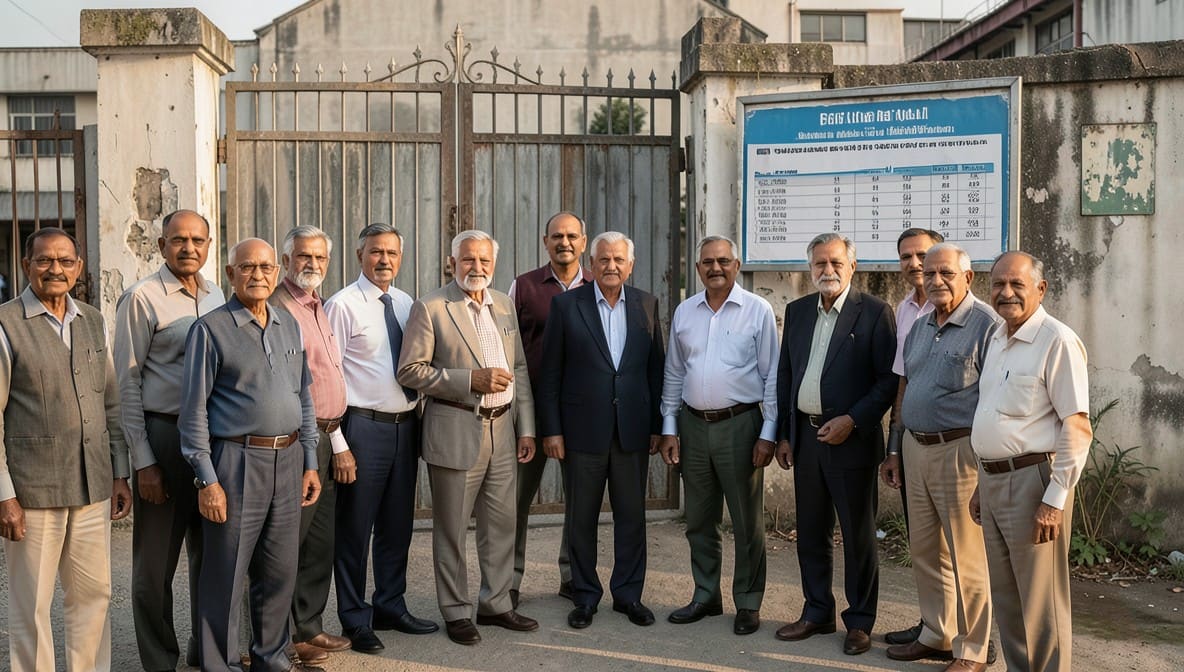
The petitioners, 13 retired employees of the Kasturba Health Society (respondent no. 3), were employed in various capacities such as Laboratory Technicians, Nurses, and X-ray Technicians. They retired on different dates after 1st January 2016, as detailed below:
The Kasturba Health Society receives 75% grant-in-aid from the Union of India (respondent no. 2) and 25% grant-in-aid from the State of Maharashtra (respondent no. 1). The remaining 25% of its funds are generated internally.
Key Facts
The State of Maharashtra issued a Government Resolution (GR) dated 1st March 2019, enhancing the maximum limit of retirement-cum-death gratuity from Rs. 7,00,000 to Rs. 14,00,000 for employees retired after 1st January 2016, based on the 7th Pay Commission recommendations.
The Kasturba Health Society, by Circular dated 26th October 2020, amended Rule 4.1(a) of its gratuity rules, fixing 21st October 2020 as the cut-off date for extending the enhanced gratuity benefits. This denied the petitioners the revised gratuity despite their retirement after 1st January 2016.
The petitioners argued that this action was arbitrary, illegal, and contrary to the GR dated 1st March 2019, seeking the differential gratuity amount with interest.
Procedural History
The petitioners filed Writ Petition No. 946/2024 before the Bombay High Court Nagpur Bench, challenging the Circular dated 26th October 2020 and seeking directions for payment of differential gratuity.
The matter was heard finally at the admission stage with the consent of both parties.
Relief Sought
The petitioners sought:
Quashing of the Circular dated 26th October 2020 to the extent it fixed 21st October 2020 as the cut-off date.
Extension of the revised gratuity benefits as per the GR dated 1st March 2019.
Payment of the differential gratuity amount with interest within a stipulated period.
The Legal Issue
The central question was whether the fixation of a cut-off date (21st October 2020) by the Kasturba Health Society for extending enhanced retirement gratuity benefits to employees retired after 1st January 2016 was arbitrary, unconstitutional, and violative of Article 12 of the Constitution of India.
Arguments Presented
For the Petitioners
The petitioners relied on the GR dated 1st March 2019, which extended the benefits of the 7th Pay Commission to employees retired after 1st January 2016.
They argued that the Circular dated 26th October 2020 arbitrarily denied them the enhanced gratuity by fixing a cut-off date of 21st October 2020, despite their retirement after 1st January 2016.
The petitioners placed reliance on the judgment in Dr. Vijay Shrawan Gambhir and Ors. v. State of Maharashtra, where the Court held that fixing a cut-off date (27th February 2009) for pensionary benefits was unconstitutional as it denied benefits to employees retired between 1st January 2006 and 26th February 2009.
For the Respondent (Kasturba Health Society)
The respondent contended that the MCS (Pension) Rules, 1982 do not govern the services of the petitioners, as they are not State Government employees.
It argued that the GR dated 1st March 2019 applied only to employees whose services were governed under the MCS Rules, and since the petitioners were employees of the Kasturba Health Society, they were not entitled to the benefits.
The Court's Analysis
The Court examined the GR dated 1st March 2019 and noted that Clauses 12 to 15 extended the benefits of the 7th Pay Commission to employees retired after 1st January 2016, including those in aided institutions like the Kasturba Health Society. The relevant clauses are reproduced below:
"12. The pensioners/family pensioners who are getting provisional pension/ family pension on unrevised pay as per Rule 126, 130, and 140 of the Maharashtra Civil Services (Pension) Rules, 1982, shall be revised provisionally as per these orders. Legal heir / heirs is / are entitled for Life Time Arrears in terms of revised pension /family pension/retirement gratuity / death gratuity with effect from 1 January 2016, till the death of pensioner / family pensioner... Government is pleased to direct that the above decision should mutatis mutandis apply with necessary changes to those pensioners of Recognized and Aided Educational Institutions... to whom pension scheme has been made applicable."
The Court observed that the Kasturba Health Society receives substantial grants from the State Government and the Union of India, bringing it within the ambit of "State" under Article 12 of the Constitution, as held in Ajay Gambhir v. Dean M.G. Institute.
The Court relied on the judgment in Smt. Savitribai Narsayya Guddapa v. State of Maharashtra and Ors., where the Aurangabad Bench of the Bombay High Court held that fixing a cut-off date (27th February 2009) for pensionary benefits was unconstitutional as it denied benefits to employees retired between 1st January 2006 and 26th February 2009. The Supreme Court upheld this judgment in State of Maharashtra v. Savitribai Narsayya Guddapa.
Applying this precedent, the Court held that the cut-off date of 21st October 2020 fixed by the Kasturba Health Society was arbitrary and unconstitutional, as it denied the petitioners their rightful benefits despite their retirement after 1st January 2016.
The Verdict
The Court allowed the writ petition and passed the following directions:
The Circular dated 26th October 2020, fixing 21st October 2020 as the cut-off date for enhanced gratuity, was quashed and set aside.
The petitioners were held entitled to the revised maximum limit of retirement-cum-death gratuity as per the GR dated 1st March 2019.
The Kasturba Health Society was directed to pay the differential gratuity amount to the petitioners within three months from the date of communication of the order.
In case of default, the petitioners were granted liberty to recover the amount with interest at 9% per annum till realization.
Rule was made absolute with no order as to costs.
What This Means For Similar Cases
Cut-off Dates for Pensionary Benefits Are Arbitrary
Courts will scrutinize cut-off dates fixed by employers or governments for extending pensionary benefits, especially when they deny benefits to employees retired within a reasonable timeframe (e.g., after 1st January 2016).
Article 12 of the Constitution applies to aided institutions receiving substantial grants from the government, making them accountable for arbitrary actions.
Aided Institutions Must Align With Government Resolutions
Institutions like Kasturba Health Society, which receive government grants, cannot unilaterally amend rules to deny benefits extended by Government Resolutions.
Clause 15 of the GR dated 1st March 2019 explicitly extends benefits to employees of aided institutions, and any deviation is unconstitutional.
Practical Takeaways for Employees and Employers
Employees retired after 1st January 2016 in aided institutions should challenge arbitrary cut-off dates denying them enhanced gratuity or pension benefits.
Employers must ensure compliance with government resolutions and avoid unjustified cut-off dates that could lead to legal challenges.
Interest at 9% per annum may be awarded for delayed payments, emphasizing the financial consequences of non-compliance.