The Chhattisgarh High Court has clarified a critical principle in motor accident compensation law: each dependent of a deceased victim is entitled to a separate and distinct award for loss of consortium, not a single lump sum divided among them. This ruling redefines how tribunals must assess non-pecuniary damages in wrongful death cases, ensuring equitable recognition of each family member’s emotional and psychological loss.
Background & Facts
The Dispute
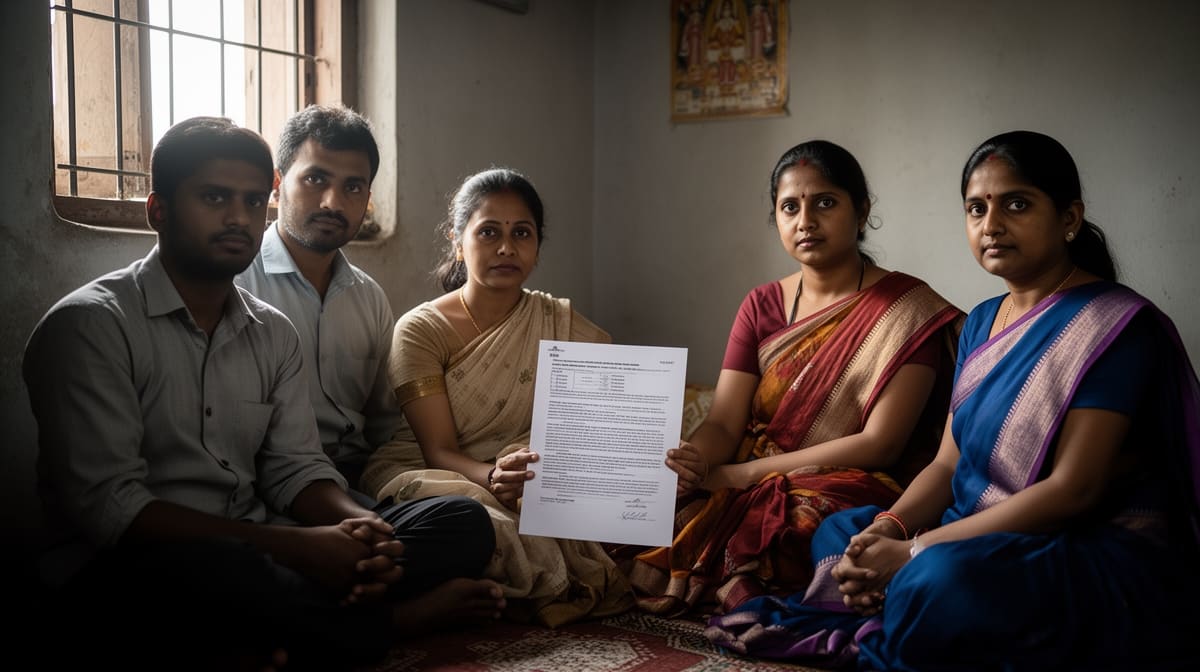
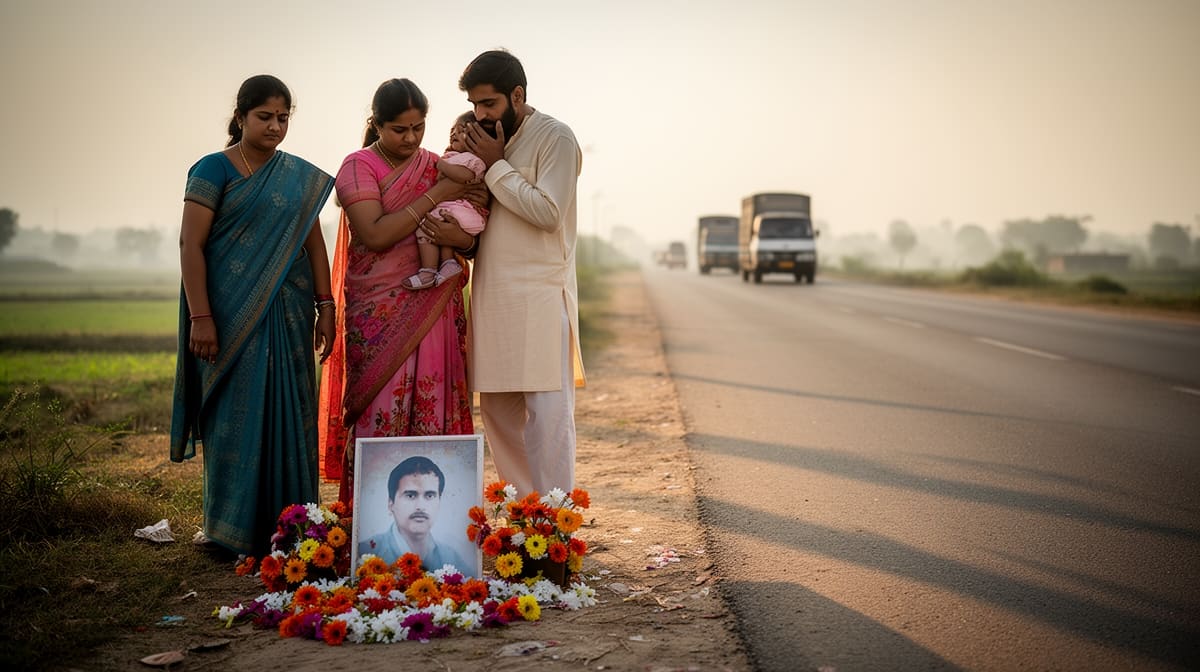
The appellants, legal representatives of Manharan Yadav, a 51-year-old school bus driver who died in a road accident on 1 June 2017, filed a joint claim petition seeking compensation for his death and for injuries sustained by his minor son, Bittu alias Ganesh. The accident occurred when Manharan Yadav, riding a motorcycle, was struck by a truck owned by respondent no. 2 and driven by respondent no. 1. The claimants include his widow and five minor children.
Procedural History
- 2018: Claim petition filed before the Second Additional Motor Accident Claims Tribunal, Janjgir
- 2020: Tribunal awarded Rs. 11,59,000/- for death of Manharan Yadav, including Rs. 40,000/- as a single lump sum for loss of consortium
- 2020: Tribunal awarded Rs. 4,30,000/- for injuries to Bittu alias Ganesh, omitting attendant charges and special diet
- 2022: Appeal filed before the Chhattisgarh High Court under Section 173 of the Motor Vehicles Act, 1988
Relief Sought
The appellants sought enhancement of compensation by granting separate awards of Rs. 40,000/- each to the five dependents for loss of consortium, and additional Rs. 10,000/- each for attendant charges and special diet for the injured minor.
The Legal Issue
The central question was whether loss of consortium under the Motor Vehicles Act, 1988 must be awarded as a single lump sum to the family, or whether each dependent - particularly minor children and a widow - is entitled to an individualized award reflecting their distinct emotional and psychological loss.
Arguments Presented
For the Appellant
Counsel relied on Magma General Insurance Co. Ltd. v. Nanu Ram @ Chuhru Ram & Ors. (2008) 18 SCC 130 to argue that the Supreme Court has consistently held that loss of consortium is not a collective right but a personal loss suffered by each dependent. He contended that denying separate awards to five dependents, including four minor children, amounted to undercompensation and violated the principle of just and equitable relief under Section 140 of the Act.
For the Respondent
The insurer argued that the Tribunal’s award was within reasonable bounds and that the Supreme Court’s ruling in Magma did not mandate rigid per-person awards but allowed discretion based on facts. They maintained that Rs. 40,000/- as a total was adequate and that no precedent compelled bifurcation.
The Court's Analysis
The Court examined the nature of loss of consortium as a non-pecuniary head of damage, emphasizing its personal and irreplaceable character. It distinguished between compensation for economic loss (which may be apportioned) and emotional loss, which is inherently individual.
"The loss of a parent’s companionship, guidance, and affection is not a divisible commodity; each child and the widow experience it in their own way, and the law must recognize that plurality of loss."
The Court held that the Tribunal erred in treating loss of consortium as a monolithic head, contrary to the ratio decidendi in Magma General Insurance. The Supreme Court had explicitly stated that where multiple dependents exist, each is entitled to compensation for their own loss, not a shared portion. The Court further noted that the Tribunal’s failure to consider attendant charges and special diet for a minor suffering grievous injuries was a manifest oversight, given the child’s age and dependency.
The Court rejected the insurer’s argument that discretion absolves tribunals from applying binding precedent. It affirmed that judicial discretion must operate within the bounds of established legal principles, and that failure to apply Magma constituted a legal error warranting interference.
The Verdict
The appellants succeeded in part. The Chhattisgarh High Court held that each dependent is entitled to a separate award for loss of consortium, and that attendant charges and special diet must be granted for minor victims of serious injury. The compensation for death was enhanced by Rs. 2,40,000/-, and for the injured minor by Rs. 20,000/-. The insurer was directed to pay the enhanced amounts within 60 days with interest at 9% per annum.
What This Means For Similar Cases
Each Dependent Is Entitled to Individual Compensation
- Practitioners must now plead and prove loss of consortium separately for each widow, child, or parent in wrongful death claims
- Tribunals must itemize and justify individual awards under this head, not aggregate them
- Failure to do so invites appellate interference under Section 173 of the Motor Vehicles Act
Minor Injury Claims Require Specific Headings
- Attendant charges and special diet are no longer discretionary for minors with prolonged hospitalization
- These must be claimed explicitly and supported by medical records
- Courts will now treat omission of these heads as a procedural lapse warranting enhancement
Precedent Binding Even in Discretionary Awards
- Magma General Insurance is not advisory - it is binding on all tribunals
- Discretion under Section 140 cannot override settled Supreme Court doctrine
- Advocates must cite Magma in every claim involving multiple dependents to prevent undercompensation