The Bombay High Court has set a critical precedent on how market value must be calculated in land acquisition cases where the sale deed relied upon is for a significantly smaller parcel. The judgment mandates a balanced, fact-based approach to deductions and establishes a clear standard for annual escalation, directly impacting how claimants and acquisition authorities assess compensation.
Background & Facts
The Dispute
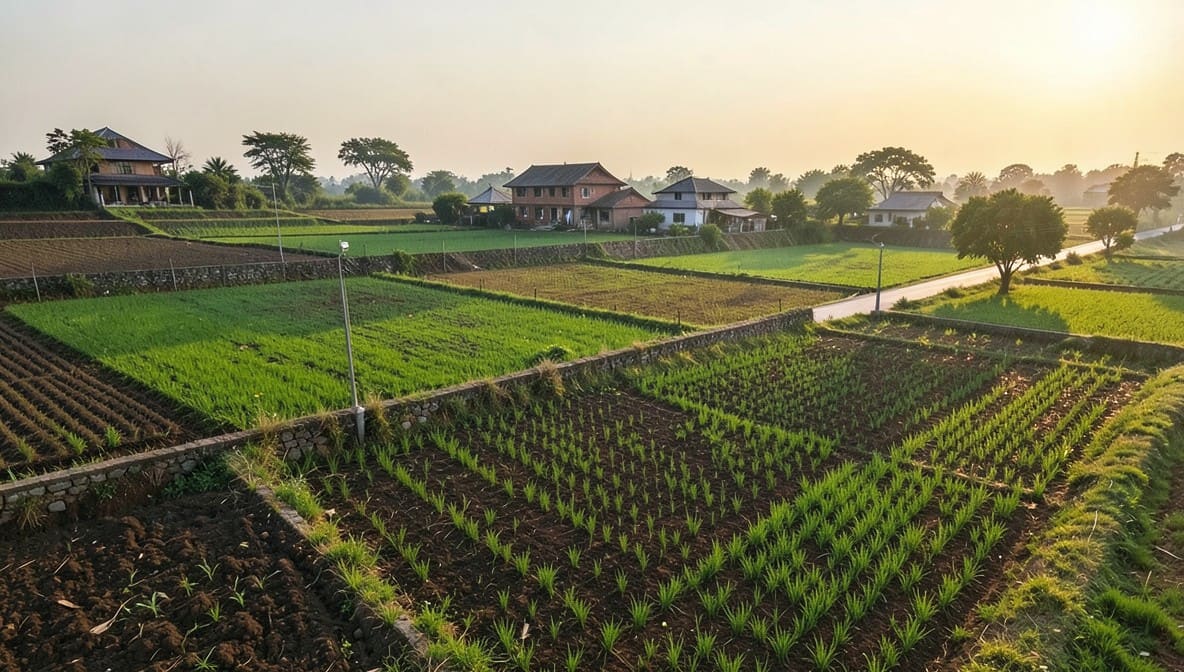
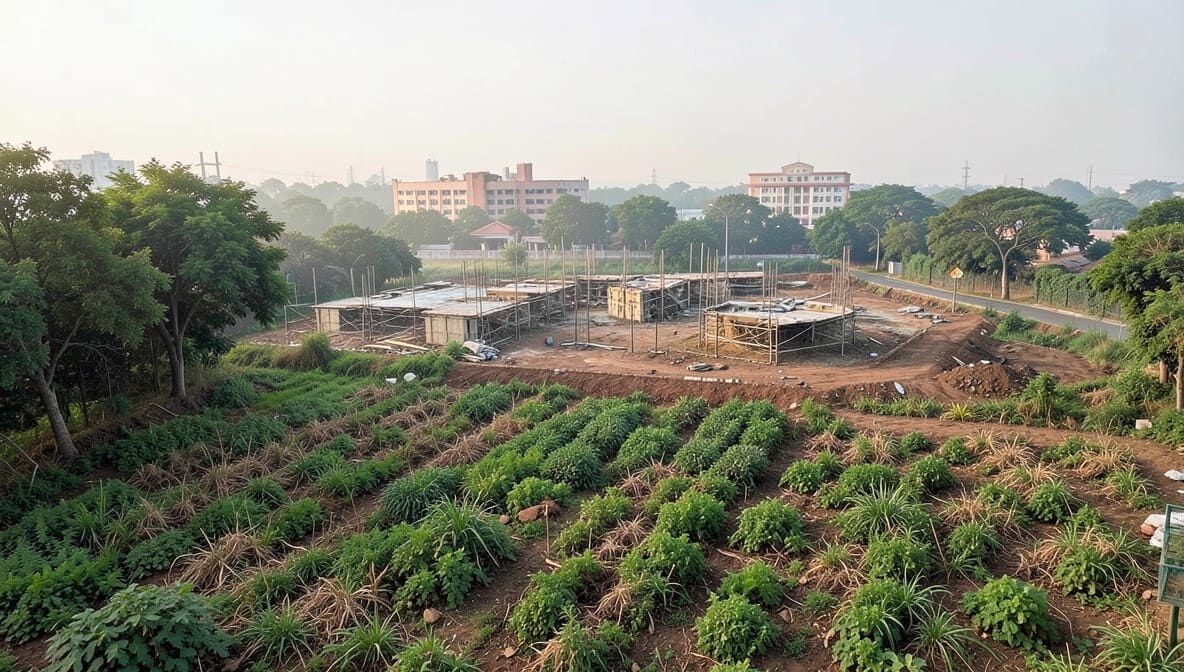
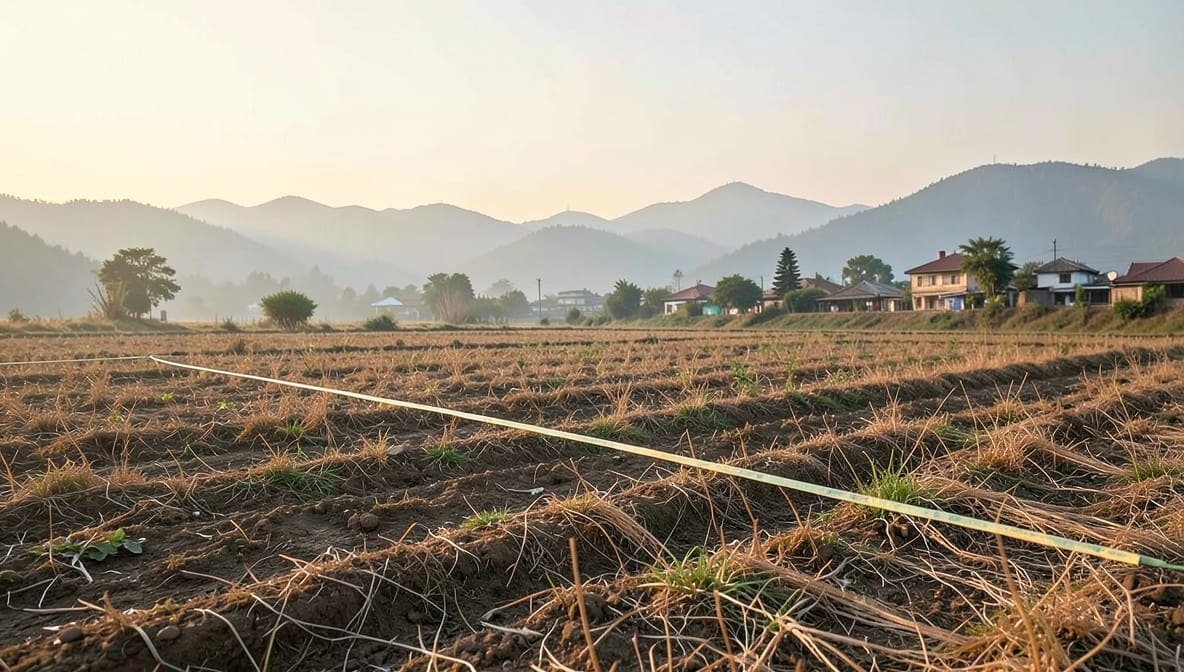
The appellants, Shilabai Gautam Ghaytadak and another, are landowners whose agricultural land admeasuring 3 Hectares 54 Ares in Gut No. 18, village Rajegaon, Taluka Ghansawangi, District Jalna, was acquired by the State of Maharashtra for the construction of Percolation Tank No. 3. The Special Land Acquisition Officer initially determined compensation at Rs. 780 per Are. Dissatisfied, the claimants filed Land Acquisition Reference No. 728 of 2011, relying on a sale deed (Exhibit-12) from the same village for 10 Ares of land sold at Rs. 5,500 per Are.
Key Facts
- The acquired land is entirely agricultural and dry.
- The sale deed (Exhibit-12) pertains to 10 Ares of dry agricultural land in the same village, executed on 15.06.1999.
- The sale price was Rs. 55,000 for 10 Ares, equating to Rs. 5,500 per Are.
- The notification under Section 4 of the Land Acquisition Act was issued on 01.01.2006.
- The Reference Court deducted 75% from the sale deed value (Rs. 5,500) to arrive at Rs. 1,375 per Are, then added a 10% increase over two years (5% per annum), resulting in a final rate of Rs. 1,890 per Are.
Procedural History
- 15.06.1999: Sale deed executed for 10 Ares at Rs. 5,500 per Are.
- 01.01.2006: Section 4 notification issued for acquisition.
- 2011: Land Acquisition Reference No. 728 filed before the Reference Court.
- Prior to 01.07.2026: Reference Court delivered order fixing compensation at Rs. 1,890 per Are.
- 2021: First Appeal No. 1569 of 2021 filed before the Bombay High Court, Aurangabad Bench.
- 01.07.2026: Final order passed by the High Court.
Relief Sought
The appellants sought enhancement of compensation by reducing the deduction from the sale deed value from 75% to a more reasonable percentage and applying 10% annual escalation for the full period between the sale deed (15.06.1999) and the Section 4 notification (01.01.2006), rather than a flat 10% over two years.
The Legal Issue
The central question was whether a 75% deduction from the sale deed value for a 10 Are plot, compared to a 3 Hectare 54 Are acquisition, is legally justified, and whether the escalation rate should be applied annually over the full period between the sale deed and the Section 4 notification.
Arguments Presented
For the Appellant
The learned Advocate contended that the Reference Court’s 75% deduction was excessive and arbitrary. He relied on a 2026 Bombay HC order in First Appeal Nos. 2273 and 2772 of 2022, where a 20% deduction was deemed appropriate for a 20 Are sale deed against a 1 Hectare 72 Are acquisition. He argued that since both the acquired land and the exemplar were dry agricultural land in the same village, a 50% deduction would be reasonable. He further submitted that the escalation should be 10% per annum for the full seven-year period (1999 to 2006), not a flat 10% over two years.
For the Respondent
The learned Additional Government Pleader defended the Reference Court’s reasoning, asserting that the small size of the exemplar (10 Ares) justified a higher deduction. She argued that the 10% increase over two years was a prudent adjustment and that the final rate of Rs. 1,890 per Are was fair and supported by precedent.
The Court's Analysis
The Court examined the principles governing market value determination under the Land Acquisition Act, particularly the use of comparable sales and the application of escalation. It noted that while the sale deed (Exhibit-12) was from the same village and of similar land use, its small size (10 Ares) warranted a deduction. However, the Court distinguished the present case from State of Maharashtra v. Rameshwar and Santosh v. State of Maharashtra, where deductions of 70-80% were upheld for plots less than 5 Ares. Here, the exemplar was 10 Ares, and the acquired land was substantial (3 Hectares 54 Ares), making a 75% deduction disproportionate.
"The deduction of 75% is excessive and not in consonance with the settled principle that the market value should be determined by reference to the nearest comparable sale, with reasonable adjustments for size and location."
The Court further held that the escalation must be applied annually at 10% for the entire period between the date of the sale deed (15.06.1999) and the Section 4 notification (01.01.2006), which is a period of approximately six years and seven months. A flat 10% increase over two years, as applied by the Reference Court, was legally unsustainable.
The Court emphasized that the purpose of escalation is to account for inflation and market appreciation over time, and it must reflect the actual duration between the sale and acquisition. The 50% deduction was deemed appropriate to account for the difference in scale while preserving the evidentiary value of the sale deed.
The Verdict
The appeal was partly allowed. The High Court modified the Reference Court’s order and held that the appellants are entitled to compensation at the rate of Rs. 2,750 per Are (50% deduction from Rs. 5,500 per Are), with escalation at 10% per annum for the period from 15.06.1999 to 01.01.2006. The award shall be recalculated accordingly, including statutory benefits. The appellants shall pay the deficit court fees. The Record and Papers shall be sent back to the Reference Court for recalculation and fresh award within six weeks.
What This Means For Similar Cases
Deductions Must Be Proportionate, Not Presumptive
- Practitioners must challenge deductions exceeding 50% for exemplar sales of 10 Ares or more in agricultural land acquisitions, unless the plot is isolated or lacks comparability.
- A 75% deduction is now prima facie excessive unless supported by specific evidence of market distortion or location disadvantage.
Escalation Must Reflect Actual Time Gap
- The 10% annual escalation must be applied for the full period between the sale deed and the Section 4 notification, not arbitrarily capped.
- Any flat percentage increase over a short period (e.g., 10% over two years) will be set aside as legally incorrect.
Sale Deeds from Same Village Are Strong Evidence
- Comparable sales from the same village, even if smaller, are admissible and must be given due weight if land use and soil type are identical.
- The burden shifts to the State to justify why a sale deed should be discounted beyond 50% in the absence of material differences.