The Bombay High Court has clarified that when parties execute a subsequent agreement governing the same subject matter with a broader jurisdiction clause, it supersedes any prior conflicting clause - even if the earlier agreement is labeled as 'principal.' This ruling reinforces the primacy of parties' latest mutual intent in determining the proper forum for disputes.
Background & Facts
The Dispute
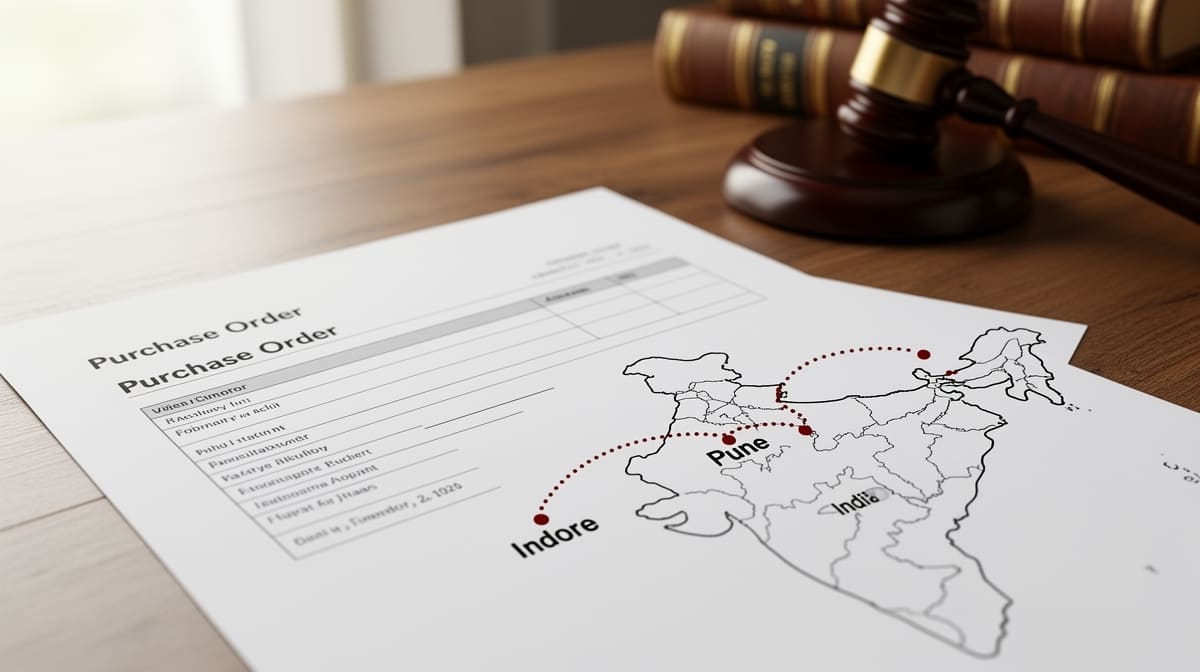
The dispute arises from the assignment of remake rights for the original Tamil film "Kaithi" into a Hindi remake, "Bholaa." The Plaintiff, Dream Warrior Pictures, entered into two sequential agreements with the Applicant (Reliance Entertainment Studios Pvt. Ltd.) and Defendant No. 2 (Ajay Devgn Film Productions LLP) concerning the exploitation of these rights. The first agreement, dated 29.03.2023, granted 50% remake rights to the Applicant and included an exclusive jurisdiction clause in favor of courts in Chennai. The second agreement, dated 01.04.2023, involved all three parties and granted 100% remake rights to Defendant No. 2, with an exclusive jurisdiction clause in favor of courts in Mumbai. The Plaintiff now alleges that the assignment was never perfected, that the agreements were terminated, and that the continued exploitation of "Bholaa" constitutes copyright infringement and breach of contract.
Key Facts
- The original Tamil film "Kaithi" is owned by the Plaintiff.
- On 29.03.2023, the Plaintiff and the Applicant executed the first agreement, assigning 50% remake rights to the Applicant.
- Clause 2.4 of the first agreement permitted the Applicant to appoint a third party (Defendant No. 2) as an additional producer via a separate agreement.
- Clause 11 of the first agreement provided: "exclusive jurisdiction of courts in Chennai."
- Clause 12.2 of the first agreement contained an entire agreement clause superseding prior understandings.
- On 01.04.2023, the Plaintiff, the Applicant, and Defendant No. 2 executed the second agreement, assigning 100% remake rights to Defendant No. 2.
- Clause 11.1 of the second agreement provided: "exclusive jurisdiction of the courts in Mumbai."
- Clause 11.7 of the second agreement explicitly stated: "expressly and unequivocally supersedes all previous agreements... as to the subject matter hereof."
- Clause 4 of the second agreement acknowledged the first agreement as the "Principal Agreement" solely for the purpose of fixing consideration terms.
- The remade film "Bholaa" was produced and released in 2024.
- On 28.10.2024, the Plaintiff issued a Cure Notice alleging material breach and terminating the first agreement.
- The Plaintiff filed the suit on 2026 seeking declaration of invalid assignment, termination of agreements, injunction against exploitation, and damages of Rs. 28,89,02,466/- for breach of both agreements.
Procedural History
- 29.03.2023: First agreement executed between Plaintiff and Applicant (jurisdiction: Chennai).
- 01.04.2023: Second agreement executed between Plaintiff, Applicant, and Defendant No. 2 (jurisdiction: Mumbai).
- 28.10.2024: Plaintiff issued Cure Notice terminating the first agreement.
- 2026: Commercial IP Suit (L) No. 3739 of 2026 filed in Bombay High Court.
- 11.02.2024: Bombay High Court granted leave under Clause XII of Letters Patent to maintain the suit in Mumbai (unchallenged).
- 10.04.2026: Interim Application (L) No. 10646 of 2026 filed by Defendant No. 1 seeking return of plaint to Chennai.
The Parties' Positions
Applicant (Defendant No. 1): Argued that the first agreement is the principal agreement and its Chennai jurisdiction clause governs. The second agreement is ancillary and cannot override the principal. Relied on Olympus Superstructures, Ameet Lalchand Shah, and Balasore Alloys to argue that the first agreement’s jurisdiction clause must prevail.
Plaintiff (Dream Warrior Pictures): Argued that the second agreement, executed later and involving all parties, supersedes the first under its express entire agreement clause. The dispute arises from the exploitation of the remake film, which is a direct consequence of the second agreement. The jurisdiction clause in the second agreement is broader and governs all disputes arising out of or in connection with it.
Relief Sought
The Plaintiff seeks:
- Declaration that the assignment of remake rights was never completed or perfected.
- Declaration that the first agreement was validly terminated on 27.11.2024.
- Declaration that Defendant Nos. 1 and 2 have no rights in the original film.
- Declaration that "Bholaa" is an unauthorized remake and its exploitation infringes copyright.
- Injunction against further exploitation of "Bholaa" and derivative materials.
- Damages of Rs. 28,89,02,466/- for breach of both agreements.
The Applicant seeks return of the plaint to Chennai for presentation before the competent court.
The Legal Issue
The central question is whether a subsequent agreement, executed between the same parties plus a new party, with an express entire agreement clause and a broader jurisdiction clause, supersedes a prior agreement’s jurisdiction clause - even when the prior agreement is labeled as the "principal agreement."
Arguments Presented
For the Appellant/Petitioner
The Applicant contended that the first agreement dated 29.03.2023 is the principal agreement, as acknowledged in Clause 4 of the second agreement. The jurisdiction clause in Clause 11 of the first agreement is specific and exclusive to Chennai. The second agreement, dated 01.04.2023, is ancillary and merely operationalizes Clause 2.4 of the first agreement. The Applicant relied on Olympus Superstructures v. Meena Vijay Khetan to argue that ancillary agreements cannot override the jurisdiction clause of a principal agreement unless explicitly stated. It was further submitted that the second agreement lacks a termination clause and does not expressly revoke the first agreement, making the Chennai clause still operative.
For the Respondent/State
The Plaintiff argued that the second agreement, executed after the first and involving all relevant parties, contains an express entire agreement clause (Clause 11.7) that supersedes all prior understandings. The jurisdiction clause in Clause 11.1 is wide and unambiguous, covering "any dispute arising out of or in connection with this Agreement." Since the suit seeks relief based on the exploitation of the remake film - a direct consequence of the second agreement - the Mumbai jurisdiction must govern. The Plaintiff relied on Tyso International, Juggilal Kamalapat, and Chrisomar Corporation to establish that parties’ latest intent, especially when expressed in a comprehensive subsequent agreement, controls forum selection.
The Court's Analysis
The Court undertook a detailed textual and contextual analysis of both agreements. It rejected the Applicant’s characterization of the first agreement as "dominant" or "principal" for jurisdictional purposes. The Court observed that while Clause 4 of the second agreement refers to the first as the "Principal Agreement," this reference was limited to fixing the consideration amount and commercial terms, not to governing dispute resolution.
"The expression 'Principal Agreement' in Clause 4 of the second agreement is used solely to anchor the consideration and commercial understanding, not to establish primacy of jurisdiction or to negate the superseding effect of the second agreement."
The Court emphasized that the second agreement was not merely ancillary but constituted a new, independent transaction: it involved a new party (Defendant No. 2), transferred 100% rights (as opposed to 50%), and created new obligations regarding exploitation and indemnification. The Plaintiff’s claims for copyright infringement and damages are directly tied to the exploitation of the remake film under the second agreement, which Defendant No. 2 - non-party to the first agreement - executed.
The Court distinguished the precedents cited by the Applicant. In Olympus Superstructures, the arbitration clause in the ancillary agreement was narrowly worded and intended to apply only if disputes arose exclusively under that agreement. Here, the second agreement’s jurisdiction clause was broad and inclusive. In Balasore Alloys, the Supreme Court upheld the umbrella agreement’s arbitration clause because it governed the entire transaction - similarly, the second agreement here governed the full scope of the remake rights exploitation.
The Court also noted that Defendant No. 2 was never a party to the first agreement and could not be bound by its Chennai jurisdiction clause. To compel the Plaintiff to sue Defendant No. 2 in Chennai while suing the Applicant in Mumbai would result in a fragmented cause of action, contrary to judicial efficiency and the principle of unity of transaction.
Finally, the Court held that the unchallenged order dated 11.02.2024 granting leave under Clause XII of the Letters Patent to maintain the suit in Mumbai further solidified the forum’s competence.
The Verdict
The Applicant’s application under Order VII, Rule 10 CPC seeking return of the plaint to Chennai was dismissed. The Court held that the jurisdiction clause in the second agreement dated 01.04.2023 governs the dispute. The Bombay High Court has exclusive jurisdiction to entertain the suit. The Plaintiff’s claims, including infringement and damages of Rs. 28,89,02,466/-, shall proceed before the Commercial Division of the Bombay High Court.
What This Means For Similar Cases
Subsequent Agreements Override Prior Jurisdiction Clauses
- Practitioners must treat the latest agreement between the same or expanded parties as controlling if it contains an express entire agreement clause.
- Labeling an agreement as "principal" does not immunize its jurisdiction clause from being superseded by a later, comprehensive agreement.
- Courts will prioritize the parties’ final, written intent over formal labels.
Multi-Party Transactions Require Unified Forum Selection
- When a dispute involves multiple agreements and multiple parties, splitting causes of action across jurisdictions is impermissible.
- A jurisdiction clause in an agreement that includes all relevant parties and covers the full scope of the transaction will govern, even if earlier agreements exist.
- Counsel must assess whether a new party has been added and whether the new agreement expands the subject matter - this triggers supersession.
Drafting Best Practices for Jurisdiction Clauses
- Avoid ambiguous references to "principal" or "ancillary" agreements unless the intent is clearly to preserve prior terms.
- Use explicit language: "This Agreement supersedes all prior agreements, including any jurisdiction clauses therein."
- Ensure jurisdiction clauses are consistent across related agreements, or deliberately replace them with broader, inclusive language.