The Bombay High Court has clarified that in domestic enquiries under the Industrial Disputes Act, 1947, a finding of misconduct based on alleged forgery of educational documents cannot stand without concrete proof that the document was both submitted and false. The judgment underscores that suspicion, inconsistency, or delay cannot replace evidentiary substantiation, even in non-judicial proceedings.
Background & Facts
The Dispute
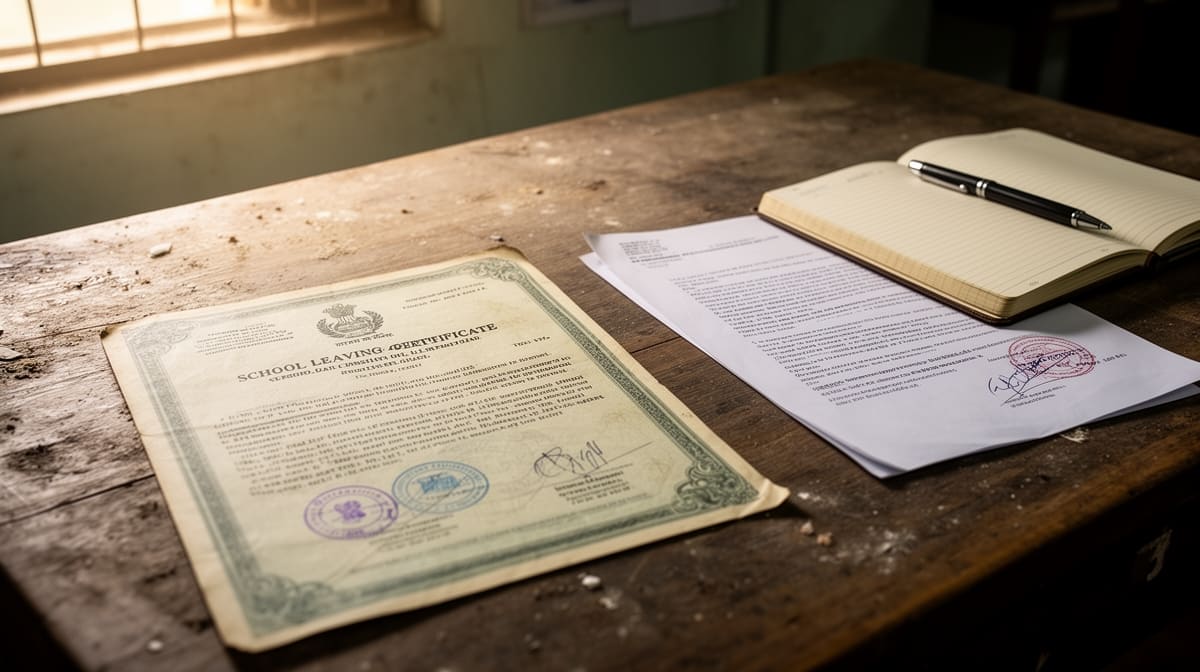
The petitioner-workmen, Ashok Chimaji Navsupe and Shahaji Madhukar Jadhav, were employed by Alicon Castalloy Limited, a manufacturer of aluminium auto components. Both were initially hired as trainees and later confirmed as Machine Operators (Staff II). At the time of termination, each was drawing monthly emoluments of Rs. 34,642.08. The employer alleged that both had submitted forged B.A. passing certificates from Pune University at the time of employment or confirmation, constituting serious misconduct under Clause 24(h) and 24(l) of the company’s service rules.
Key Facts
- The petitioner joined service on the basis of passing S.S.C. examination; no graduation qualification was required for the post.
- A charge-sheet dated 31.05.2015 was issued alleging submission of a forged B.A. certificate.
- The petitioner denied the allegations and submitted a written reply.
- An internal departmental enquiry was conducted by Enquiry Officer Shri P.A. Narona, Advocate, with Mr. Prakash Takte (HR) as Management Representative.
- The petitioner sought permission to be represented by Ms. Anuja Terkar, Advocate, which was denied on the ground that the Management Representative was not a legal practitioner.
- The Enquiry Officer relied on a handwriting expert’s report to conclude that the B.A. certificate was forged.
- No original B.A. certificate was produced in evidence.
- No witness was examined to confirm the petitioner’s submission of the certificate.
- The management claimed an audit in 2011 revealed the forgery, but the audit report was not produced on record.
- No disciplinary action was taken between 2011 and 2015, despite the alleged discovery.
- The Enquiry Officer submitted his report on 10.03.2017; the petitioner received it on 12.03.2017.
- Termination order was issued on 30.04.2017.
Procedural History
- 31.05.2015: Charge-sheet issued against the petitioner.
- 10.03.2017: Enquiry Officer’s report submitted.
- 12.03.2017: Petitioner received the enquiry report.
- 30.04.2017: Termination order issued.
- 2017: Industrial dispute raised before Deputy Commissioner of Labour, Pune.
- 14.10.2021: Labour Court delivered judgment on preliminary issues.
- 20.10.2022: Labour Court passed final award, partly allowing the claim but declining back wages.
- 2023: Writ Petitions Nos. 8697 and 8698 of 2023 filed by the employer.
- 2025: Writ Petitions Nos. 2174 and 2175 of 2025 filed by the workmen.
- 23.04.2026: Judgment reserved.
- 30.04.2026: Judgment pronounced.
The Parties' Positions
For the Petitioners (Workmen):
- No evidence proved that the B.A. certificate was ever submitted.
- No document showed the petitioner had appeared for or failed the B.A. exam.
- Handwriting expert’s report was not proved; expert was not examined.
- Audit report (alleged basis of action) was not produced, creating doubt about its existence.
- Delay of six years between alleged audit (2011) and charge-sheet (2015) was unexplained.
- Denial of legal representation violated principles of natural justice.
For the Respondent (Employer):
- Documents submitted at the time of confirmation showed inconsistency in educational qualifications.
- Handwriting expert possessed a diploma and was qualified.
- Domestic enquiry need not follow strict rules of evidence.
- Even if Part I charge is not proved, the matter should be remanded for fresh evidence.
- The employer’s case was based on documentary inconsistencies and conduct.
Relief Sought
The petitioners sought reinstatement with continuity of service and full back wages. The employer sought confirmation of termination and dismissal of the petitions.
The Legal Issue
The central question was whether a finding of misconduct based on alleged submission of a forged educational certificate can be sustained in a domestic enquiry when the document is not produced, the expert report is not examined, and no foundational evidence establishes that the certificate was ever submitted or was false.
Arguments Presented
For the Appellant/Petitioner
The petitioners relied on the principle that disciplinary proceedings must be fair and based on material evidence. They cited State of U.P. v. Mohd. Noor and Management of Mysore Paper Mills Ltd. v. Workmen to argue that suspicion cannot substitute proof. They emphasized that the burden lies on the employer to prove the charge, and failure to produce the alleged forged document or examine the handwriting expert rendered the enquiry defective. The absence of the audit report and the unexplained delay further undermined the credibility of the case.
For the Respondent/State
The employer contended that domestic enquiries are not bound by the Evidence Act and that inconsistencies in documents submitted at the time of confirmation were sufficient to infer misconduct. They argued that the handwriting expert’s qualification was adequate and that judicial review should not re-appreciate evidence. They also submitted that even if the enquiry was flawed, the matter should be remanded to the Labour Court for fresh adjudication.
The Court's Analysis
The Court undertook a meticulous review of the enquiry process and the evidentiary basis for the finding of guilt. It held that while domestic enquiries are not bound by the strict rules of evidence, they must still meet the threshold of fairness and rationality. The Court observed:
"The case as projected against the petitioner is that though he entered service on the basis of passing S.S.C., he projected himself as a graduate by submitting a B.A. passing certificate of Pune University which is alleged to be false. Now, when such allegation goes to the root of integrity of an employee, there must be some material showing first that such a certificate was in fact submitted, and second that the same was not genuine."
The Court found that the absence of the original certificate, the non-examination of the handwriting expert, and the non-production of the audit report created a critical evidentiary void. The Enquiry Officer’s conclusion that the certificate was forged was based on assumption, not proof. The Court noted:
"Suspicion cannot take the place of proof of misconduct. The connection between the documents and the charge must be reasonably clear."
Regarding the handwriting expert, the Court clarified that while qualification is not subject to judicial scrutiny, the evidentiary value of the report is. Without examination of the expert or corroboration of the document’s authenticity, the report remained untested and unreliable.
The Court also addressed the delay between the alleged 2011 audit and the 2015 charge-sheet. While delay alone does not vitiate proceedings, the Court held that when coupled with the non-production of the primary document, it renders the management’s case implausible.
The Court rejected the argument that the employer’s case could be saved by remand as a routine measure. However, recognizing that the employer had pointed to documentary inconsistencies and that the dispute involved serious allegations, the Court concluded that fairness demanded a fresh opportunity for both parties to present evidence before the Labour Court.
The Verdict
The writ petitions were partly allowed. The judgment and award dated 20.10.2022 of the 3rd Labour Court, Pune, and the preliminary findings dated 14.10.2021, were quashed and set aside. The reference was remanded to the Labour Court for fresh adjudication limited to the issue of proof of misconduct. The employer was granted liberty to adduce evidence, and the petitioner was entitled to lead rebuttal evidence. The Labour Court was directed to decide the matter expeditiously, preferably within six months. All other contentions were kept open. No costs were awarded.
What This Means For Similar Cases
Proof of Alleged Forgery Must Be Concrete
- Employers must produce the original disputed document or provide credible evidence of its submission.
- Mere inconsistency in educational records is insufficient to prove forgery; a direct link between the document and the act of submission must be established.
- Suspicion, even if reasonable, cannot substitute proof in disciplinary proceedings.
Expert Reports Require Testing
- Handwriting or forensic expert reports must be formally introduced and the expert examined, especially when the report is pivotal to the finding.
- Qualification alone does not validate an expert’s opinion; the report must be tested through cross-examination or corroboration.
- Unexamined expert reports, even from qualified individuals, lack evidentiary weight in domestic enquiries.
Delay and Non-Production of Key Documents Undermine Credibility
- Unexplained delays between discovery of alleged misconduct and initiation of proceedings weaken the employer’s case.
- Failure to produce documents that form the basis of the charge (e.g., audit reports, original certificates) raises doubts about the genuineness of the allegations.
- Courts will view such omissions as indicators of a weak or speculative case.
Remand Is Not Automatic - But Fairness Demands It When Evidence Is Incomplete
- Remand to the Labour Court is permissible only when the record shows a plausible case that was not fully developed, not merely because the enquiry was flawed.
- The Court must balance the rights of the employee against the employer’s right to prove misconduct.
- Employers should ensure that all material evidence is collected and presented during the domestic enquiry to avoid subsequent litigation.
Legal Representation in Domestic Enquiries
- While not mandatory, denial of legal representation may be challenged if it results in a procedurally unfair outcome, particularly where complex legal issues are involved.
- The Court did not rule on this issue conclusively but noted the procedural irregularity as part of the broader fairness assessment.