The Calcutta High Court has affirmed that a tenant’s long-standing, uninterrupted use of a landlord’s compound for the essential operation of a motor vehicle showroom constitutes an implied right incidental to the tenancy, which cannot be revoked by the landlord through unilateral action. This decision clarifies the scope of tenant rights under the West Bengal Premises Tenancy Act and the doctrine of lost grant.
Background & Facts
The Dispute
The Plaintiff, Karnani Properties Limited, is the owner of Karnani Mansion, a multi-occupancy building at 25B, Park Street, Kolkata, which includes several commercial and residential units. The Defendant No. 1, Mr. Kailash Prasad Jhunjhunwala, was the tenant of a 4,400 sq. ft. showroom on the ground floor since 24.08.1956 under a tenancy agreement (Ext. A) for a period of 11 months, which was subsequently renewed. The showroom was used for the business of selling Hyundai motor vehicles under the trade name "Bengal Hyundai". The Defendant No. 2, J.J. Automotive Pvt. Ltd., is a company under common management with Defendant No. 1 and operates the showroom.
Key Facts
- The tenancy agreement (Ext. A) dated 24.08.1956 specified the purpose as a "showroom having 4 ways" but did not explicitly define boundaries or restrict use of the adjacent compound.
- The showroom has a front entrance facing Mirza Ghalib Street and a rear entrance opening into a large open compound within Karnani Mansion.
- The front entrance is not viable for vehicle entry due to a 9.5-inch high footpath with no slope, making vehicle access impractical.
- Since 1956, vehicles have been delivered to customers through the rear entrance into the compound, a practice acknowledged by the Plaintiff as early as 28.04.1960 (Ext. S), when it objected only to washing and repairing cars, not to parking or delivery.
- The compound, estimated at three bighas, is used by multiple tenants for vehicle parking and loading/unloading goods.
- The Plaintiff began issuing car stickers in 2007 to regulate parking, but did not enforce them against the Defendants or other tenants.
- On 22.03.2006, the Plaintiff terminated the tenancy, but no formal ejectment suit was filed under the West Bengal Premises Tenancy Act, 1997.
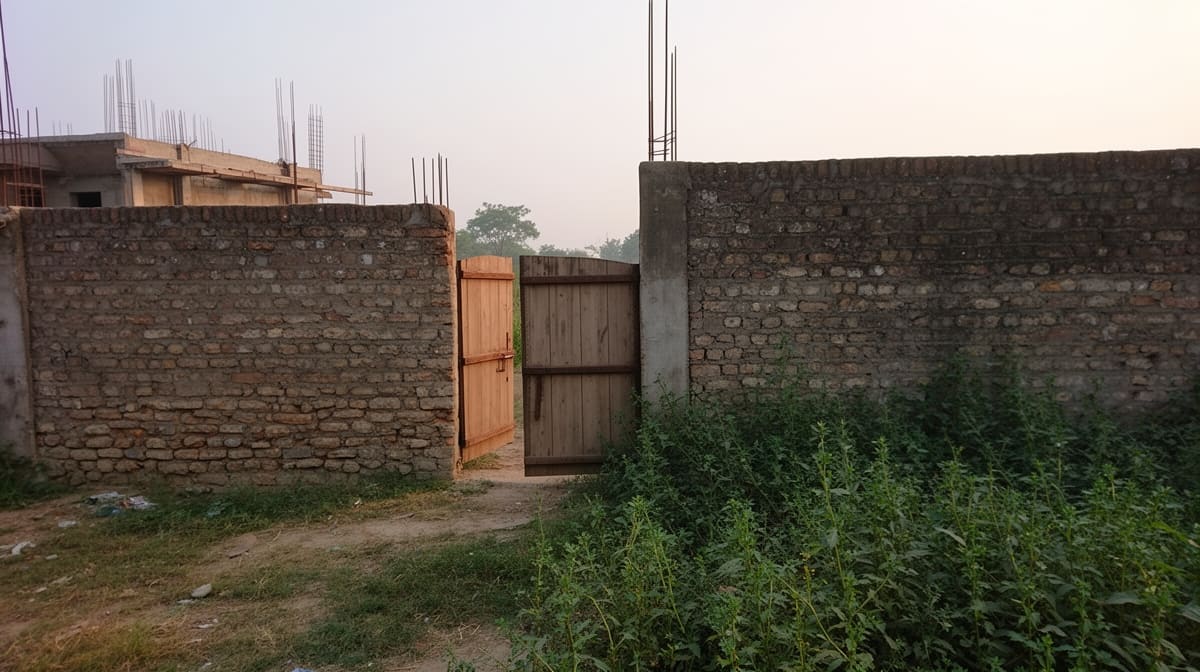
- On 02.09.2009, the Plaintiff installed iron pillars and bars at the rear of the showroom to block access to the compound. These were removed by the Defendants two days later.
- The suit was filed on 04.09.2009, alleging trespass, nuisance, and damage to the iron structures.
Procedural History
- 24.08.1956: Tenancy agreement executed for showroom with "4 ways".
- 28.04.1960: Plaintiff’s letter (Ext. S) to M/s Auto Enterprise objects only to washing/repairing cars in compound, not to parking or delivery.
- 1999 onwards: Rent deposited with Rent Controller; no arrears admitted.
- 01.10.2007: Plaintiff issues circular requiring car stickers for compound parking.
- 22.03.2006: Termination notice issued under Section 6(iv) of the West Bengal Premises Tenancy Act, 1997.
- 20.07.2006: Plaintiff writes to Hyundai Motors India Ltd. alleging illegal parking (Ext. F).
- 01.05.2007: Police report (Ext. 15) filed by M/s Auto Enterprise under Section 144 CrPC, acknowledging vehicle entry via compound.
- 02.09.2009: Iron pillars installed by Plaintiff; removed by Defendants on 04.09.2009.
- 04.09.2009: Suit filed in Calcutta High Court (CS/256/2009).
- 10.02.2026: Final arguments concluded.
- 18.03.2026: Judgment delivered.
The Parties' Positions
Plaintiff’s Position: The compound is exclusively owned by the Plaintiff. The Defendants have no right to use it. The iron pillars were lawful boundary markers. The Defendants’ use of the compound for parking and repairs is illegal trespass. The Plaintiff seeks permanent injunction and damages of Rs. 1,00,000.
Defendants’ Position: The compound has been used since 1956 for vehicle delivery, a necessity for the showroom business. The use is incidental to the tenancy and has been acquiesced in for over 50 years. The iron pillars were installed surreptitiously to force eviction. The Defendants are statutory tenants and cannot be dispossessed without due process.
Relief Sought
The Plaintiff sought:
- Permanent injunction restraining Defendants from parking or repairing vehicles in the compound.
- Permanent injunction against trespass and interference with iron pillars.
- Damages of Rs. 1,00,000 for removal of iron structures.
- Ancillary reliefs.
The Legal Issue
The central question was whether the Defendants, as tenants of a motor vehicle showroom, acquired an implied or easementary right to use the adjacent compound for vehicle delivery and temporary parking, given continuous, uninterrupted, and known use since 1956, and whether the landlord could unilaterally restrict such use after five decades.
Arguments Presented
For the Appellant/Petitioner
Mr. Ajay Krishna Chatterjee, Senior Counsel for the Plaintiff, argued:
- The tenancy agreement did not include the compound, and the iron pillars were lawful demarcations.
- The Defendants’ claim of long user was based on uncorroborated oral testimony, contradicted by documentary evidence such as rent challans (Ext. 14, 14(1)) which listed only the showroom as tenanted premises.
- The Easement Act, 1882, does not apply because the Plaintiff and Defendants are not separate dominant and servient owners; the Defendants are tenants, not independent owners.
- The dealership agreement with Hyundai Motors was deliberately withheld, inviting adverse inference.
- The installation of iron pillars was a lawful act to protect property rights.
For the Respondent/State
Mr. Anindya Kumar Mitra, Senior Counsel for the Defendants, argued:
- The compound’s use for vehicle delivery is essential to the business purpose of the showroom, satisfying the doctrine of easement of necessity.
- The use has been continuous, open, and uninterrupted since 1956, with the Plaintiff’s knowledge and acquiescence, constituting a lost grant.
- The letter dated 28.04.1960 (Ext. S) confirms the compound was used for vehicle-related purposes, and the objection was limited to cleaning/repairing, not parking.
- The front entrance is unusable for vehicles due to physical constraints, making rear access indispensable.
- The Plaintiff’s conduct over 50 years, including issuing car stickers to tenants, confirms the compound is a common area incidental to tenancy.
- The suit is an indirect attempt at eviction without following statutory procedures under the West Bengal Premises Tenancy Act, 1997.
The Court's Analysis
The Court undertook a detailed analysis of the factual and legal dimensions of the dispute, emphasizing the nature of the tenancy and the practical necessities of the business.
The Court observed that the tenancy agreement, while silent on the compound, specified the purpose as a showroom with "4 ways" - a term interpreted in context to imply access points for vehicle movement. The rear entrance, opening into the compound, was the only viable access for vehicles, as the front entrance was physically unsuitable due to the high footpath and lack of slope.
"The very nature of the business - the sale and delivery of motor vehicles - demands a space for temporary parking and customer delivery. The rear compound, used for this purpose since 1956, is not an incidental convenience but an essential component of the tenancy."
The Court rejected the Plaintiff’s reliance on the Easement Act, 1882, noting that while the Act requires separate dominant and servient tenements, the doctrine of easement by necessity and lost grant operate independently. The Court cited Wong v. Beaumont Property Trust Ltd. and Kailas Chandra Nag v. Bijay Chandra Nag to affirm that where a tenant’s use of a landlord’s property is necessary for the enjoyment of the tenancy, and such use has been continuous and known for decades, an implied grant arises.
The Court emphasized that the Plaintiff’s letter dated 28.04.1960 (Ext. S) did not prohibit use of the compound for vehicle delivery - only for washing and repairing. This distinction was critical: the Plaintiff had long accepted the core function of the compound.
The Court further noted that the Plaintiff’s own witness, PW-1, admitted that tenants parked vehicles in the compound, that car stickers were issued to regulate parking, and that even the Plaintiff’s own tenants used the compound without restriction. This conduct, over 50 years, amounted to acquiescence.
"The Plaintiff cannot now, after half a century of silent acceptance, assert exclusive ownership over a space that has functioned as an integral part of the Defendants’ business operations."
The Court also dismissed the argument that non-production of the Hyundai dealership agreement warranted an adverse inference, holding that such an agreement between the Defendants and a third party could not override the landlord-tenant relationship.
The Court concluded that the iron pillars were installed not as boundary markers but as a tactical device to force the Defendants out of the premises, circumventing the statutory eviction process. The timing - two days before filing the suit - was deemed suspicious and indicative of bad faith.
The Verdict
The suit was dismissed on merit. The Court held that the Defendants, as statutory tenants, have a lawful right to use the compound adjacent to the showroom for vehicle delivery and temporary parking, as such use has been continuous, essential, and acquiesced in since 1956. The Plaintiff’s claim for permanent injunction and damages of Rs. 1,00,000 was rejected. No costs were awarded. The Defendants are entitled to continue their operations in the compound without interference, subject to the outcome of any pending ejectment proceedings under the West Bengal Premises Tenancy Act, 1997.
What This Means For Similar Cases
Implied Rights Arise from Long-Term Business Necessity
- Practitioners must argue that where a tenant’s business model requires access to a landlord’s ancillary space (e.g., delivery zones, loading areas), and such use has been continuous for over 20 years, an implied grant arises under the doctrine of lost grant.
- Oral evidence of long user, when corroborated by conduct and contemporaneous documents, can outweigh the absence of written terms.
Landlord Conduct Can Create Binding Rights
- Issuing parking permits to tenants, failing to object to long-standing use, or limiting objections to specific activities (e.g., washing vs. parking) constitutes acquiescence.
- A landlord cannot later claim exclusive control over a space that has functioned as part of the tenancy for decades.
Easement by Necessity Applies to Tenants
-
The doctrine of easement by necessity is not confined to landowners; tenants may claim it when access to the leased premises is physically impossible without using the landlord’s land.
-
Physical impracticality of alternative access (e.g., high footpaths, narrow entrances) strengthens the claim.
-
Always examine whether the leased premises’ stated purpose inherently requires ancillary space.
-
Document historical use through photographs, letters, and tenant records - these are more persuasive than oral testimony alone.
-
Avoid unilateral actions (e.g., installing barriers) to enforce exclusivity; such acts may be deemed retaliatory and invalidate claims.