The High Court of Kerala has imposed a mandatory procedural safeguard to prevent misuse of writ petitions seeking the freezing of bank accounts. By requiring police verification and sworn affidavits from Station House Officers, the Court has established a clear threshold for judicial intervention in financial matters, reinforcing the principle that procedural integrity must precede substantive relief.
Background & Facts
The Dispute
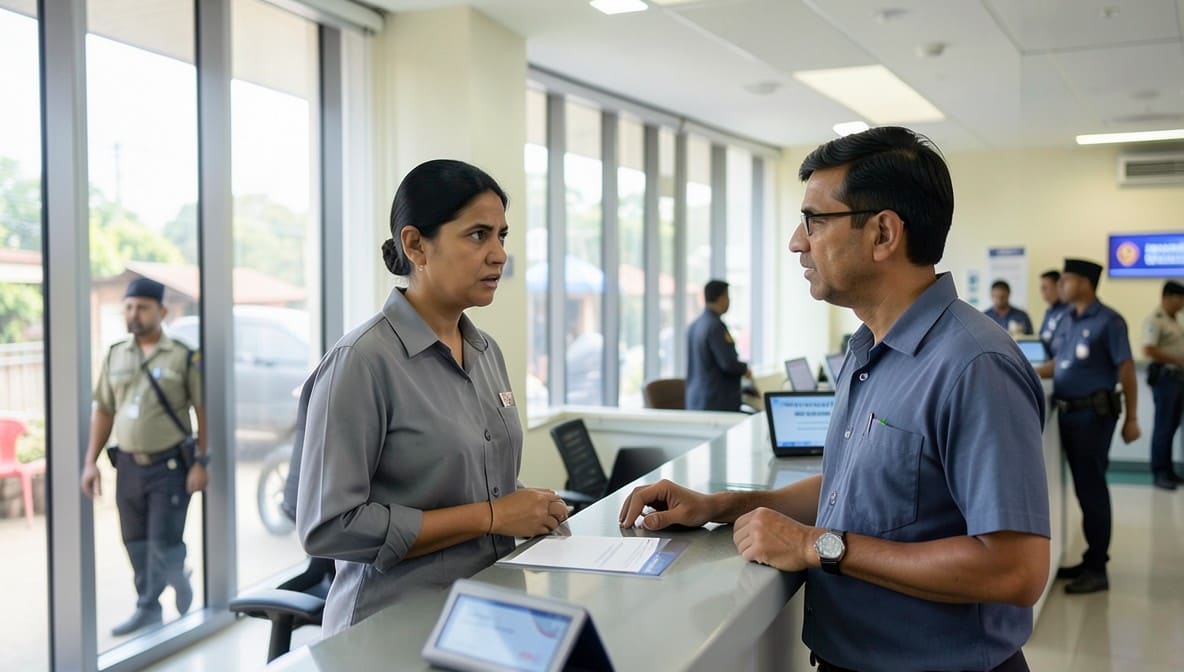
The Court initiated suo motu proceedings in response to a surge in frivolous writ petitions filed under Article 226, primarily seeking the defreezing of bank accounts frozen under investigation orders. Many petitioners failed to establish their identity, leading to potential misuse by individuals impersonating account holders or filing duplicate petitions with false details.
Procedural History
- December 2025: An interim order in WP(C) No.43123/2025 highlighted systemic irregularities in identity verification for account-freezing petitions.
- January 2026: The Registry began receiving over 40 petitions in a single month with identical or near-identical claims, lacking supporting documentation.
- February 2026: The Court took suo motu cognizance under its inherent powers under Article 227 and Section 482 CrPC to regulate its own procedure.
Relief Sought
The Court did not grant relief to any specific petitioner but issued binding procedural directions to prevent future abuse of judicial process.
The Legal Issue
The central question was whether the High Court’s inherent power to regulate its own procedure permits the imposition of mandatory identity verification through police authorities before entertaining petitions for bank account freezing.
Arguments Presented
For the Petitioner
The petitioner, represented by Adv. Nayanpally Ramola, did not file a traditional petition but supported the Court’s suo motu initiative by highlighting documented instances of identity fraud in similar cases. She cited State of Haryana v. Bhajan Lal to argue that courts must act against abuse of process, even in the absence of a formal petition.
For the Respondent
The State, through Special Government Pleader P. Narayanan, acknowledged the problem of fraudulent petitions and did not oppose the proposed safeguards. He confirmed that multiple SHOs had reported instances where petitioners could not be located or were impersonating others, thereby undermining the legitimacy of court orders.
The Court's Analysis
The Court grounded its order in its inherent jurisdiction under Article 227 and Section 482 CrPC, emphasizing that judicial power must not be weaponized through procedural loopholes. It observed that the absence of identity verification created a vacuum exploited by litigants seeking to delay investigations or shield illicit assets.
"The Court cannot be a conduit for fraudulent claims masquerading as legitimate grievances. The identity of the petitioner is not a mere formality - it is the very foundation upon which the right to relief rests."
The Court distinguished K. Veeraswami v. Union of India and State of Punjab v. Baldev Singh, noting that while those cases dealt with immunity and arrest powers, this matter concerned procedural due process in the context of financial restraint. It held that requiring an SHO affidavit does not infringe upon fundamental rights but ensures that judicial orders are not issued on unverified claims.
The Court further noted that the DGP and police infrastructure are already equipped to verify identity through existing databases and local knowledge, making the requirement both feasible and proportionate.
The Verdict
The Court ruled in favor of procedural integrity. It held that no writ petition seeking bank account defreezing shall be entertained unless the SHO of the petitioner’s jurisdiction is impleaded and files a verified affidavit confirming identity. The order is binding on all registries and judges of the High Court.
What This Means For Similar Cases
Identity Verification Is Non-Negotiable
- Practitioners must now ensure that any petition for bank account relief includes a sworn affidavit from the local SHO before filing.
- Failure to produce this affidavit will result in immediate rejection without hearing.
- Advocates must advise clients to approach the SHO proactively, not after filing.
SHO Affidavit as a Threshold Requirement
- The SHO’s affidavit must state: (a) the petitioner’s full name, address, and photograph; (b) confirmation of residence; (c) absence of identity fraud.
- Oral testimony or police reports alone are insufficient - only a sworn affidavit will suffice.
- This standard now applies to all financial restraint petitions, including those under Section 102 CrPC or PMLA.
Judicial Self-Regulation Overrides Procedural Gaps
- Courts may impose procedural conditions even in the absence of statutory mandate, provided they serve the ends of justice.
- This precedent may be cited in other High Courts facing similar abuse of writ jurisdiction.
- Litigants cannot exploit judicial goodwill - procedural compliance is now a precondition for substantive relief.