The Supreme Court has clarified that while State Electricity Regulatory Commissions (SERCs) hold exclusive authority to determine electricity tariffs, they cannot ignore Union Government incentives designed to promote renewable energy. The judgment establishes that tariff fixation must align with national climate goals and statutory policy objectives, not operate in isolation.
Background & Facts
The Dispute
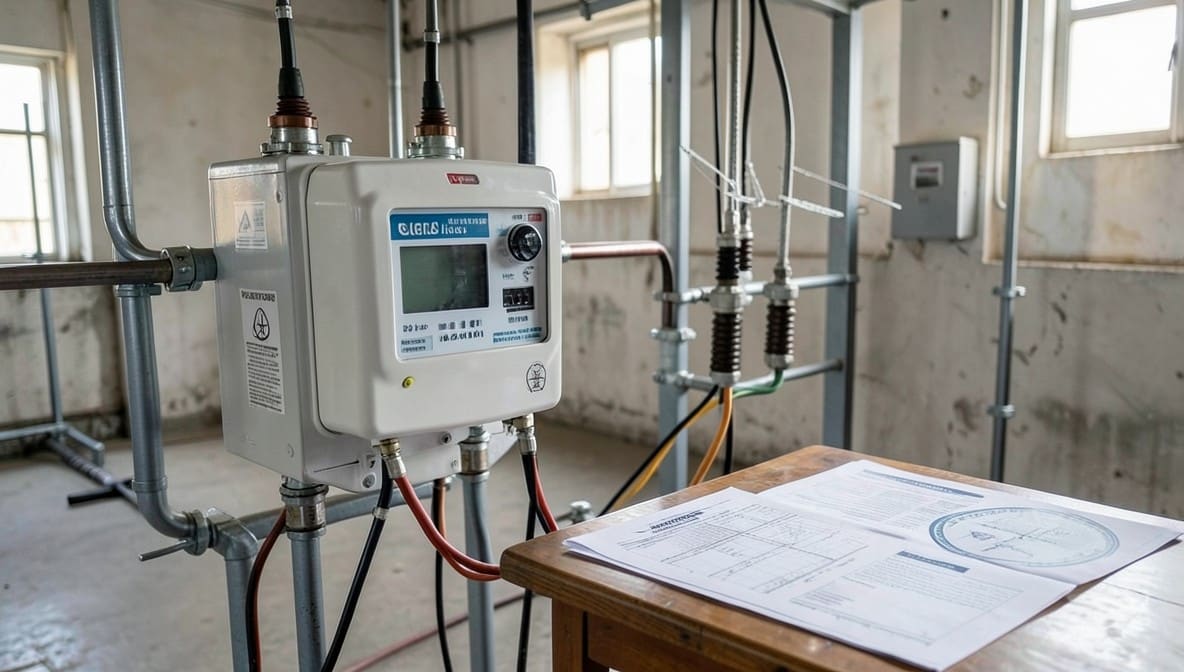
The dispute arose over whether the Andhra Pradesh Electricity Regulatory Commission (APERC) could factor in the Generation Based Incentive (GBI) granted by the Ministry of New and Renewable Energy (MNRE) to wind power generators when determining the tariff payable by distribution companies (DISCOMs). The GENCOs received GBI as a per-unit payment of Rs. 0.50 for electricity fed into the grid, intended to incentivize renewable generation. The DISCOMs sought to deduct this incentive from the tariff, arguing that Regulation 20 of APERC’s 2015 Tariff Regulations required it. The APERC agreed, but the Andhra Pradesh Electricity Appellate Tribunal (APTEL) reversed, holding that GBI was meant to be additional to tariff and could not be offset.
Key Facts
- The MNRE introduced the GBI Scheme via Notification dated 17.12.2009 to incentivize wind power generation.
- GBI was structured as Rs. 0.50 per unit of electricity fed into the grid for a period of 4 to 10 years, capped at Rs. 62 lakhs per MW.
- The Scheme explicitly stated that GBI was "over and above the tariff" approved by SERCs.
- GBI was disbursed directly to GENCOs by the Indian Renewable Energy Development Agency (IREDA) through e-payment.
- APERC’s 2015 Tariff Regulations, notified on 31.07.2015, included Regulation 20: "The Commission shall take into consideration any incentive or subsidy offered by the Central or State Government... if availed by the generating company."
- APERC issued Tariff Orders dated 01.08.2015 and 26.03.2016 without factoring in GBI.
- On 10.12.2016, DISCOMs requested APERC to amend the Tariff Orders to deduct GBI.
- APERC issued Order dated 28.07.2018 allowing deduction of GBI from tariff.
- APTEL, by Judgment dated 19.12.2024, set aside APERC’s order, directing DISCOMs to refund amounts deducted with 12% interest.
Procedural History
- 17.12.2009: MNRE notifies GBI Scheme.
- 31.07.2015: APERC notifies Tariff Regulations, 2015.
- 01.08.2015: APERC issues first Tariff Order for wind projects (2015 - 2016), excluding GBI.
- 26.03.2016: APERC issues second Tariff Order (2016 - 2017), again excluding GBI.
- 10.12.2016: DISCOMs request APERC to amend Tariff Orders to include GBI deduction.
- 14.02.2017: DISCOMs file Original Petition before APERC.
- 28.07.2018: APERC allows petition and directs deduction of GBI from tariff.
- 19.12.2024: APTEL allows GENCOs’ appeal, sets aside APERC’s order, and directs refund of deducted amounts with 12% interest.
- 2025: Civil Appeal No. 4495 of 2025 filed in Supreme Court.
- 25.03.2026: Supreme Court delivers judgment.
The Parties' Positions
Appellants (DISCOMs): Argued that Regulation 20 imposed a mandatory duty on APERC to deduct GBI from tariff, as it was a subsidy availed by GENCOs. They contended that failure to do so resulted in double benefit to GENCOs and unfair cost burden on consumers.
Respondents (GENCOs): Argued that GBI was a direct incentive to generators, intended to be additional to tariff. They relied on the explicit language of the GBI Scheme and contended that APERC’s deduction amounted to altering the destination of a Parliamentary grant, violating Articles 112 - 114 of the Constitution.
Relief Sought
The DISCOMs sought to uphold APERC’s 28.07.2018 order permitting deduction of GBI from tariff. The GENCOs sought to uphold APTEL’s 19.12.2024 order, which directed refund of deducted amounts with 12% interest and barred future deductions.
The Legal Issue
Can a State Electricity Regulatory Commission, while exercising its exclusive power to determine tariff under the Electricity Act, 2003, deduct a Union Government incentive (GBI) granted directly to renewable energy generators, when the incentive scheme explicitly states it is "over and above" the tariff?
Arguments Presented
For the Appellant (DISCOMs)
The DISCOMs relied on Regulation 20 of the 2015 Tariff Regulations, which mandates the Commission to "take into consideration" any incentive or subsidy availed by the GENCO. They argued that the word "shall" imposes a statutory obligation to adjust tariff downward to reflect the benefit received. They cited the principle of tariff rationalization under Section 61(g) of the Electricity Act, 2003, and contended that allowing GBI without deduction amounted to unjust enrichment of GENCOs and increased consumer burden. They further argued that the GBI, though funded by the Union, was effectively a subsidy to the sector and thus subject to regulatory adjustment.
For the Respondent (GENCOs)
The GENCOs contended that the GBI Scheme, framed under Article 282 and funded from the Consolidated Fund of India, was a direct grant to generators to incentivize renewable energy production. They emphasized that the Scheme explicitly stated GBI was "over and above" the tariff and that Parliament’s assent under Articles 112 - 114 prohibited any alteration of its destination. They argued that Regulation 20 only required APERC to be aware of the incentive, not to reduce tariff. They relied on APTEL’s reasoning that tariff orders, once fixed for 25 years under Section 64(6), could not be amended absent statutory breach.
The Court's Analysis
The Supreme Court began by affirming that tariff determination is the exclusive and plenary power of the SERC under Sections 61 and 86 of the Electricity Act, 2003. No regulatory residue remains outside its jurisdiction. The Court rejected the contention that Parliamentary approval of GBI under Article 282 and appropriation under Articles 112 - 114 created a constitutional barrier to regulatory consideration. The Court held that the GBI had reached its intended beneficiary - the GENCO - and no diversion had occurred. "The Commission does not intercept or redirect the payment; it merely determines the tariff payable by the DISCOM to the GENCO."
"The submission that factoring GBI into tariff would amount to altering the beneficiary of a Parliamentary grant proceeds on a misconception. The beneficiary of the GBI remains the GENCO."
However, the Court departed from both APERC and APTEL’s reasoning. It held that while Regulation 20 requires the SERC to "take into consideration" the incentive, this does not mandate mechanical deduction. The phrase requires a contextual, purposive interpretation. The Court emphasized that the GBI was not a consumer subsidy but a generator-focused incentive designed to achieve national and international climate goals, including India’s NDC targets under the Paris Agreement and the 450 GW renewable capacity goal by 2030.
The Court invoked the doctrine of "regulation as an enterprise," distinguishing it from "regulation as control." It held that regulators must act as collaborative agents of public policy, not isolated arbiters of cost. The Electricity Act’s preamble, Section 61(h), and international obligations require SERCs to harmonize tariff policy with renewable energy promotion.
"Regulatory authority cannot be exercised in a manner that nullifies the legislative or policy intent or the intent of the grant, just because power and jurisdiction to determine tariff is exclusively vested in the Regulatory Commission."
The Court concluded that APERC erred by treating GBI as a cost to be deducted, and APTEL erred by treating it as entirely outside the tariff calculus. The correct approach is to recognize GBI as a policy tool that informs, but does not dictate, tariff. The SERC must ensure that tariff fixation does not undermine the incentive’s purpose.
The Verdict
The Supreme Court dismissed the appeal filed by the DISCOMs and upheld the APTEL’s judgment dated 19.12.2024. The Court held that the GBI is intended to be disbursed to the GENCOs over and above the tariff and cannot be deducted from the tariff. The DISCOMs were directed to refund all amounts previously deducted on account of GBI, with interest at 12% per annum from the date of deduction until repayment. No future deduction of GBI from tariff is permitted. The judgment clarifies that while SERCs retain exclusive tariff-setting authority, they must ensure their decisions do not frustrate the statutory and policy objectives of Union Government incentives.
What This Means For Similar Cases
Regulatory Commissions Must Align Tariff with National Policy Goals
- Practitioners must now argue that tariff adjustments cannot be made if they undermine the core purpose of a statutory incentive, even if the incentive is labeled a "subsidy."
- SERCs must document how they considered policy objectives (e.g., renewable targets, climate commitments) in tariff orders.
- Any attempt to reduce tariff to offset a Union incentive must be justified by a clear statutory breach, not merely the existence of the incentive.
GBI and Similar Incentives Are Not Automatic Tariff Offsets
- Incentives explicitly stated as "over and above tariff" (e.g., GBI, capital subsidies, viability gap funding) cannot be mechanically deducted.
- The burden shifts to the regulator to prove that the incentive’s inclusion in tariff calculation would distort market incentives or violate the scheme’s intent.
- Legal challenges to tariff orders must now include analysis of whether the regulator considered the policy purpose of the incentive, not just its financial impact.
Harmonization of Regulatory and Executive Powers Is Now a Legal Standard
- Courts will scrutinize whether regulators acted as "government in miniature" - collaborating with policy makers - or as isolated arbiters.
- Future tariff regulations must explicitly state how they reconcile with central schemes (e.g., PM-KUSUM, PLI for solar).
- Advocates should cite State of Himachal Pradesh v. JSW Hydro Energy Ltd. to argue against fragmentation of regulatory authority.