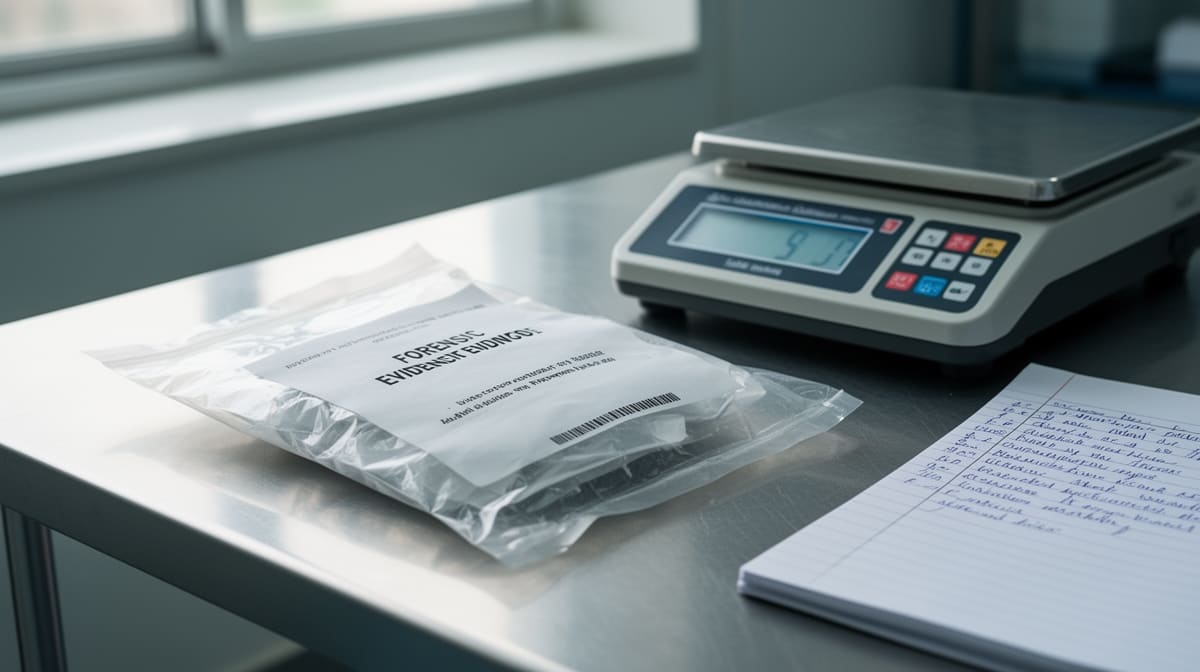
The Bombay High Court has reaffirmed that in capital cases, reliance on forensic reports without summoning the analysts who prepared them constitutes a fundamental denial of fair trial. This judgment establishes that the prosecution cannot treat scientific evidence as self-authenticating, and the accused’s right to confront such witnesses is non-negotiable under Article 21 of the Constitution.
Background & Facts
The Dispute
The case arose from the brutal sexual assault and murder of a six-year-old girl in Pune. The accused, Tejas @ Dada Mahipati Dalvi, was charged under Sections 363, 302, 376(2), 376A, 376AB, and 201 of the IPC, along with Sections 4 and 6 of the POCSO Act. His mother, Sujata Mahipati Dalvi, was charged under Section 201 IPC and Section 21 POCSO Act for aiding in concealment of the body. The prosecution’s case hinged heavily on circumstantial evidence, including 12 chemical analysis reports and four DNA reports prepared by the Regional Forensic Science Laboratory, Pune.
Procedural History
- 2022: Victim’s body discovered; accused arrested on August 4, 2022.
- 2023: Charge sheet filed; charges framed by Sessions Court.
- March 22, 2024: Sessions Court convicted both accused and sentenced Tejas to death for aggravated penetrative sexual assault and murder; Sujata sentenced to seven years and six months.
- 2025: Accused filed Interim Application No. 4190 of 2025 before the Bombay High Court, challenging the trial’s fairness on grounds of non-summoning of forensic analysts.
- March 10, 2026: Bombay High Court heard the application alongside confirmation of death sentence and appeals.
Relief Sought
The accused sought:
- Summoning and cross-examination of all forensic analysts who prepared the 12 chemical and 4 DNA reports.
- Production of complete laboratory documentation, including raw data, calibration logs, and quality control records.
- Recording of a fresh statement under Section 313 CrPC (now Section 351 BNSS) after the new evidence is adduced.
- Setting aside the conviction and remanding the case for a fair rehearing.
The Legal Issue
The central question was whether the trial court’s reliance on forensic reports without summoning the analysts for cross-examination vitiates the trial, particularly in a capital case where the prosecution’s case is substantially built upon such evidence.
Arguments Presented
For the Appellant/Petitioner
Counsel for the accused relied on Irfan alias Bhayu Mevati v. State of Madhya Pradesh (2025 SCC OnLine SC 359), arguing that:
- The 12 chemical and 4 DNA reports were marked as exhibits without any witness being examined to authenticate them.
- The accused were not provided copies of the reports before trial, violating the right to prepare a defense.
- The statement under Section 313 CrPC was recorded jointly, denying each accused an individual opportunity to respond to incriminating evidence.
- The failure to summon analysts rendered the trial unfair and violated the principles of natural justice and the right to a fair trial under Article 21.
For the Respondent/State
The State conceded that the analysts were not summoned and that the Section 313 CrPC statement was recorded jointly. However, it argued:
- The accused did not raise objections during trial, thereby waiving the right.
- The reports were produced through the investigating officer, who was a competent witness to lay foundation.
- The gravity of the crime warranted no remand, and the conviction was otherwise supported by strong circumstantial evidence.
The Court's Analysis
The Court examined the right to confrontation under Article 21 and the procedural safeguards mandated by the Supreme Court in Irfan alias Bhayu Mevati. It held that forensic reports are not self-executing documents; their probative value depends on the credibility of the analyst and the integrity of the process.
"The failure of the trial Court to ensure the deposition of the scientific experts while relying upon the DNA report, has definitely led to the failure of justice thereby, vitiating the trial."
The Court rejected the State’s argument that the accused’s silence during trial amounted to waiver. It emphasized that in capital cases, the court has a non-delegable duty to ensure procedural fairness, even if the accused or prosecution are remiss. The Court distinguished between procedural lapses and structural violations: the absence of cross-examination on scientific evidence is not a mere irregularity but a fundamental defect.
The Court also clarified that remand is not a de novo trial. Evidence already recorded, including the last seen theory and eyewitness accounts, remains intact. The remand is strictly limited to:
- Summoning the analysts as court witnesses.
- Permitting cross-examination.
- Recording fresh Section 313 CrPC statements after the new evidence is adduced.
The Court further held that joint recording of Section 313 CrPC statements is impermissible. Each accused must be questioned separately to ensure individualized responses to incriminating circumstances.
The Verdict
The accused won. The Bombay High Court quashed the conviction and death sentence, holding that the trial was vitiated by the failure to summon forensic analysts and the joint recording of Section 313 CrPC statements. The case was remanded for limited purposes: cross-examination of analysts, production of laboratory documentation, and a fresh Section 313 CrPC statement. The mother’s conviction was upheld, but she was released on bail.
What This Means For Similar Cases
Cross-Examination of Forensic Analysts Is Mandatory
- Practitioners must now insist on summoning analysts whenever forensic reports are relied upon, even if the prosecution claims the reports are "standard" or "routine".
- Failure to do so, especially in death penalty cases, invites automatic remand under Irfan alias Bhayu Mevati.
- Defense counsel should file formal applications under Section 311 CrPC (now Section 345 BNSS) to summon analysts at the earliest opportunity.
Section 313 CrPC Must Be Recorded Separately
- Joint examination of co-accused under Section 313 CrPC is a reversible error.
- Each accused must be questioned individually on all incriminating evidence, including forensic reports.
- Courts must record separate statements and avoid boilerplate questioning.
Laboratory Documentation Must Be Disclosed
- Defense has a right to access raw data, calibration logs, chain of custody records, and quality control manuals.
- Courts must direct production of such documents under Section 91 CrPC if not voluntarily provided.
- Failure to disclose undermines the reliability of the entire forensic chain and may lead to exclusion of evidence.