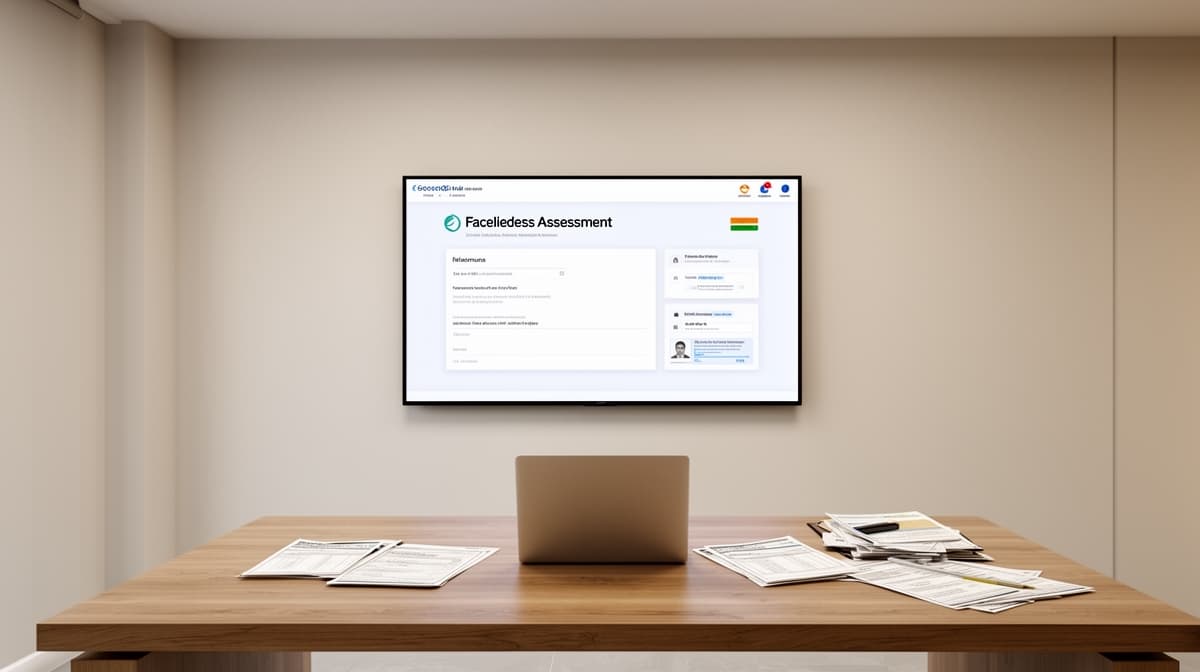
The Income Tax Appellate Tribunal's Chennai 'B' Bench has delivered a pivotal ruling affirming that notices under Section 148 of the Income Tax Act, 1961, issued by Jurisdictional Assessing Officers after March 29, 2022, are legally invalid. This decision aligns with the mandatory faceless procedure introduced under the e-assessment scheme and reinforces the statutory intent to eliminate territorial jurisdiction in reassessment proceedings.
Background & Facts
The Dispute
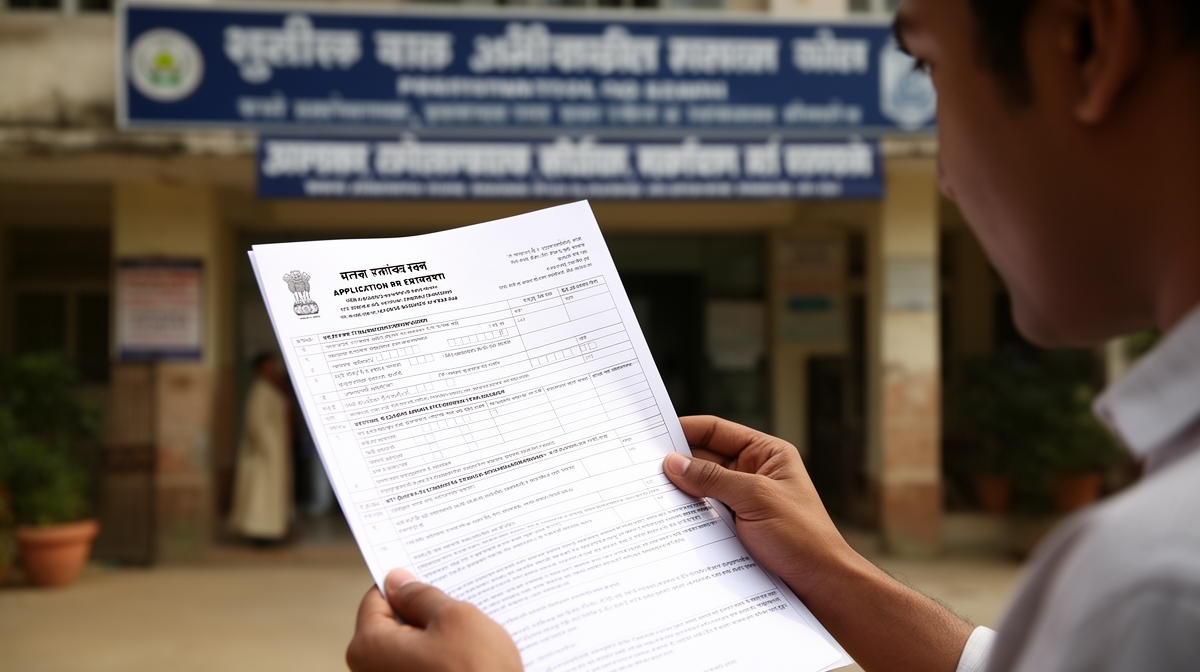
The appellant, SP Chidambaram, challenged the validity of a notice issued under Section 148 of the Income Tax Act on March 29, 2024, by the Jurisdictional Assessing Officer (JAO), Ward 1, Kancheepuram. The notice initiated reassessment proceedings for Assessment Year 2020-21. The appellant contended that, following the CBDT’s e-assessment scheme of March 29, 2022, only the Faceless Assessing Officer (FAO) has the authority to issue such notices, rendering the JAO’s action ultra vires.
Procedural History
- March 29, 2022: CBDT notified the "e-Assessment of Income Scheme, 2022", mandating faceless assessment under Section 144B and automated allocation of notices under Section 148.
- March 29, 2024: JAO issued reassessment notice to the appellant.
- December 17, 2025: Commissioner of Income Tax (Appeals) upheld the notice.
- January 28, 2025: Hearing held before ITAT Chennai.
- January 29, 2026: ITAT delivered judgment allowing the appeal.
Relief Sought
The appellant sought quashing of the Section 148 notice and consequential assessment order, arguing that issuance by the JAO violated the faceless regime established by the 2022 Scheme and binding precedents from the Telangana and Bombay High Courts.
The Legal Issue
The central question was whether the e-Assessment Scheme, 2022, enacted under Section 151A, renders the issuance of Section 148 notices by Jurisdictional Assessing Officers (JAOs) legally invalid, and whether such notices must be issued exclusively by Faceless Assessing Officers (FAOs).
Arguments Presented
For the Appellant
The appellant relied on multiple High Court judgments - including Kankanala Ravindra Reddy v. ITO (Telangana), Hexaware Technologies Ltd v. ACIT (Bombay), and Deepanjan Roy v. ADIT (Telangana) - all holding that Section 148 notices must be issued only by FAOs under the faceless scheme. The appellant further cited the Supreme Court’s dismissal of the Revenue’s SLP in Deepanjan Roy, arguing that this constituted a de facto affirmation of the High Court’s reasoning. He invoked Section 151A of the Act, which mandates centralized, automated allocation of reassessment notices, and contended that JAO issuance defeats the statutory objective of eliminating discretion and bias.
For the Respondent
The Revenue argued that the Section 148 notice issued by the JAO was valid, relying on Delhi High Court’s decision in T.K.S. Builders v. ITO, which held that JAOs and FAOs possess concurrent jurisdiction. It contended that the Supreme Court’s dismissal of the SLP in Prakash Pandurang Patil was a non-speaking order and therefore did not bind lower forums under Article 141. The Revenue further asserted that the e-assessment scheme did not expressly repeal the JAO’s jurisdiction and that the doctrine of merger did not apply to SLP dismissals.
The Court's Analysis
The Tribunal undertook a detailed examination of the e-Assessment Scheme, 2022, and its statutory underpinning in Section 151A. It noted that the Scheme explicitly requires notices under Section 148 to be issued through automated allocation in a faceless manner, eliminating the role of local Assessing Officers. The Tribunal emphasized that the CBDT Notification dated March 29, 2022, was not merely procedural but substantive, altering the very structure of reassessment authority.
"Since notices under Section 148 of the Act were not issued in a faceless manner, the entire further proceeding founded upon it and assessment orders stand vitiated."
The Tribunal then analyzed the Supreme Court’s jurisprudence on the doctrine of merger and the binding effect of SLP dismissals. It relied on Kunhayammed v. State of Kerala and Fuljit Kaur v. State of Punjab, holding that dismissal of an SLP without reasons does not affirm the High Court’s judgment or create a binding precedent under Article 141. However, the Tribunal distinguished this from the binding authority of the High Court’s own judgment, particularly the jurisdictional Delhi High Court’s recent decision in TVS Credit Services Ltd. v. DCIT, which had explicitly held that Section 148 notices issued by JAOs are invalid.
The Tribunal concluded that while the Supreme Court’s dismissal of the SLP did not create a binding precedent, the Delhi High Court’s own judgment - authored by its Chief Justice - was binding on the Tribunal as a matter of judicial discipline and territorial jurisdiction. The Tribunal further noted that the Revenue had not sought a stay on the TVS Credit judgment, thereby leaving it in full force.
The Verdict
The appellant won. The Tribunal held that Section 148 notices issued by Jurisdictional Assessing Officers after March 29, 2022, are invalid under the e-Assessment Scheme. The impugned notice was quashed, and consequential orders set aside. The Tribunal preserved the Revenue’s right to reissue notices through the FAO mechanism if it chooses to pursue reassessment.
What This Means For Similar Cases
Faceless Procedure Is Mandatory
- Practitioners must now challenge any Section 148 notice issued by a JAO post-March 2022 as void ab initio.
- Assessments based on such notices are legally unsustainable and may be set aside even at appellate stages.
- Taxpayers should file objections at the notice stage itself, citing the e-assessment scheme and TVS Credit Services Ltd..
Jurisdictional High Court Rulings Bind Lower Forums
- Even if the Supreme Court has not yet ruled on the issue, binding High Court judgments within a jurisdiction govern proceedings before tribunals.
- Revenue authorities cannot rely on contrary rulings from other jurisdictions (e.g., Delhi’s T.K.S. Builders) if the local High Court has ruled otherwise.
- Practitioners must monitor jurisdictional High Court developments closely.
SLP Dismissals Do Not Settle Law
- A non-speaking dismissal of an SLP cannot be cited as binding precedent under Article 141.
- The Revenue’s strategy of relying on SLP dismissals to justify JAO notices is legally untenable.
- Only speaking orders by the Supreme Court on merits can declare law under Article 141.