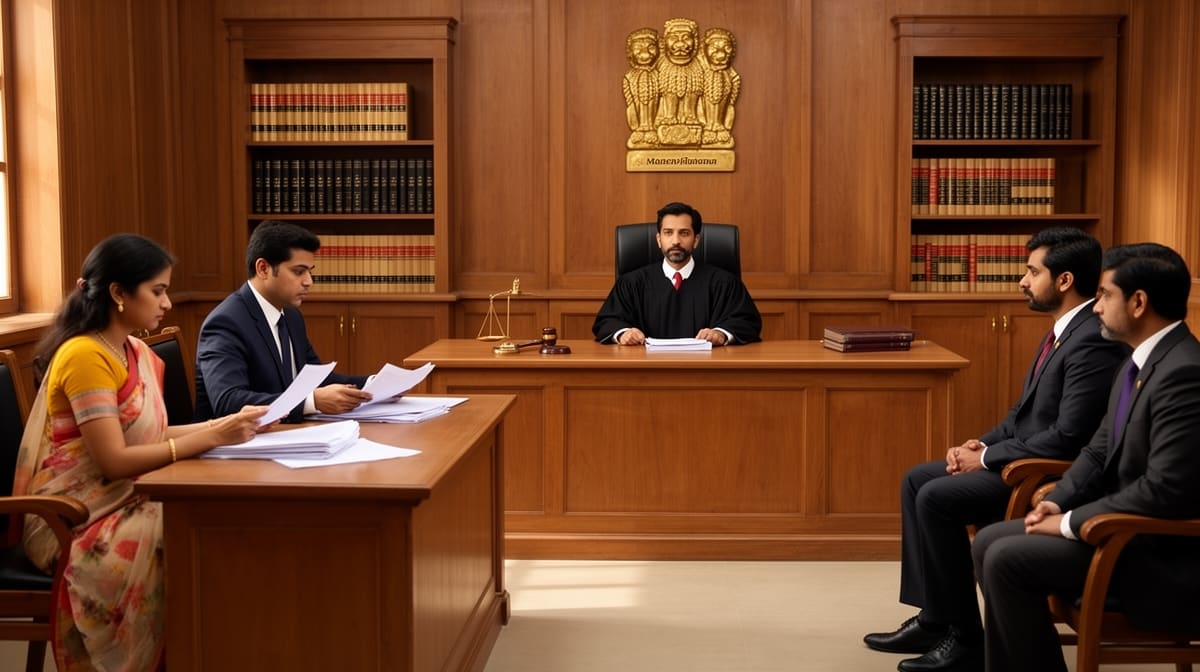
The High Court of Uttarakhand dismissed a criminal revision challenging a Family Court's maintenance order under Section 125 Cr.P.C., affirming that the claimant had established a valid marital relationship and the maintenance amount was not excessive. The Court held that the revisionist, who had previously filed a civil suit to declare the marriage void (later dismissed for want of prosecution), was estopped from denying the marriage, and the Family Court's appreciation of evidence regarding income and marriage ceremonies was legally sustainable.
Background & Facts
The Dispute
The revisionist, Gaurav Kalura, a soldier in the 12 Garhwal Rifles, challenged the maintenance order passed by the Family Court, Uttarkashi, which awarded ₹20,000 per month to respondent no.2 (his alleged wife) under Section 125 Cr.P.C. The revisionist contended that the marriage was not validly solemnized, there was no evidence of his income, and the maintenance amount was excessive.
Key Facts
- The respondent no.2 alleged that the marriage was solemnized on 16.03.2022 and produced an agreement executed in the presence of witnesses and a certificate from the Pandit who conducted the marriage.
- The revisionist denied the marriage, claiming that essential ceremonies under the Hindu Marriage Act, 1955 (including Saptapadi) were not performed and that the priest had stated on oath that he did not perform the marriage ceremonies.
- The revisionist had filed Suit No.96 of 2022 before the Civil Judge, Uttarkashi, under Section 34 of the Specific Relief Act, seeking a declaration that the marriage was null and void. This suit was dismissed for want of prosecution on 26.09.2023.
- The application for maintenance under Section 125 Cr.P.C. was filed by respondent no.2 on 11.04.2023, and the Family Court, after considering oral and documentary evidence, awarded maintenance of ₹20,000 per month from the date of filing the application (i.e., 11.04.2023) in its order dated 16.12.2025.
- The revisionist's counsel argued that there was no documentary evidence of his income (salary slip) and that the maintenance amount was excessive, but the Family Court had considered oral evidence regarding his earning (approximately ₹60,000 per month).
Procedural History
- 11.04.2023: Application under Section 125 Cr.P.C. filed by respondent no.2 before the Family Court, Uttarkashi (Misc. Criminal Case No.11 of 2023).
- 26.09.2023: Order dismissing Suit No.96 of 2022 (filed by the revisionist seeking declaration of nullity of marriage) for want of prosecution before the Civil Judge, Uttarkashi.
- 16.12.2025: Judgment and order of the Family Court, Uttarkashi, awarding maintenance of ₹20,000 per month to respondent no.2.
- 10.09.2026: Judgment of the High Court of Uttarakhand dismissing the criminal revision and affirming the Family Court's order.
The Parties' Positions
- For the Revisionist (Petitioner):
- The marriage was not validly solemnized (no essential ceremonies, priest denied performing marriage).
- No reliable evidence of income; the maintenance amount of ₹20,000 per month was excessive and arbitrary.
- Reliance on Yunabai Anantrao Adhav v. Anantrao Shivram Adhav (1988) to argue that a void marriage does not entitle a woman to maintenance.
- For the Respondent no.2:
- The marriage was solemnized on 16.03.2022, supported by an agreement and a priest's certificate.
- The revisionist had himself filed a civil suit to declare the marriage void (which was dismissed for want of prosecution), thereby acknowledging the marriage and being estopped from denying it.
- The Family Court had properly appreciated the evidence, including oral evidence of the revisionist's income, and the maintenance amount was not excessive.
Relief Sought
The revisionist sought to set aside the Family Court's order dated 16.12.2025 and deny maintenance to respondent no.2.
The Legal Issue
The central question was whether the Family Court's finding of a valid marital relationship and the award of maintenance under Section 125 Cr.P.C. was legally sustainable, particularly in light of the revisionist's contentions regarding the non-performance of essential marriage ceremonies, lack of documentary evidence of income, and the dismissal of his civil suit seeking to declare the marriage null and void.
Arguments Presented
For the Appellant/Petitioner (Revisionist)
Learned counsel for the revisionist submitted that the Family Court's order was contrary to the evidence and settled principles of law. Specifically, they argued:
- The marriage was not validly solemnized as per the Hindu Marriage Act, 1955, with no cogent evidence of essential ceremonies (including Saptapadi) and the priest's denial of performing the marriage.
- There was no documentary evidence of the revisionist's income, and the maintenance amount of ₹20,000 per month was excessive without proper basis.
- The revisionist's acquittal in a criminal case (under IPC Sections 323, 504, 506, 498-A and Dowry Prohibition Act) where the prosecution failed to establish the marital relationship should be considered, though the Court noted the distinct standards in criminal trials and maintenance proceedings.
- Reliance was placed on Yunabai Anantrao Adhav v. Anantrao Shivram Adhav (1988) to contend that a woman claiming maintenance must establish a valid marriage, which was not done here.
For the Respondent/State
Learned counsel for respondent no.2 countered that:
- The marriage was solemnized on 16.03.2022, supported by an agreement executed in the presence of witnesses and a certificate from the Pandit who conducted the marriage.
- The revisionist had filed Suit No.96 of 2022 seeking a declaration that the marriage was null and void, which was dismissed for want of prosecution on 26.09.2023, thereby estopping him from denying the marriage.
- The Family Court had properly appreciated the oral and documentary evidence, including the revisionist's earning capacity (oral evidence of approximately ₹60,000 per month), and the maintenance amount was not excessive or arbitrary.
- The proceedings under Section 125 Cr.P.C. are summary in nature and intended to prevent destitution, and the Court had correctly considered the material before it.
- Reliance was placed on Rajnesh v. Neha and Another (2021) to support the maintenance award.
The Court's Analysis
The High Court began by framing the principal controversy: the existence of a valid marital relationship and the entitlement to maintenance under Section 125 Cr.P.C. The Court noted that it was not in dispute that the revisionist had instituted Suit No.96 of 2022 seeking a declaration of nullity of marriage, which was dismissed for want of prosecution on 26.09.2023, and he had not taken steps to recall that order or have the suit adjudicated on its merits. Consequently, the revisionist was estopped from contending that respondent no.2 was not his legally wedded wife.
Regarding the marriage ceremonies, the Court observed that the Family Court had considered the oral and documentary evidence (including the agreement and priest's certificate) and recorded a finding in favor of respondent no.2. The mere possibility of a different view on appreciation of evidence did not justify interference in revisional jurisdiction.
On the quantum of maintenance, the Court held that the absence of a salary slip could not by itself render the finding of income unsustainable, especially when oral evidence of the revisionist's earning (approximately ₹60,000 per month) was available. The Court found no material to show that the awarded amount of ₹20,000 per month was excessive or arbitrary.
The Court further noted that the revisionist's acquittal in the criminal case could not be treated as a conclusive determination of the marital status for Section 125 Cr.P.C. proceedings, given the distinct standards of evidence appreciation in criminal trials (beyond reasonable doubt) and summary maintenance proceedings.
Ultimately, the Court found that the impugned judgment and order of the Family Court did not suffer from any patent illegality, perversity, or jurisdictional error warranting interference. The findings were based on the material available on record and were legally sustainable.
The Verdict
The High Court of Uttarakhand dismissed the criminal revision and affirmed the Family Court's order dated 16.12.2025, which awarded maintenance of ₹20,000 per month to respondent no.2 from 11.04.2023. No costs were awarded. The revisionist was estopped from denying the marriage due to the dismissal of his civil suit (Suit No.96 of 2022) for want of prosecution, and the Family Court's assessment of income and maintenance amount was found to be legally sustainable.
What This Means For Similar Cases
Estoppel by Prior Proceedings
A party who institutes proceedings to declare a marriage null and void, which are subsequently dismissed for want of prosecution without adjudication on merits, is estopped from denying the marriage in subsequent Section 125 Cr.P.C. proceedings. Practitioners must ensure that such suits are either pursued to conclusion or properly withdrawn to avoid estoppel.
Appreciation of Evidence in Summary Proceedings
In maintenance proceedings under Section 125 Cr.P.C., the Court is not required to insist on documentary proof of income when oral evidence is available and credible. The absence of a salary slip does not automatically invalidate an maintenance award based on oral evidence of earning capacity.
Distinction Between Criminal and Maintenance Proceedings
An acquittal in a criminal case where the prosecution failed to establish the marital relationship beyond reasonable doubt does not preclude a finding of valid marriage in summary maintenance proceedings, which operate on a lower standard of proof and aim to prevent destitution.