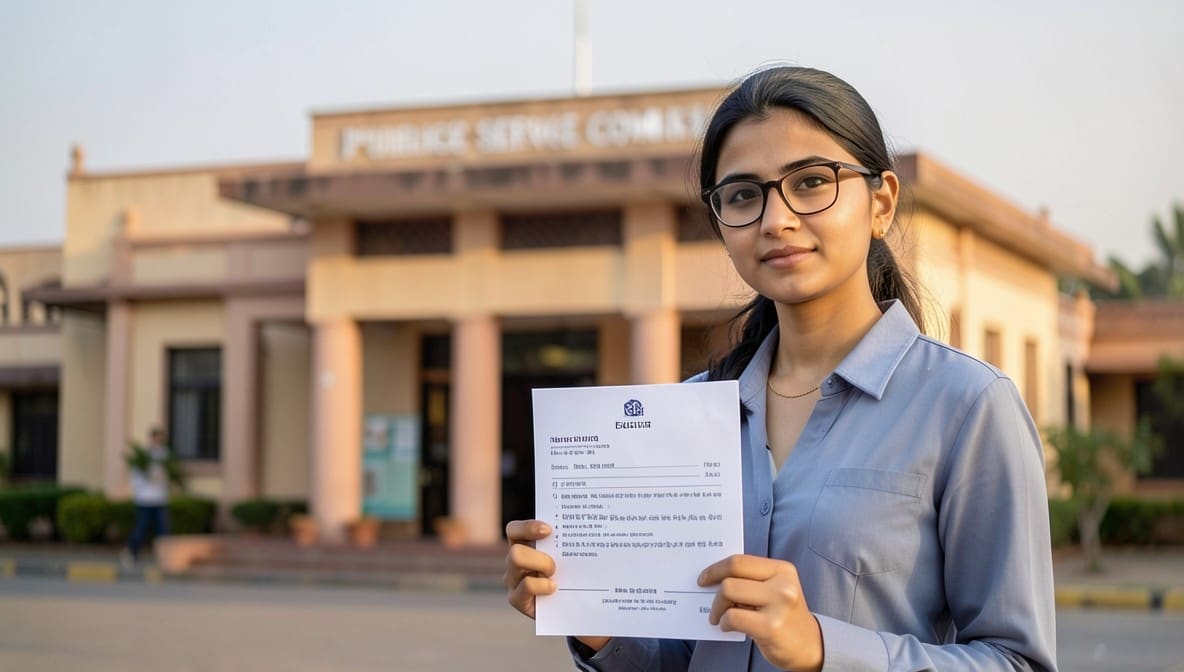
The Central Administrative Tribunal, Principal Bench, New Delhi, dismissed a review application challenging the Union Public Service Commission's (UPSC) authority to cancel recruitment results after initial declaration. The Tribunal held that the doctrine of functus officio does not apply to UPSC's executive functions, allowing corrective measures to uphold the integrity of the selection process.
Background & Facts
The Dispute
The applicants - Bhim Singh, Mohit Panchal, and Deepika Tiwari - were recommended for appointment to the post of Scientist 'B' (Forensic DNA) under the unreserved category by the UPSC on 06.09.2023. The results were forwarded to the Ministry of Home Affairs and the Directorate of Forensic Science Services on 15.09.2023. However, the UPSC subsequently issued a notice on 07.12.2023, cancelling the applicants' selection, citing concerns over the conduct of Dr. Arun Sharma, an expert member of the selection board.
Key Facts
- 06.09.2023: UPSC declared the results for the post of Scientist 'B' (Forensic DNA), recommending the applicants for appointment.
- 15.09.2023: UPSC forwarded the results to the Ministry of Home Affairs and the Directorate of Forensic Science Services.
- 07.12.2023: UPSC issued a notice cancelling the applicants' selection without prior show-cause notice.
- The applicants alleged no malpractice on their part and contended that the cancellation was based on the conduct of Dr. Arun Sharma, who had no nexus with them.
- The applicants filed OA No. 4051/2023 before the CAT, seeking quashing of the cancellation notice and consequential benefits, including arrears with interest.
Procedural History
- 23.12.2025: CAT dismissed OA No. 4051/2023, upholding the UPSC's authority to cancel the results.
- MA No. 1223/2026: Applicants sought condonation of a 32-day delay in filing the review application, citing logistical challenges in coordinating from different cities. The CAT condoned the delay.
- RA No. 44/2026: Applicants filed a review application against the order dated 23.12.2025, reiterating the grounds raised in the original application.
Relief Sought
The applicants sought:
- Quashing of the UPSC's notice dated 07.12.2023.
- Direction to the respondents to appoint them to the post of Scientist 'B' (Forensic DNA) with all consequential benefits, including arrears with interest at GPF rates.
- Award of costs.
The Legal Issue
The central question was whether the doctrine of functus officio bars the UPSC from revisiting and cancelling its own recruitment decisions after the initial declaration of results, particularly in the absence of a show-cause notice or allegations of malpractice against the selected candidates.
Arguments Presented
For the Applicants
- Doctrine of Functus Officio: The UPSC, having declared the results on 06.09.2023 and forwarded them on 15.09.2023, was barred from reviewing its own decision under the doctrine of functus officio.
- Natural Justice: The UPSC violated principles of natural justice by cancelling the results without issuing a show-cause notice to the applicants.
- No Nexus with Dr. Arun Sharma: The cancellation was based on the conduct of Dr. Arun Sharma, an expert member, who had no connection with the applicants. Thus, the cancellation was irregular and unjustified.
- No Allegations of Malpractice: There were no allegations of misconduct against the applicants, and their selection process was untainted.
- Precedent from Interim Order: In OA No. 3027/2023 (Monika & Ors. v. UPSC & Ors.), the CAT declined to stay the applicants' appointment, indicating a strong case in their favour. The final order in the present case should not contradict this interim order.
For the Respondents
The judgment does not explicitly detail the respondents' arguments, but the CAT's analysis implies the following contentions:
- Executive Function of UPSC: The UPSC's recruitment decisions are part of its executive functions, not quasi-judicial proceedings, and thus not subject to the doctrine of functus officio.
- Corrective Authority: The UPSC retains the authority to take corrective measures if misconduct is detected in the selection process, even after the initial declaration of results.
- Sanctity of Recruitment Process: The UPSC's action was necessary to uphold the integrity of the recruitment process, particularly if the conduct of a selection board member was under scrutiny.
The Court's Analysis
The CAT dismissed the review application, holding that the applicants had failed to establish any error apparent on the face of the record warranting review. The Tribunal's reasoning can be summarized as follows:
-
No New Grounds in Review Application: The CAT observed that all grounds raised in the review application had already been considered and addressed in the original order dated 23.12.2025. The applicants merely re-argued the case under the guise of review, which is impermissible.
-
Doctrine of Functus Officio Inapplicable: The Tribunal clarified that the doctrine of functus officio applies to legal or quasi-judicial proceedings, ensuring finality and preventing re-visitation of decisions. However, the UPSC's recruitment process is an executive function, not a quasi-judicial proceeding. Thus, the doctrine does not bar the UPSC from correcting its decisions if misconduct is detected post-declaration of results.
"The doctrine of functus officio is more applicable in legal proceedings or quasi judicial proceedings ensuring that it is final and cannot be re-visited. The UPSC is conducting recruitment for various services. In that process selection of candidates and rejection of any candidature are part of its routine executive functions and these decisions cannot be termed as legal proceedings or quasi judicial proceedings."
-
UPSC's Corrective Power: The CAT held that the UPSC is within its rights to take corrective measures if misconduct by a selection board member is detected after the initial declaration of results. This is essential to maintain the sanctity of the recruitment process.
"In the event of detection of any misconduct by any member of the Selection Board on a subsequent date to initial declaration of results, the UPSC is within its right to take corrective measures to ensure sanctity of the recruitment process."
-
Adequate Consideration in Original Order: The Tribunal noted that the issues raised in the review application - such as the application of functus officio, the principles of natural justice, and the conduct of Dr. Arun Sharma - had been adequately dealt with in the original order dated 23.12.2025. No error of fact or law was apparent on the face of the record.
The Verdict
The CAT dismissed RA No. 44/2026, holding that the review applicants failed to establish any error apparent on the face of the record. The Tribunal reiterated that the UPSC's recruitment decisions are executive functions, not quasi-judicial proceedings, and thus not subject to the doctrine of functus officio. The UPSC retains the authority to correct its decisions to uphold the integrity of the recruitment process.
What This Means For Similar Cases
Doctrine of Functus Officio Does Not Apply to Executive Functions
- Recruitment Bodies Empowered: Recruitment agencies like the UPSC, SSC, or state public service commissions are not barred by functus officio from correcting their decisions, even after declaring results. This ensures flexibility to address misconduct or irregularities detected post-selection.
- Practitioners' Strategy: Lawyers representing candidates in similar disputes must argue that the recruitment body's actions are executive, not quasi-judicial, and thus not bound by functus officio. Emphasize the body's corrective authority to maintain process integrity.
Natural Justice Must Be Balanced with Administrative Efficiency
- Show-Cause Notice Not Mandatory: While principles of natural justice require fair hearing, the CAT's judgment implies that show-cause notices may not always be mandatory if the recruitment body acts to correct systemic irregularities. However, practitioners should still argue for notice as a matter of best practice.
- Burden of Proof: Candidates challenging cancellation must prove lack of nexus between their selection and any alleged misconduct in the selection process. Mere absence of allegations against them may not suffice if the recruitment body establishes a broader irregularity.
Review Applications Must Demonstrate Error Apparent on Record
-
High Threshold for Review: Review applications before the CAT or other tribunals must establish an error apparent on the face of the record. Mere dissatisfaction with the original order is insufficient.
-
Actionable Takeaways:
- Grounds raised in review must be novel and not merely a rehash of arguments from the original application.
- Focus on factual or legal errors that were overlooked in the original order.
- If no such errors exist, consider alternative remedies (e.g., appeals) rather than review.
-
Precedential Value: This judgment reinforces that review is not an appeal. Practitioners must carefully assess whether a review application is the appropriate remedy or if an appeal would be more effective.