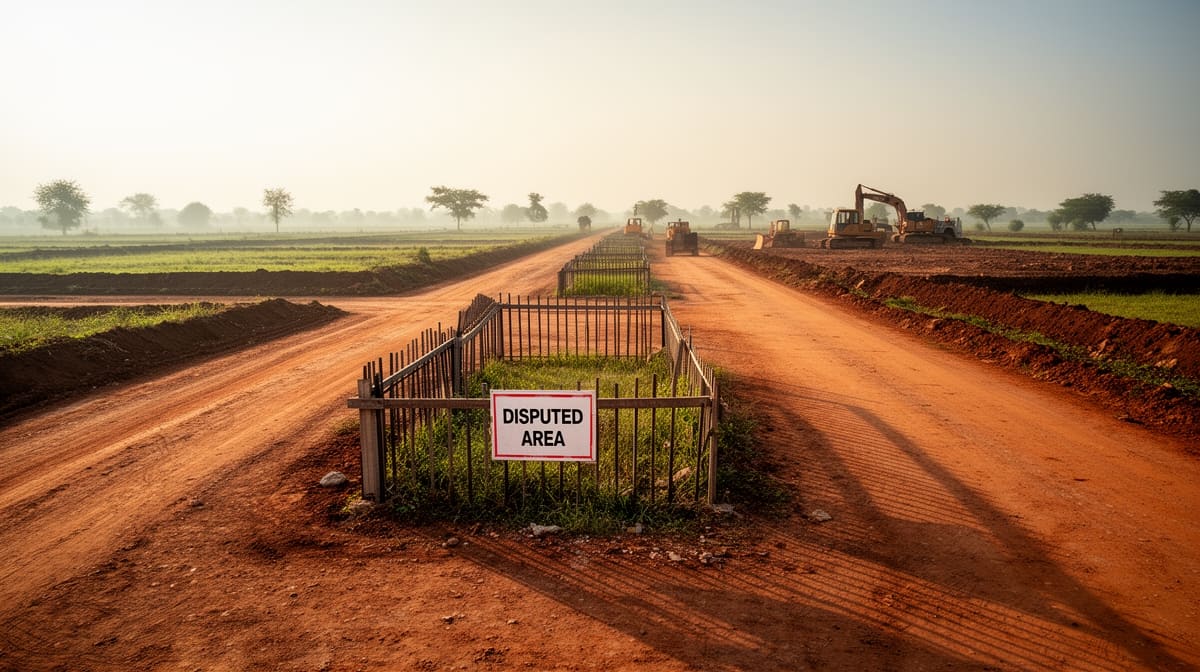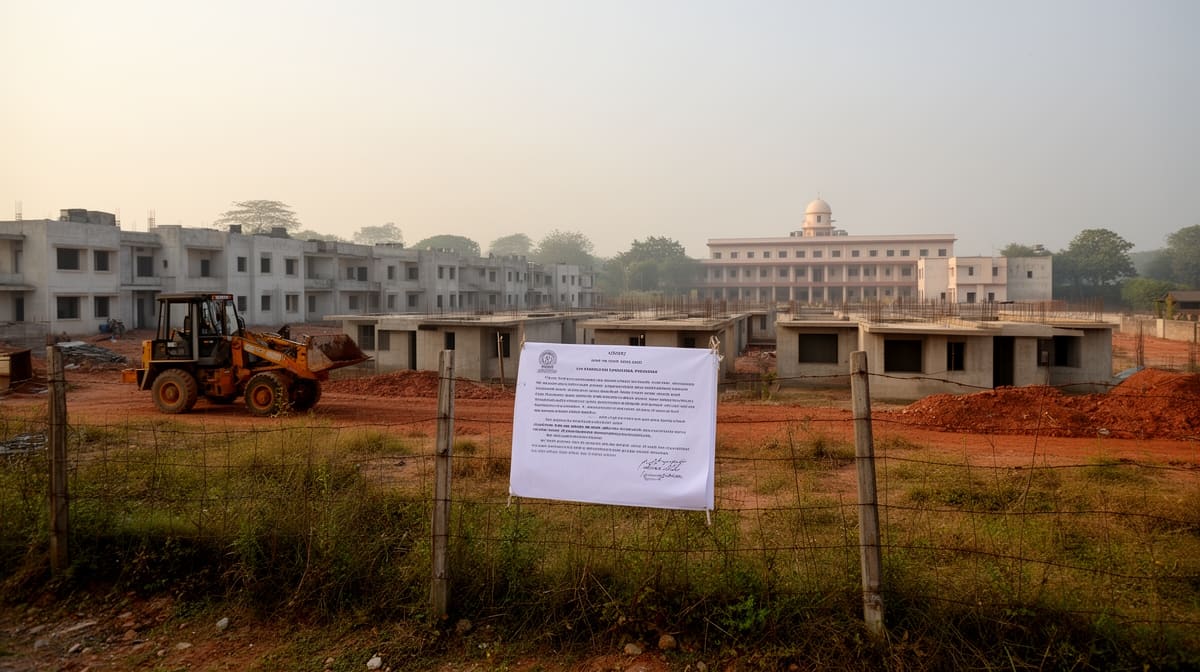
The Madhya Pradesh High Court has reaffirmed that any alteration to the physical status of disputed property during pendency of a civil suit constitutes a violation of the principle of preserving status quo, particularly under Section 52 of the Transfer of Property Act. This judgment clarifies that even development activities - such as construction or planning - amount to de facto alienation and cannot be permitted absent exceptional circumstances.
Background & Facts
The Dispute
The dispute arose from a contested land transaction involving Survey No. 2716/6 at Village Datoda. Respondent No. 1 (plaintiff) entered into an agreement to sell dated 13.06.2014 with Defendant No. 1 for Rs. 6 crore, with payment milestones tied to demarcation and documentation compliance. The plaintiff paid Rs. 62 lakh but alleged non-compliance by the seller. Defendant No. 1 later sold the same land to Appellant Sarvoday Farms Pvt. Ltd. via sale deed dated 30.06.2021, triggering the plaintiff’s civil suit for declaration of title, injunction, and specific performance.
Procedural History
- 2021: Civil suit filed by plaintiff seeking injunction and declaration of invalidity of sale deed.
- 2022: Trial Court dismissed application for temporary injunction under Order XXXIX Rules 1 & 2 CPC.
- December 2022: High Court, in M.A. No. 4717 of 2022, declined to interfere but directed that no alienation of property occur without trial court’s permission under Section 52 of the Transfer of Property Act.
- October 2023: Parties reached a compromise wherein appellant agreed to pay Rs. 60 lakh and provide a 31,000 sq. ft. plot, but the compromise was never formally recorded before the trial court.
- May 2025: Plaintiff filed fresh application for injunction, alleging appellant had obtained development permissions and begun constructing Sarvodaya Hills colony.
- July 2025: Trial Court granted injunction restraining all development work.
- February 2026: High Court dismissed the appeal against the injunction order.
Relief Sought
The plaintiff sought to restrain all development, construction, or alienation of the property pending final adjudication of title. The appellant sought vacation of the injunction, arguing that the trial court lacked jurisdiction to re-adjudicate the injunction after the High Court’s earlier order.
The Legal Issue
The central question was whether development work, including obtaining planning permissions and initiating construction, constitutes an impermissible alteration of the status quo under Section 52 of the Transfer of Property Act during the pendency of a civil suit, even in the absence of formal transfer or sale.
Arguments Presented
For the Appellant
The appellant contended that the trial court had no jurisdiction to entertain a second application for injunction after the High Court’s 2022 order, which only restricted alienation. It argued that development activity does not equate to transfer or sale under Section 52, and that the compromise payment of Rs. 60 lakh indicated acquiescence by the plaintiff. The appellant further asserted that halting development caused irreparable financial harm and that the trial court’s order exceeded the scope of the earlier directive.
For the Respondent
The respondent relied on Maharwal Khewji Trust v. Baldev Dass to argue that any change in the nature of the property - such as construction - amounts to irreversible alienation, even if no title is transferred. It emphasized that permitting development would render any future decree in the plaintiff’s favor meaningless, leading to multiplicity of litigation and inequitable outcomes. The respondent maintained that the trial court’s order was consistent with the High Court’s 2022 direction to preserve the status quo.
The Court's Analysis
The Court examined the scope of Section 52 of the Transfer of Property Act, which prohibits alienation of property during litigation if such alienation affects the rights of any party. The Court held that the term "alienation" is not confined to conveyance or sale but encompasses any act that alters the physical or economic character of the property in a manner prejudicial to the rights of the litigant.
"Unless and until a case of irreparable loss or damage is made out by a party to the suit, the court should not permit the nature of the property being changed which also includes alienation or transfer of the property which may lead to loss or damage being caused to the party who may ultimately succeed and may further lead to multiplicity of proceedings."
The Court distinguished between mere possession and active development. While the appellant had not executed a new sale deed, the grant of development permissions and commencement of construction fundamentally altered the property’s nature. Such changes, once executed, cannot be undone without demolition or costly compensation - both of which invite further litigation.
The Court also noted that the compromise payment of Rs. 60 lakh did not extinguish the plaintiff’s claim, as it was never formally recorded before the court. The earlier High Court order explicitly directed preservation of status quo pending adjudication, and the trial court’s injunction was a faithful implementation of that directive.
The Court rejected the appellant’s argument that the trial court lacked jurisdiction to entertain a fresh injunction application. Where new facts emerge - such as commencement of construction - the court retains jurisdiction to reassess the need for injunctive relief.
The Verdict
The appellant’s appeal was dismissed. The Court held that development work on disputed property during litigation constitutes impermissible alteration of status quo under Section 52 of the Transfer of Property Act, and that trial courts are empowered to restrain such activities to prevent irreparable harm and multiplicity of proceedings.
What This Means For Similar Cases
Development Work Is Alienation in Substance
- Practitioners must treat any construction, excavation, or infrastructure development on disputed land as legally equivalent to transfer under Section 52 TPA.
- Applications for injunction must be filed promptly upon discovery of development activity, even if no sale deed has been executed.
- Courts will not permit speculative development under the guise of "improvement" during pendency of title suits.
Compromise Payments Do Not Waive Injunctive Relief
- Unrecorded compromises or partial payments do not extinguish a plaintiff’s right to seek injunction.
- Parties must formally record compromises before the court to obtain legal effect; otherwise, the original suit remains active.
- Payment of compensation post-dispute does not validate unlawful alteration of property status.
Trial Courts May Re-Examine Injunctions on New Facts
- A prior injunction order does not bar a fresh application if new facts emerge, such as commencement of construction.
- Courts are not bound by prior directions if the factual matrix changes materially.
- The principle of res judicata does not apply to interlocutory orders unless expressly made final.