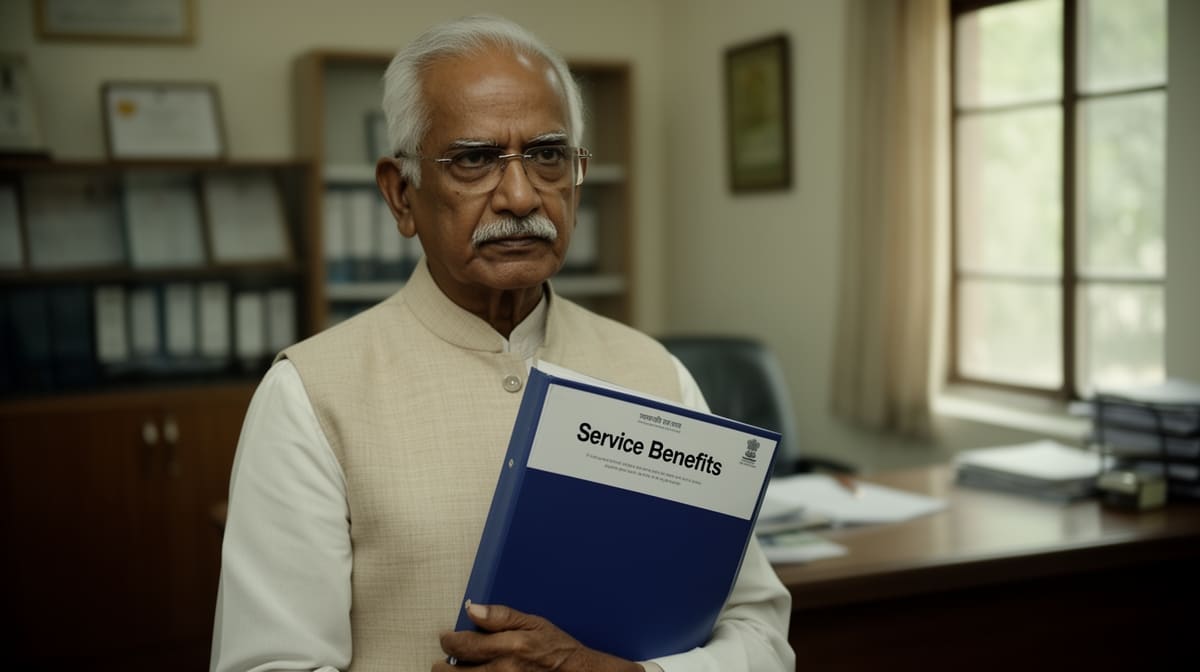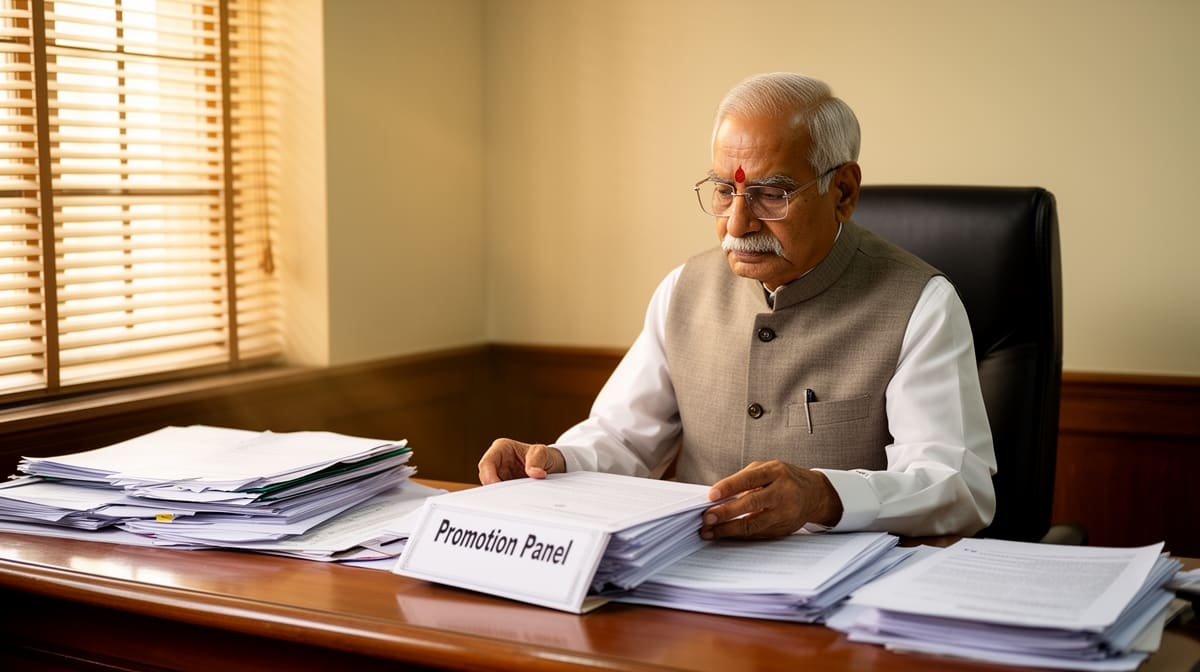
The High Court of Madhya Pradesh at Gwalior has clarified that the doctrine of 'no work no pay' cannot be invoked to deny backwages when a public servant's promotion is delayed solely due to administrative inaction or error, and not due to any fault of the employee. This ruling reinforces the principle that procedural lapses by the state cannot be used to deprive employees of rightful consequential benefits.
Background & Facts
The Dispute
The petitioner, Ashok Nim, was serving as Chief Executive Officer (Additional Assistant Development Commissioner) in Janpad Panchayat, Morena. He was subjected to a minor penalty of stoppage of one increment with non-cumulative effect by order dated 31.01.2012. He appealed this penalty, and the appellate authority set aside the punishment by order dated 04.02.2014. During the pendency of his appeal, a Departmental Promotion Committee (DPC) was convened on 03.10.2013 to consider candidates for promotion to the post of Deputy Commissioner, Development. Despite the petitioner’s name appearing at Serial No. 120 in the gradation list, his case was not placed before the DPC. Several juniors, however, were promoted on the basis of that DPC meeting, with effect from 30.12.2013. The petitioner submitted representations seeking inclusion in the promotion list. After prolonged delay, he was finally promoted by order dated 29.01.2020 with retrospective effect from 30.12.2013.
Key Facts
- Petitioner subjected to minor penalty: 31.01.2012
- Penalty set aside by appellate authority: 04.02.2014
- DPC meeting held for promotion to Deputy Commissioner, Development: 03.10.2013
- Promotion order issued to juniors: 30.12.2013
- Petitioner’s name on gradation list: Serial No. 120 (as of 03.10.2013)
- Petitioner’s representations submitted: 2014 - 2019 (exact dates not specified, but acknowledged by court)
- Final promotion order issued to petitioner: 29.01.2020
- Retrospective effect of promotion: 30.12.2013
- Petitioner currently holding post: Chief Executive Officer (Additional Assistant Development Commissioner), Janpad Panchayat, Morena
Procedural History
- 03.10.2013: DPC convened; petitioner’s case omitted despite eligibility
- 29.01.2020: Petitioner promoted with retrospective effect from 30.12.2013
- 2021 - 2022: Petitioner filed representations seeking arrears and seniority
- 2017: Writ Petition No. 3627 of 2017 filed before the High Court of Madhya Pradesh at Gwalior
- 01.04.2026: Judgment delivered by Hon’ble Justice Anand Singh Bahrawat
Relief Sought
The petitioner sought:
- Promotion with effect from 30.12.2013 (already granted)
- Payment of arrears of salary and allowances from 30.12.2013
- Grant of seniority from 30.12.2013
- Interest on arrears
- Costs of litigation
The Legal Issue
The central question was whether the principle of 'no work no pay' can be applied to deny backwages to a public servant who was wrongfully denied timely promotion due to departmental failure, despite being eligible and ultimately granted retrospective promotion.
Arguments Presented
For the Petitioner
The petitioner’s counsel relied on Union of India v. K.V. Jankiraman (1991) 4 SCC 109 and R.B. Guhe v. State of M.P. (2008) 5 MPHT 291 to argue that when promotion is delayed due to administrative negligence or procedural lapse, and not due to any fault of the employee, the doctrine of 'no work no pay' is inapplicable. The petitioner was ready, willing, and eligible for promotion on 30.12.2013. The delay was entirely attributable to the respondents. Therefore, he was entitled to all consequential benefits, including arrears, seniority, and interest.
For the Respondent
The Government Advocate contended that since the petitioner was not actually holding the post of Deputy Commissioner, Development until 29.01.2020, he could not claim arrears for the intervening period. The department had already granted retrospective promotion, which was the maximum relief possible. Payment of backwages would amount to unjust enrichment and violate the principle of 'no work no pay'.
The Court's Analysis
The Court examined the precedents cited by the petitioner and found them directly applicable. In K.V. Jankiraman, the Supreme Court held that when a government servant is wrongfully denied promotion due to departmental delay, and the promotion is later granted with retrospective effect, the employee is entitled to all consequential benefits, including arrears of pay, unless the delay was attributable to the employee’s own conduct. The Court emphasized that the doctrine of 'no work no pay' is not absolute and cannot be used as a shield by the state to evade its obligations arising from its own procedural failures.
"The principle of 'no work no pay' cannot be invoked to deprive an employee of the benefits of a promotion which was delayed solely due to the fault of the department and not due to any lapse on the part of the employee."
The Court further relied on R.B. Guhe, where this Court had held that if a promotion is granted retrospectively, and the delay was not caused by the employee, the employee must be placed in the same position as if the promotion had been granted on time. The Court rejected the State’s argument that the petitioner had not performed duties of the higher post, noting that the petitioner was ready and eligible, and the failure to promote was entirely administrative. The Court observed that the department’s inaction in placing the petitioner’s name before the DPC in 2013 was a clear procedural lapse, and the petitioner bore no responsibility for it.
The Verdict
The petitioner succeeded. The Court directed the respondents to pay arrears of salary and allowances w.e.f. 30.12.2013 for the post of Deputy Commissioner, Development, with interest at 6% per annum from the date of entitlement until actual payment. If the amount is not paid within 8 weeks from the date of judgment, the interest rate shall increase to 12% per annum. The petitioner is also entitled to all other consequential benefits, including seniority from 30.12.2013. The promotion order dated 29.01.2020 stands confirmed with full effect.
What This Means For Similar Cases
Backwages Are Mandatory When Promotion Delay Is Administrative
- Practitioners must argue that 'no work no pay' is inapplicable when promotion delay stems from departmental omission, not employee misconduct
- The burden shifts to the State to prove that the delay was attributable to the employee
- Retrospective promotion without arrears is incomplete relief under service law
DPC Omission Triggers Liability for Consequential Benefits
- Failure to place an eligible candidate before a DPC, despite inclusion in the gradation list, constitutes actionable administrative negligence
- Petitioners in similar cases should seek not just promotion, but also arrears, interest, and seniority from the original effective date
- Courts will not allow the State to benefit from its own procedural failures
Interest Rates as Enforcement Mechanism
- The Court’s use of escalating interest (6% to 12%) sets a precedent for compelling compliance in service matters
- Practitioners should routinely pray for interest at 12% if compliance is not assured within a reasonable timeframe
- This mechanism reinforces judicial authority and deters delay by government departments