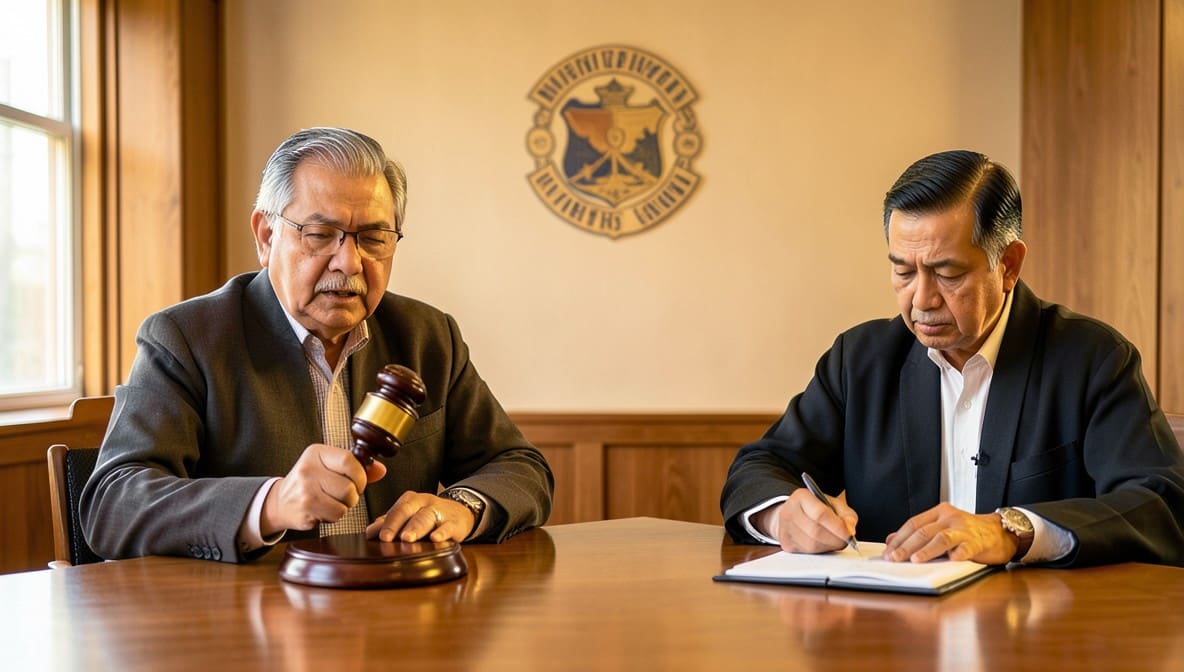
The Himachal Pradesh High Court has reaffirmed the narrow scope of review jurisdiction under the Code of Civil Procedure, emphasizing that it cannot serve as a substitute for appeal or a mechanism to re-litigate decided matters. The dismissal of the review petition underscores the doctrine of finality in judicial orders and the stringent threshold for invoking review.
Background & Facts
The Dispute
The dispute arose from a writ petition filed by Bir Singh, a respondent in the present review, seeking promotion to the post of Honorary Assistant Sub-Inspector (ASI). He contended that his immediate juniors had been promoted from a certain date, yet his own case had been overlooked despite fulfilling eligibility criteria. The High Court, in its judgment dated 03.09.2025 in CWP No. 7099 of 2023, allowed the petition and directed the State to consider his promotion from the date his juniors were promoted.
Key Facts
- The respondent, Bir Singh, was serving in a subordinate police post with alleged seniority and eligibility for promotion.
- His juniors were promoted to the post of Honorary ASI effective from a specific date, which the respondent claimed should be applied retroactively to him.
- The original writ petition was filed before the High Court and was allowed on 03.09.2025.
- No appeal was filed against the 03.09.2025 order.
- The State of Himachal Pradesh filed the present review petition on 16.01.2026, over four months after the judgment.
Procedural History
- 03.09.2025: High Court delivered judgment in CWP No. 7099 of 2023, directing consideration of respondent’s promotion from the date of junior promotions.
- 16.01.2026: Review Petition No. 30 of 2026 filed by the State of Himachal Pradesh.
- 16.01.2026: Application for condonation of delay (CMP(M) No. 493 of 2026) filed, citing 140 days of delay.
- 16.04.2026: Court condoned the delay, noting sufficient explanation, and proceeded to hear the review petition on merits.
- 16.04.2026: Review petition dismissed on merits.
The Parties' Positions
For the Petitioners (State of Himachal Pradesh)
- Argued that the original judgment erred in directing promotion consideration without examining service records, seniority lists, or departmental rules.
- Claimed the order was passed without adequate scrutiny of facts and legal entitlements.
- Sought review on grounds of alleged error apparent on the face of the record.
For the Respondent (Bir Singh)
- Did not appear or file any written submission.
- No advocate appeared on his behalf.
Relief Sought
The petitioners sought review and recall of the judgment dated 03.09.2025, arguing that the direction to consider promotion was legally unsustainable and based on an erroneous appreciation of facts and law.
The Legal Issue
The central question was whether a review petition under Section 114 of the Code of Civil Procedure read with Section 47 can be entertained to re-examine a final order merely because the petitioner disagrees with its outcome, or whether it is restricted to cases involving a patent error apparent on the face of the record.
Arguments Presented
For the Appellant/Petitioner
The State contended that the original judgment suffered from an error apparent on the face of the record because:
- It directed promotion consideration without reference to the applicable service rules or seniority list.
- It failed to consider whether the respondent had been formally recommended or found eligible by the competent authority.
- It treated a mere request for consideration as a right to promotion, thereby overstepping judicial limits. Counsel relied on M/s. Thungabhadra Industries Ltd. v. Government of Andhra Pradesh (AIR 1964 SC 1372) to argue that the error was so glaring that it required correction under review jurisdiction.
For the Respondent/State
No arguments were presented by the respondent, as no counsel appeared on his behalf.
The Court's Analysis
The Court undertook a rigorous examination of the scope of review jurisdiction, distinguishing it sharply from appellate or revisional powers. It held that review is not a rehearing of the case, nor is it a vehicle to re-appreciate evidence or reargue contentions already decided.
"...a review is by no means an appeal in disguise whereby an erroneous decision is reheard and corrected, but lies only for patent error. We do not consider that this furnishes a suitable occasion for dealing with this difference exhaustively or in any great detail, but it would suffice for us to say that where without any elaborate argument one could point to the error and say here is a substantial point of law which stares one in the face, and there could reasonably be no two opinions entertained about it, a clear case of error apparent on the face of the record would be made out."
The Court found that the petitioner’s grounds were merely reiterations of arguments already considered and rejected in the original judgment. The alleged error - failure to examine service records or departmental norms - was not patent or obvious from the face of the record. It was a matter of factual appreciation and legal interpretation, which fell squarely within the realm of judicial discretion and could not be revisited under review.
The Court further relied on Kamlesh Verma v. Mayawati & Ors. (2013) 8 SCC 320 and Akhilesh Yadav v. Vishwanath Chaturvedi (2013) 2 SCC 1, which reiterate that review jurisdiction must be exercised sparingly and only where a manifest error affects the integrity of the judgment.
The Court emphasized that allowing review on the basis of dissatisfaction with the outcome would undermine the finality of judgments and open the floodgates to endless litigation.
The Verdict
The review petition was dismissed. The Court upheld the judgment dated 03.09.2025 in CWP No. 7099 of 2023. All pending applications, including the application for condonation of delay, were disposed of. No monetary relief, direction, or modification was ordered, as the review petition failed on its merits.
What This Means For Similar Cases
Review Is Not a Second Appeal
- Practitioners must understand that filing a review petition to challenge factual findings or legal reasoning already addressed is futile.
- A review petition must identify a patent error - one that is obvious, glaring, and undeniable from the face of the record.
- Mere disagreement with the outcome, even if legally arguable, does not qualify.
Finality of Orders Must Be Respected
- Once a judgment is delivered and no appeal is filed, the parties are bound by its finality.
- Delay in filing a review petition, even if condoned, does not validate a meritless petition.
- Courts will not entertain review petitions that seek to re-litigate issues already decided, regardless of the petitioner’s status or seniority.
Strategic Takeaway for Practitioners
- Before filing a review petition, conduct a rigorous assessment: Is the error patent? Can it be pointed to without detailed analysis?
- If the issue involves interpretation of facts or application of law to facts, consider an appeal instead - review is not the remedy.
- Always cite Thungabhadra Industries and Kamlesh Verma to anchor arguments in the correct legal standard.