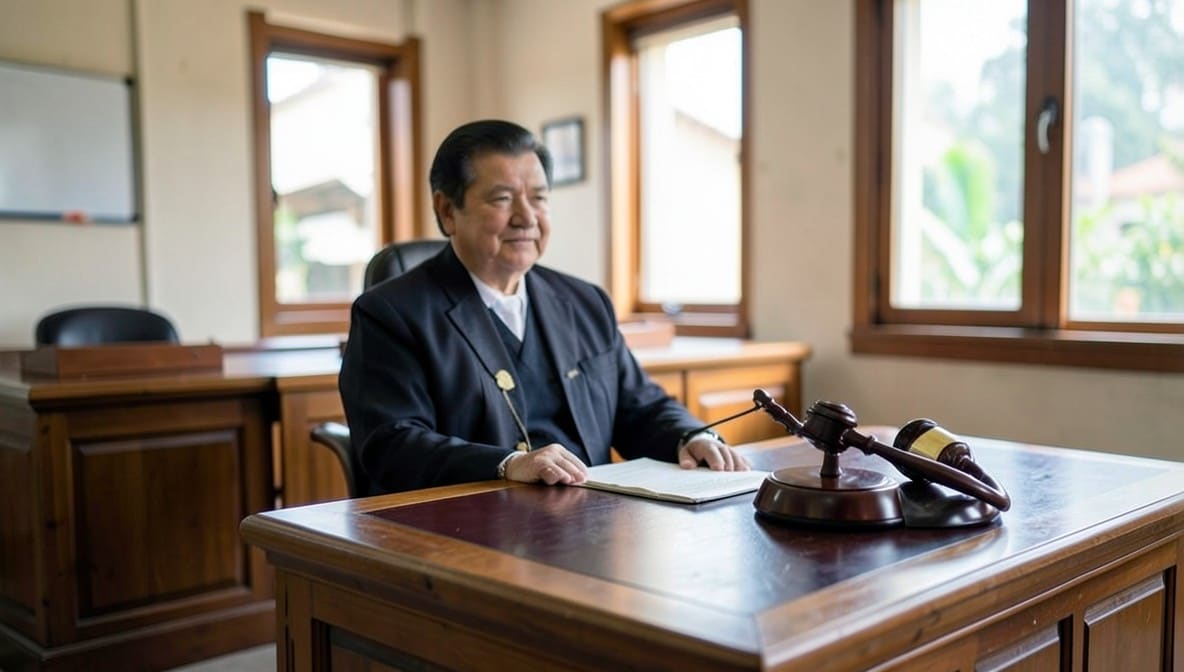
The Madhya Pradesh High Court has clarified that while courts must prevent dilatory tactics in civil litigation, the right to lead evidence under the Code of Civil Procedure may be restored upon payment of cost, ensuring substantive justice is not sacrificed for procedural lapses.
Background & Facts
The Dispute
The respondent, as plaintiff, filed a civil suit for specific performance of contract against the petitioner, who appeared as defendant. The matter progressed to the stage of defendant’s evidence. Despite multiple opportunities, the petitioner failed to produce any witness. On three separate dates, the trial court adjourned the matter to allow the petitioner to arrange witnesses. On the fourth date, the trial court closed the petitioner’s right to lead evidence, holding that the defendant had shown no genuine interest in prosecuting his defence, and fixed the matter for final arguments.
Key Facts
- The petitioner filed a written statement on 12.03.2019, contesting the plaintiff’s claims
- Issues were framed by the trial court on 05.07.2019
- The petitioner failed to produce witnesses on three scheduled dates: 10.04.2026, 28.04.2026, and 07.05.2026
- On 13.06.2026, the trial court rejected the petitioner’s application under Order 17 Rule 1 CPC seeking adjournment to lead evidence
- The matter was fixed for final arguments on 19.06.2026
- The petitioner filed the present petition under Article 227 on 16.06.2026
Procedural History
- 12.03.2019: Written statement filed by defendant
- 05.07.2019: Issues framed by trial court
- 10.04.2026: First date of defendant’s evidence - no witness produced
- 28.04.2026: Second date - no witness produced
- 07.05.2026: Third date - no witness produced
- 13.06.2026: Trial court rejects application under Order 17 Rule 1 CPC and closes evidence
- 16.06.2026: Petitioner files Misc. Petition No. 3867 of 2026 under Article 227
- 23.06.2026: High Court hears the petition
The Parties' Positions
For the Petitioner: Admitted failure to produce witnesses but argued that the written statement and framed issues indicated a meritorious defence. Requested one final opportunity to lead evidence, offering to pay costs.
For the Respondent: Contended that repeated non-appearance and failure to produce witnesses amounted to abuse of process. Argued that the trial court acted correctly in closing evidence to prevent delay.
Relief Sought
The petitioner sought quashing of the order dated 13.06.2026 and direction to the trial court to permit him to lead evidence.
The Legal Issue
The central question was whether the trial court’s refusal to grant a final opportunity to lead evidence under Order 17 Rule 1 of the CPC, after repeated defaults, amounted to a denial of natural justice, and whether such refusal could be corrected by the High Court under Article 227.
Arguments Presented
For the Petitioner
The petitioner’s counsel admitted the failure to produce witnesses but relied on the principle that courts must afford a reasonable opportunity to present a defence, especially where a written statement has been filed and issues framed. He cited Smt. Sushila Devi v. Harish Chandra to argue that technicalities should not defeat substantive justice. He offered to pay costs as a condition for restoration of the right to lead evidence.
For the Respondent
The respondent argued that the petitioner had been given three consecutive opportunities over two months and had shown no bona fide intention to prosecute his defence. Relied on K. Srinivasulu Reddy v. K. Srinivasa Rao to contend that courts must not allow parties to treat litigation as a game of delay. The closure of evidence was a legitimate exercise of judicial discretion under Order 17 Rule 1 CPC.
The Court's Analysis
The High Court acknowledged that the petitioner’s failure to produce witnesses on three occasions was inexcusable and amounted to a clear violation of procedural discipline. The trial court’s initial decision to close evidence was legally sound and aligned with the principle that litigation cannot be prolonged indefinitely due to a party’s negligence.
"The Court is not oblivious to the fact that the petitioner has filed a written statement and issues have been framed - indicating that the matter is not frivolous and deserves a fair hearing."
However, the Court emphasized that Article 227 jurisdiction is not merely to correct legal errors but to prevent abuse of process and ensure justice. The Court noted that the petitioner’s default was not malicious but due to negligence, and the defence was not frivolous. The trial court’s order, while procedurally correct, risked denying a fair hearing on merits.
The Court held that the imposition of a cost as a condition for restoring the right to lead evidence strikes the right balance between enforcing procedural discipline and preserving substantive rights. The cost serves both as a deterrent and as compensation for the delay caused.
The Verdict
The petition was allowed. The order dated 13.06.2026 was set aside. The trial court was directed to permit the petitioner to lead his evidence upon deposit of a cost of Rs. 15,000/- to the plaintiff. The Court explicitly directed that no further adjournment shall be granted under any circumstances, and the evidence must be completed within seven days of deposit.
What This Means For Similar Cases
Cost as a Condition for Restoring Evidence Rights
- Practitioners may now seek restoration of closed evidence under Order 17 Rule 1 CPC by offering to pay a reasonable cost, even after multiple defaults
- Courts are likely to permit such restoration where the defence is not frivolous and written statement/issue framing indicate merit
- The cost must be quantified and paid before evidence resumes - not merely offered
Judicial Discretion Under Order 17 Rule 1 CPC Is Not Absolute
- The High Court reaffirmed that while courts must curb delay, they cannot deny a fair hearing on technical grounds alone
- The presence of a written statement and framed issues creates a presumption of substantive merit
- Closure of evidence should be a last resort, not the first
Procedural Discipline Must Be Enforced, But Not at the Cost of Justice
- This judgment reinforces that procedural rules serve justice, not the reverse
- Lawyers must advise clients to avoid repeated defaults - but if they occur, a cost-based remedy remains available
- Future applications under Order 17 Rule 1 should include a clear offer of cost to improve chances of relief