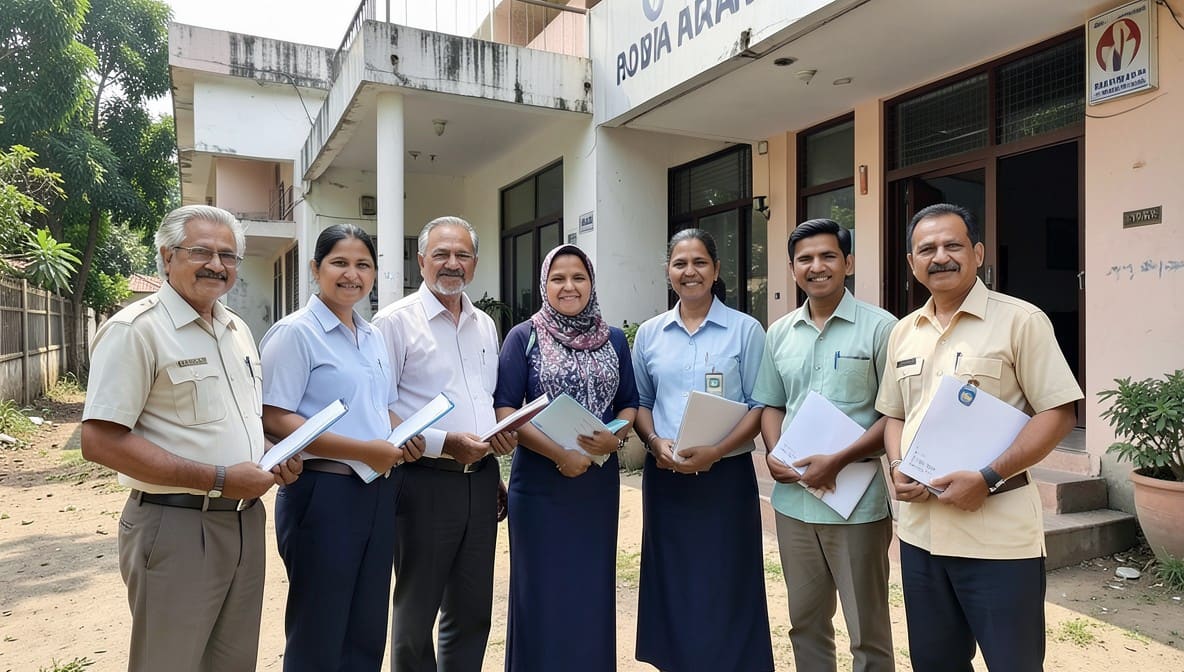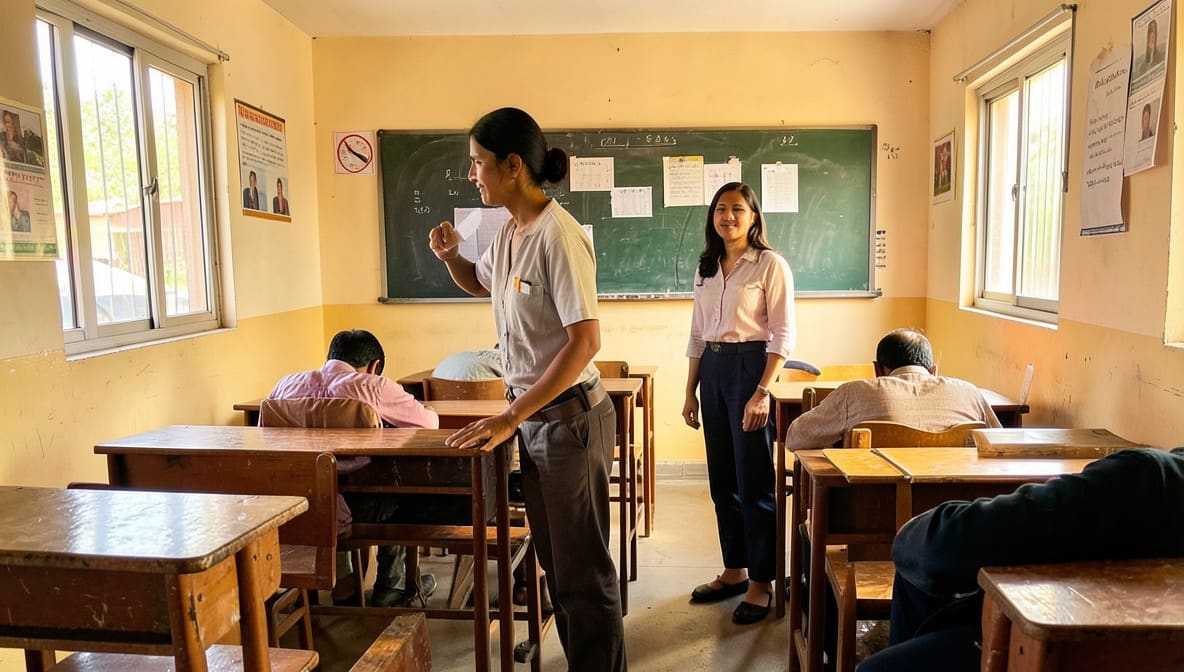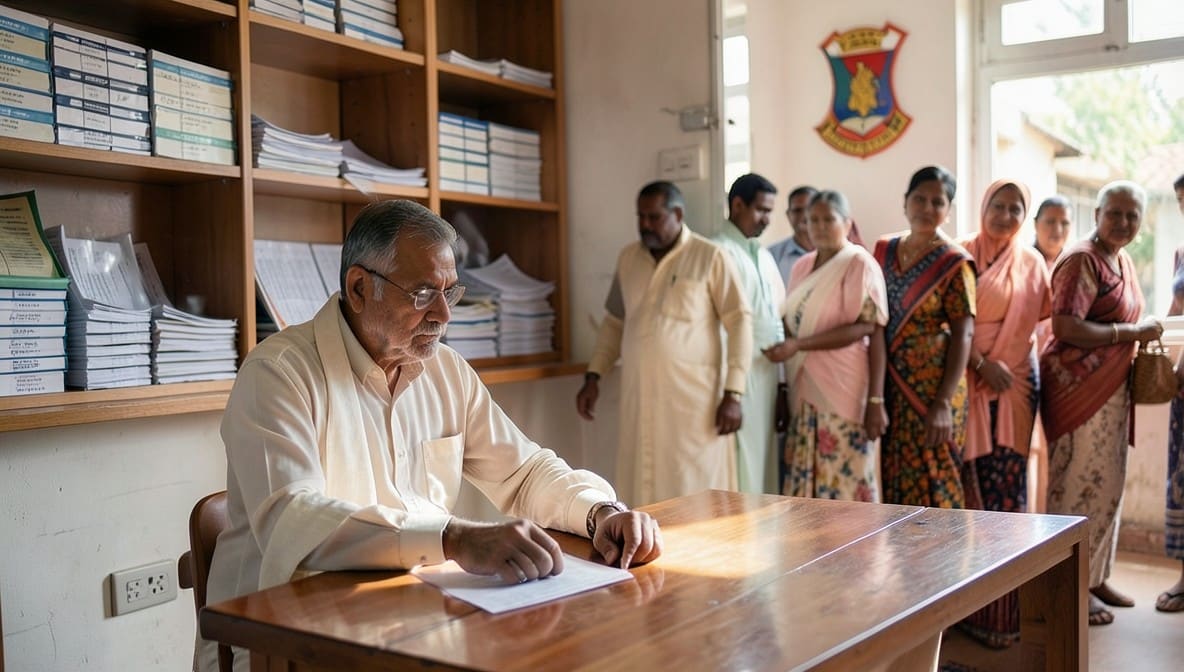
The Madhya Pradesh High Court has affirmed that contractual service rendered as Panchayat Karmi qualifies for inclusion in seniority and entitlement to monetary benefits, reinforcing the principle that functional continuity trumps formal classification in public employment. This ruling provides critical clarity for thousands of similar cases across the state.
Background & Facts
The Dispute
The petitioner, Kamal Singh Rajput, was appointed as a Panchayat Karmi under the policy dated 12.09.1995, performing duties equivalent to those of a Panchayat Secretary. Despite continuous service, his tenure was treated as contractual and excluded from seniority calculations and pensionary or monetary benefits. The impugned orders dated 27.08.2013, 24.07.2013, and 04.08.2017 (Annexures P/3, P/2, P/1) denied him recognition of this service for promotion, pay fixation, or retirement benefits.
Key Facts
- The petitioner was appointed as Panchayat Karmi on the basis of the State Government’s policy dated 12.09.1995
- He served continuously in the same capacity for over two decades without interruption
- His duties were identical to those of a regular Panchayat Secretary, including record maintenance, revenue collection, and administrative coordination
- No formal regularization was granted despite long and continuous service
- The State treated his service as temporary or contractual, thereby excluding it from seniority lists and benefit calculations
- The petitioner submitted multiple representations between 2010 and 2017 seeking recognition of his service, all of which were rejected
Procedural History
- 12.09.1995: State policy issued for appointment of Panchayat Karmi
- Continuous service: Petitioner served from date of appointment until at least 2017
- 24.07.2013: First adverse order denying inclusion of service for seniority
- 27.08.2013: Second order reaffirming denial of benefits
- 04.08.2017: Final order rejecting representation and closing the matter
- 2026: Writ Petition No. 23954 of 2026 filed before the High Court of Madhya Pradesh at Jabalpur
Relief Sought
The petitioner sought:
- Quashing of orders dated 27.08.2013, 24.07.2013, and 04.08.2017
- Declaration that his service as Panchayat Karmi from the date of initial appointment shall be counted for seniority and monetary benefits
- Direction to the State to grant all arrears of pay, allowances, and other benefits retroactively
- Consideration of his case in light of the judgment in Ajay Sharma & Ors. v. State of M.P. (WP No. 14188/2017)
The Legal Issue
The central question was whether contractual service as a Panchayat Karmi under a State policy, performed continuously and in the same capacity as a regular officer, can be excluded from seniority and monetary benefits solely on the ground of its contractual nature.
Arguments Presented
For the Petitioner
The petitioner’s counsel relied on the judgment in Ajay Sharma & Ors. v. State of M.P. (WP No. 14188/2017), dated 10.01.2024, wherein the Court held that service rendered as Panchayat Karmi, whether contractual or regular, must be counted for the purpose of seniority and monetary benefits if the duties performed were identical to those of a regular Panchayat Secretary. The counsel argued that the doctrine of promissory estoppel and the principle of equal pay for equal work applied, and that exclusion based on formal classification violated Article 14 of the Constitution.
For the Respondent
The Government Advocate conceded that the issue had been previously decided by a coordinate bench in Ajay Sharma and did not dispute the legal principle laid down therein. However, he submitted that the petitioner’s case had not been formally reconsidered in light of that judgment and requested the Court to direct fresh consideration.
The Court's Analysis
The Court noted that the petitioner’s service was not intermittent, nor was it performed in a different capacity. He discharged the same duties as a regular Panchayat Secretary under the same policy framework. The Court emphasized that the distinction between contractual and regular service cannot override the reality of functional continuity and public interest.
"The nature of service must be judged by the duties performed and the continuity of employment, not merely by the label attached to the appointment. To deny benefits on the basis of a contractual designation while the work is identical is arbitrary and violative of Article 14."
The Court further held that the judgment in Ajay Sharma & Ors. (WP No. 14188/2017) was binding on the authorities and constituted a clear precedent. The State’s failure to apply this precedent to the petitioner’s case amounted to inconsistent application of law, which cannot be countenanced.
The Court rejected the notion that the petitioner’s service was somehow less legitimate because it was not formally regularized. It observed that the State itself had created the category of Panchayat Karmi under a policy and had benefited from decades of uninterrupted service.
The Verdict
The writ petition is disposed of with directions to the State authorities to reconsider the petitioner’s case within 90 days from the date of receipt of the certified copy of this order. The authorities shall include the petitioner’s service as Panchayat Karmi from the date of initial appointment for the purpose of seniority and grant him all monetary benefits, including arrears of pay, allowances, and other entitlements, to which he is lawfully entitled. The State shall also pay costs of Rs. 10,000 to the petitioner.
What This Means For Similar Cases
Contractual Service Cannot Be Disregarded When Duties Are Identical
- Practitioners representing Panchayat Karmi or similar contractual employees must now argue that functional equivalence overrides formal classification
- Any denial of seniority or benefits based solely on the word "contractual" is legally unsustainable after this judgment
- The burden shifts to the State to prove that the duties performed were materially different
Precedent Binding on Coordinate Benches
- The Ajay Sharma judgment (10.01.2024) is now binding on all authorities in Madhya Pradesh
- Authorities cannot ignore or delay implementation of a High Court precedent by claiming "pending reconsideration"
- Petitioners in similar cases may now file applications for immediate implementation of the Ajay Sharma ruling without waiting for fresh litigation
Monetary Benefits Must Be Calculated Retroactively
- Arrears must be computed from the date the benefits should have been granted, not from the date of the petition
- Interest on arrears, though not explicitly ordered here, may be claimed in subsequent proceedings under State of U.P. v. Rajendra and similar precedents
- Practitioners should prepare detailed pay scales and service records to substantiate claims for arrears