The Central Sales Tax Appellate Tribunal has clarified that the characterization of goods movement as consignment sale or inter-State sale must be determined by the terms of the agreement in force at the time of transaction, not by prior conduct. This ruling reinforces the primacy of documented commercial arrangements over speculative inferences drawn from pre-existing patterns.
Background & Facts
The Dispute
The dispute centers on whether sales of paper products by Shree Karthik Papers Limited from Tamil Nadu to agents in Karnataka, Kerala, Orissa, and West Bengal during the assessment year 1995-96 constituted consignment sales or inter-State sales under the Central Sales Tax Act, 1956. The distinction is critical because consignment sales are exempt from central sales tax if properly documented under Form F, while inter-State sales are taxable.
Key Facts
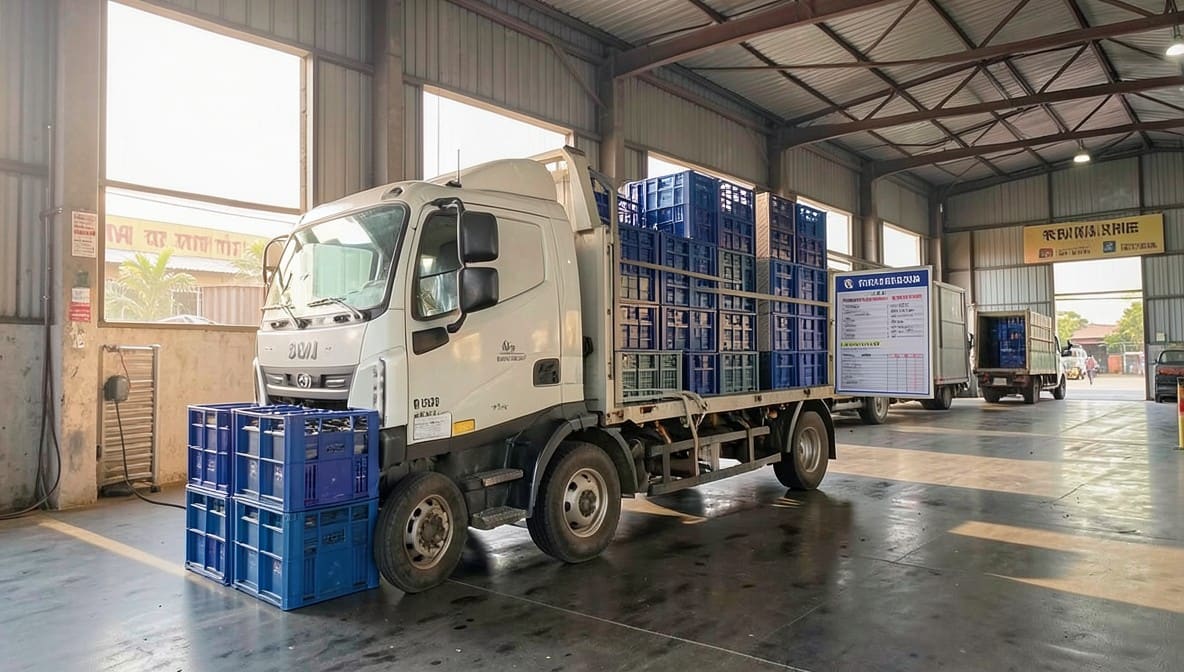
- The appellant, Shree Karthik Papers Limited, is a paper manufacturer based in Coimbatore, Tamil Nadu.
- From 01.04.1995 to 31.07.1995, the appellant treated its movements of goods to agents as inter-State sales and paid central sales tax accordingly.
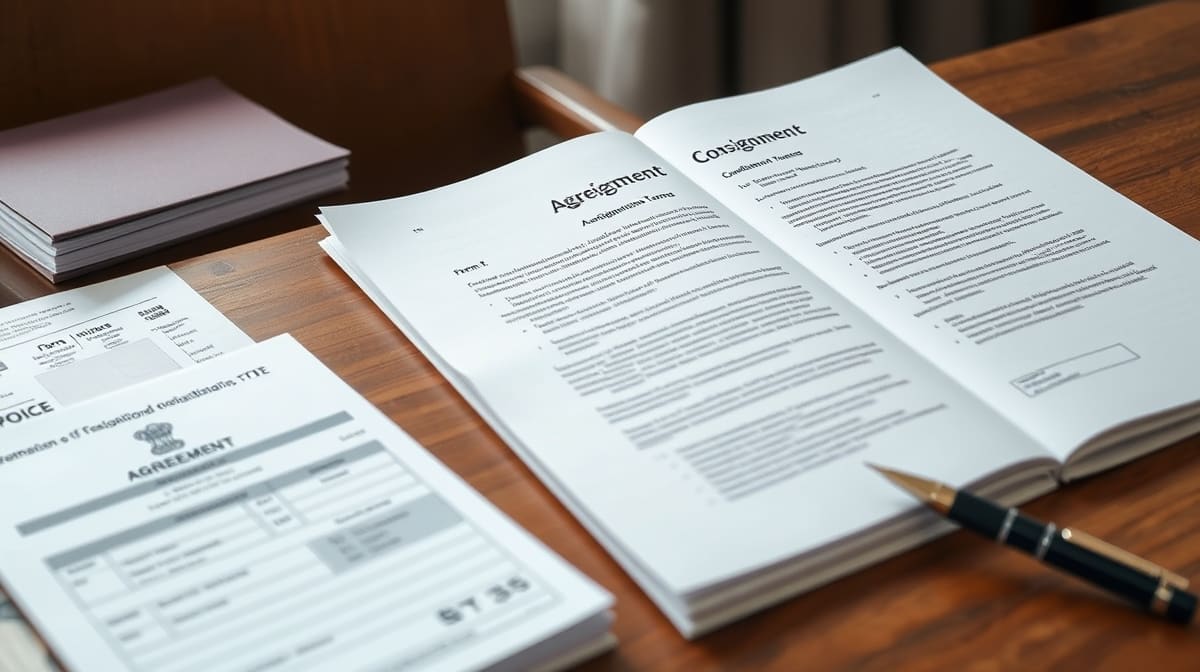
- On 31.07.1995, the appellant entered into a formal Agreement with its agents, effective from 01.08.1995, explicitly defining the relationship as consignment.
- The Agreement stipulated that:
- Goods remained the property of the appellant until sold by the agent
- The agent acted as a sales representative, not a buyer
- The agent would remit sale proceeds monthly, after deducting freight, handling charges, and commission
- Advances could be secured via hundies, but these were explicitly not sale value
- The agent was to render monthly account statements with invoices
- On 26.07.1995, the Commercial Tax Officer conducted an inspection and recovered slips, blank cheques, and debit notes relating to transactions between 01.04.1995 and 31.07.1995.
- The appellant claimed exemption for consignment sales of Rs. 1,51,28,219/- for the period 01.08.1995 to 31.03.1996.
- The appellant submitted Form F declarations from agents in the receiving States, confirming the consignment nature of the transactions.
- The appellant also submitted monthly account statements from agents showing freight and handling charges debited to the appellant’s account.
Procedural History
- 21.03.1997: Commercial Tax Officer assessed turnover of Rs. 5,74,80,750/- without distinguishing between inter-State and consignment sales.
- 31.12.1997: Assistant Commissioner set aside the assessment and remanded for de-novo examination.
- 31.07.1998: Commercial Tax Officer re-assessed, treating Rs. 1,54,28,218/- as consignment sales and disallowing exemption.
- 30.11.2006: Additional Appellate Assistant Commissioner set aside the 1998 order, holding the transactions from 01.08.1995 were consignment sales, reducing penalty to Rs. 2,21,858/-.
- 16.09.2014: Tamil Nadu Sales Tax Appellate Tribunal:
- Dismissed CTA Appeal No. 13 of 2007 (filed by appellant against penalty)
- Partially allowed CTA Appeal No. 135 of 2009 (filed by State):
- Set aside the 30.11.2006 order
- Reinstated assessment on Rs. 1,51,28,219/- as inter-State sale
- Restored penalty of Rs. 25,64,365/-
- 02.06.2026: Central Sales Tax Appellate Tribunal heard the appeal.
The Parties' Positions
Appellant (Shree Karthik Papers Limited):
- Argued that the Agreement dated 31.07.1995 governed all transactions from 01.08.1995.
- Contended that Form F submissions and account statements proved consignment nature.
- Asserted that pre-inspection documents (26.07.1995) cannot be used to re-characterize post-agreement transactions.
- Relied on C.V.G. Industries Ltd. and Lux Hosieries Industries Ltd. to support that discounting bills and bulk sales do not convert consignment into sale.
Respondent (State of Tamil Nadu and others):
- Argued that the pattern of transactions before 01.08.1995 (blank cheques, debit notes, advance payments) indicated a pre-existing contract of sale.
- Claimed that the Agreement was a camouflage to evade tax.
- Relied on Sri Durga Distilleries and Mehta Group of Industries to argue that movement in compliance with prior orders constitutes inter-State sale.
- Contended that Form F is rebuttable and the department may investigate its veracity under Section 6A(2).
Relief Sought
The appellant sought:
- Setting aside of the order dated 16.09.2014
- Restoration of the order dated 30.11.2006
- Confirmation that Rs. 1,51,28,219/- was consignment sale and exempt from tax
- Retention of the reduced penalty of Rs. 2,21,858/-
The Legal Issue
The central question was whether Section 3(a) and Section 6A of the Central Sales Tax Act, 1956 require tax liability to be determined based on the commercial arrangement in force at the time of goods movement, or whether prior conduct can override a subsequent, documented consignment agreement.
Arguments Presented
For the Appellant
The appellant argued that the Agreement dated 31.07.1995, effective from 01.08.1995, unambiguously established a consignment relationship. The burden under Section 6A(1) was discharged by submitting Form F declarations from agents and monthly account statements showing freight and handling charges debited by agents. The Tribunal’s reliance on documents from the pre-agreement period (26.07.1995 inspection) was legally impermissible, as no evidence existed to show that the post-agreement transactions deviated from the agreed terms. The appellant cited C.V.G. Industries Ltd. and Lux Hosieries Industries Ltd. to establish that discounting bills and bulk sales do not alter the character of consignment. The Tribunal’s assumption that the appellant would have declared sales as inter-State had inspection occurred in March 1996 was speculative and contrary to the principle of res judicata in tax matters.
For the Respondent
The State contended that the pre-01.08.1995 pattern of transactions - blank cheques, debit notes, advance payments, and immediate resale by agents - demonstrated a pre-existing contract of sale. The Agreement, they argued, was a post-hoc device to disguise inter-State sales as consignment. Under Section 6A(2), the department had the right to investigate the veracity of Form F and reject it if the underlying transaction was a sale. The State relied on Sri Durga Distilleries and Mehta Group of Industries to argue that movement in compliance with prior orders constitutes inter-State sale under Section 3(a). The State further argued that the appellant’s failure to produce complete Form F for all transactions and the absence of evidence showing actual stockholding by agents indicated a sham arrangement.
The Court's Analysis
The Tribunal conducted a meticulous review of the Agreement dated 31.07.1995 and found that it clearly established a consignment relationship. Clause 5 explicitly stated that goods remained the property of the appellant until sold. Clause 8 clarified that advances via hundies were not sale value. Clause 6 required monthly account statements with invoices, confirming the agent’s role as a fiduciary, not a buyer. The Tribunal emphasized that Section 3(a) requires a sale to occasion movement; here, the movement was occasioned by consignment, not sale.
"The mode of transactions prior to 01.08.1995 has no relevance and could not have formed the basis for determining whether the inter-State sale had taken place or not with effect from 01.08.1995."
The Tribunal rejected the State’s reliance on Sri Durga Distilleries, noting it concerned local sales under the Karnataka Sales Tax Act and did not address the statutory framework of the CST Act. The Tribunal held that Section 6A(1) places the burden on the dealer to prove consignment, which the appellant discharged through Form F and account statements. The department’s right under Section 6A(2) to investigate Form F does not permit rejection based on conjecture or prior conduct.
The Tribunal further held that the Additional Appellate Assistant Commissioner’s findings were detailed, evidence-based, and not perverse. The Tribunal noted that the Sales Tax Appellate Tribunal had ignored these findings and instead relied on speculative reasoning: "if the inspection had taken place in March 1996, the appellant would have declared all sales as inter-State sales." Such hypothetical reasoning has no legal basis.
The Tribunal also rejected the argument that bulk sales or immediate resale by agents converted consignment into sale. The Hyderabad Engineering Industries precedent was reaffirmed: a branch or agent cannot be treated as a buyer unless there is a transfer of property in goods.
The Verdict
The appellant succeeded. The Tribunal set aside the order dated 16.09.2014 of the Tamil Nadu Sales Tax Appellate Tribunal in CTA Appeal No. 135 of 2009. The order dated 30.11.2006 of the Additional Appellate Assistant Commissioner was restored. The turnover of Rs. 1,51,28,219/- for the period 01.08.1995 to 31.03.1996 was held to be consignment sale and exempt from central sales tax. The penalty of Rs. 25,64,365/- was set aside and the reduced penalty of Rs. 2,21,858/- imposed by the Additional Appellate Assistant Commissioner was upheld. The appeal in CTA Appeal No. 13 of 2007 was dismissed.
What This Means For Similar Cases
Form F and Written Agreements Are Conclusive Absent Fraud
- Practitioners must ensure that consignment agreements are detailed, dated, and signed before the commencement of transactions.
- Form F submissions, when accompanied by account statements and freight records, create a strong prima facie case for exemption.
- Tax authorities cannot reject Form F based on prior conduct unless fraud or collusion is proven with concrete evidence.
Prior Conduct Cannot Override Subsequent Commercial Arrangements
- The timing of the commercial arrangement is decisive. Transactions after a documented agreement cannot be re-characterized based on pre-agreement patterns.
- Inspection reports from before the agreement are irrelevant to post-agreement transactions unless there is evidence of continuity or fraud.
- Assumptions like "the dealer would have declared it differently" are legally inadmissible.
Bulk Sales and Advance Payments Do Not Automatically Constitute Sale
- Receiving advances via hundies or receiving bulk orders does not convert consignment into sale if the agreement clearly reserves ownership.
- The key test remains: Did ownership pass? If not, it is consignment, regardless of payment timing or volume.
- Practitioners should advise clients to maintain clear documentation of ownership retention and fiduciary roles.