
The CESTAT Kolkata has held that a truck owner transporting coal and iron without issuing consignment notes does not qualify as a Goods Transport Agency (GTA) and its services remain exempt under the Negative List entry in Section 66D(p)(i)(A) of the Finance Act, 1994. The Tribunal set aside a Service Tax demand of Rs. 2,73,51,065/- raised mechanically on Income Tax Return data, ruling that the extended period of limitation cannot be invoked where the assessee transparently disclosed receipts and acted under a bona fide belief of non-taxability.
Background & Facts
The Dispute
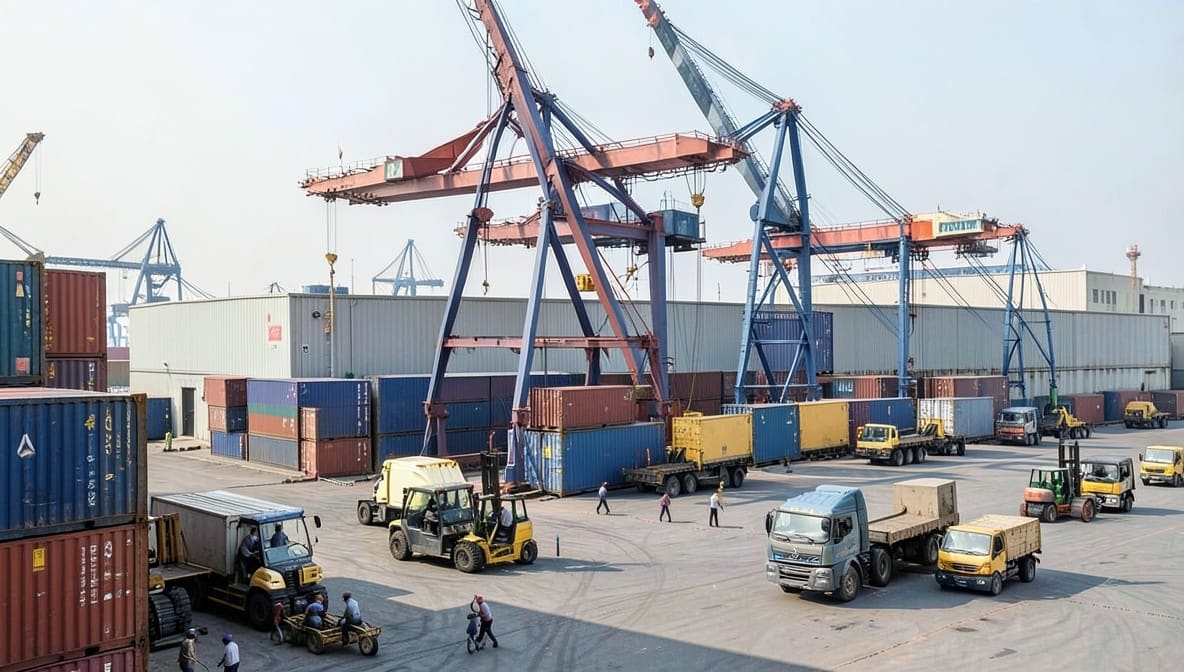
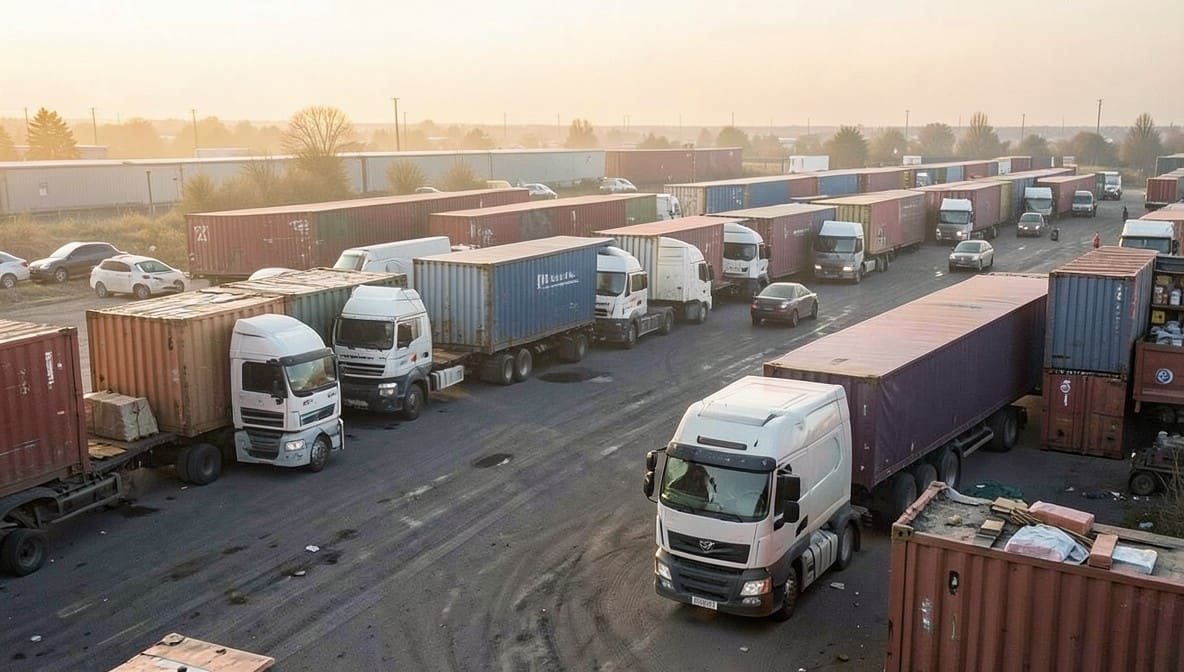
The appellant, M/s. Manish Kumar Singh, a proprietorship firm based in Belpahar, Jharsuguda, Odisha, is engaged in the business of transportation of goods - primarily coal and iron - on behalf of various clients across India. The dispute arose when the Commissioner of GST & Central Excise, Rourkela Commissionerate, confirmed a Service Tax demand of Rs. 2,73,51,065/- (inclusive of cesses) for the Financial Year 2016-17, along with interest under Section 75 and penalties under Sections 77(1)(c)(ii), 77(2), and 78 of the Finance Act, 1994.
Key Facts
- The appellant operated as a truck owner/operator providing physical road haulage of bulk commodities (coal and iron) for various principal contractors.
- Freight considerations were received in cash and through banking channels.
- The departmental scrutiny originated from third-party data shared by the Central Bureau of Direct Taxes (CBDT) based on the appellant's Income Tax Return (ITR) for FY 2016-17.
- The ITR disclosed Rs. 18,23,40,433/- under "Sales/Gross Receipts from Services" while total TDS credits under Sections 194C, 194H, 194I, and 194J of the Income Tax Act, 1961 amounted to Rs. 5,18,74,009/-.
- The Revenue adopted the higher gross turnover figure of Rs. 18,23,40,433/- and applied a flat 15% Service Tax rate to arrive at the demand.
- A letter dated 21.05.2020 was issued by the Superintendent, GST & Central Excise, Belpahar Range, calling for documents including Balance Sheet, Profit & Loss Account, and Form 26AS/TDS certificates.
- The appellant replied on 02.07.2020, clarifying its business as lifting and transportation of coal and iron, and submitted the ITR Acknowledgement and audited Balance Sheet for FY 2016-17.
- Due to COVID-19 pandemic disruptions, the appellant could not produce complete vehicle-wise, party-wise, and banking records in a fully collated format at the initial inquiry stage.
- The Department treated this as deliberate non-cooperation and mala fide intent to evade tax.
- A Show Cause Notice dated 30.06.2021 was issued invoking the extended period of limitation under the proviso to Section 73(1), alleging wilful suppression, non-registration, and non-filing of ST-3 returns.
- The appellant appeared for personal hearing on 20.06.2024, reiterating it was exclusively engaged in goods transportation by road and never functioned as a GTA.
- The adjudicating authority confirmed the entire demand and penalties vide Order-in-Original No. 24/CCE/S.TAX/RKL/2024-25 dated 03.07.2024.
Procedural History
- 21.05.2020: Departmental inquiry letter issued to appellant
- 02.07.2020: Appellant's reply with ITR Acknowledgement and audited Balance Sheet
- 30.06.2021: Show Cause Notice issued invoking extended limitation under Section 73(1) proviso
- 20.06.2024: Personal hearing before adjudicating authority
- 03.07.2024: Order-in-Original confirming demand of Rs. 2,73,51,065/- plus interest and penalties
- 2024: Service Tax Appeal No. 76113 of 2024 filed before CESTAT Kolkata
- 05.11.2026: Hearing through virtual mode
- 13.11.2026: Final Order No. 76593/2026 pronounced
Relief Sought
The appellant sought setting aside of the impugned Order-in-Original dated 03.07.2024, quashing of the Service Tax demand of Rs. 2,73,51,065/-, interest, and penalties under Sections 77(1)(c)(ii), 77(2), and 78, with consequential relief.
The Legal Issue
The central questions were: (1) Whether the appellant's road transportation services without issuance of consignment notes qualify as taxable GTA services or remain exempt under the Negative List in Section 66D(p)(i)(A); (2) Whether a Service Tax demand can be sustained solely on the basis of gross receipts from ITR/CBDT data without independent transaction-wise determination of taxable services; (3) Whether the extended period of limitation under the proviso to Section 73(1) can be invoked where the assessee transparently disclosed receipts in audited accounts and ITR and acted under a bona fide belief of non-taxability.
Arguments Presented
For the Appellant
The appellant contended that it operated strictly as a truck owner/operator providing physical transportation of goods by road and never functioned as a GTA within the meaning of the Finance Act, 1994. It never issued any document constituting a 'consignment note' as statutorily defined, and consequently its activities fall outside the ambit of taxable GTA services. The demand was raised mechanically on the aggregate ITR figure of Rs. 18,23,40,433/- without any transaction-wise determination of the legal character of receipts. The appellant placed comprehensive documentary evidence on record - audited accounts, statement of services, vehicle lists, work orders, transport challans, party-wise ledgers, and bank statements - demonstrating it operated as a sub-contracted Goods Transport Operator (GTO) under work orders from principal transporters, with freight fixed on a per-metric-tonne basis, and all transit documentation issued by the principals. Reliance was placed on M/s. Tabassum Enterprises v. Commissioner of CGST & Central Excise, Kolkata South (Final Order No. 77452/2025 dated 19.09.2025) where this Bench held that transportation services without consignment notes are excluded under the Negative List. The appellant also argued that even if treated as GTA services, liability would rest on specified recipients under the Reverse Charge Mechanism per Rule 2(1)(d)(i)(B) and Notification No. 30/2012-ST. The extended limitation was unjustified as the appellant transparently declared receipts in audited books and ITR, negating any suppression or mens rea.
For the Respondent
The Revenue reiterated the findings in the impugned order, contending that the plea regarding non-issuance of consignment notes was not specifically raised before the lower authority and constituted an afterthought. The Department maintained that the appellant's failure to produce complete vehicle-wise and party-wise records during the inquiry (May-July 2020) evidenced deliberate non-cooperation and mala fide intent to evade tax, justifying invocation of the extended period of limitation and imposition of penalties.
The Court's Analysis
The Tribunal, per Member (Technical) K. Anpazhakan, first addressed the admissibility of additional evidence. The appellant had filed a Miscellaneous Application under Rule 23(1) of the CESTAT (Procedure) Rules, 1982 seeking leave to adduce documents including audited accounts, service statements, vehicle lists, work orders, transport challans, ledgers, and bank statements. The Tribunal allowed the application, holding these records directly bear upon the factual matrix concerning the actual nature of activities, the true legal character of receipts, and whether statutory prerequisites for taxability stand satisfied.
"Taking these documents into consideration is essential for this Tribunal to arrive at a just, lawful, and effective determination of the dispute."
On the primary issue of GTA classification, the Tribunal examined Section 66D(p)(i)(A) of the Finance Act, 1994 (Negative List), which excludes services by way of transportation of goods by road unless provided by a GTA or courier agency. Under Section 65B(26) read with Rule 4B of the Service Tax Rules, 1994, issuance of a statutory 'consignment note' is an indispensable legislative prerequisite for GTA classification. Where road transportation is executed without consignment notes, the transaction retains its character as simple goods transport by a truck owner/operator, squarely exempt under the Negative List.
The Tribunal rejected the Revenue's 'afterthought' argument, holding that pure legal questions touching upon statutory exigibility can be raised at any stage. The factual premise - that the appellant was exclusively engaged in transportation of goods - was already on record vide the reply dated 02.07.2020 and the personal hearing on 20.06.2024. The impugned order completely failed to examine whether the appellant had issued any consignment notes.
The additional documentary evidence substantially fortified the appellant's stand. Work orders from principal contractors (including M/s. Pragati (Indian) Road Lines) showed the appellant operated as a sub-contracted GTO with freight on a per-metric-tonne basis, no clause for issuance of consignment notes, and standard shortage/penalty clauses merely allocating commercial risk. Transport challans were uniformly issued by principal transporters on their letterheads, with the appellant's name appearing only as "Owner's Name" alongside vehicle registration and trip advance details. These challans omitted mandatory statutory particulars under the Explanation to Rule 4B (consignor details, Service Tax liability declaration) and fastened transit risk on the truck owner/driver. Party-wise ledgers maintained by Service Tax-registered principals showed the appellant's earnings credited under "By Freight Expenses" with invoice/voucher references left blank.
"In the absence of consignment notes, the appellant cannot be artificially categorized as a Goods Transport Agency. The Ld. Authorized Representative has failed to adduce any evidence to dislodge these factual records or to prove the issuance of consignment notes."
The Tribunal relied on its decision in M/s. Tabassum Enterprises (supra), which in turn followed the Supreme Court in CCE, Ahmedabad-II v. Chartered Logistics Ltd. [(2024) 16 Centac 474 (SC)], holding that transportation by road without consignment notes is not taxable as GTA service and is excluded under the Negative List.
On the alternative RCM argument, the Tribunal noted that several payers deducting TDS under Section 194C fell within specified recipient categories (bodies corporate, partnership firms, factories, etc.), and the adjudicating authority ought to have examined recipient-wise statutory exclusion before confirming demand against the appellant.
On the mechanical demand based on ITR/CBDT data, the Tribunal held that Service Tax under Section 66B is leviable only on provision of a specific "service" as defined in Section 65B(44), neither covered by the Negative List nor exempted. The burden rests on the Revenue to identify the specific service, establish exigibility, and determine exact taxable consideration. The Department cannot simply adopt gross ITR receipts, apply a flat rate, and treat the entire turnover as taxable by default. The Tribunal cited M/s. Rishu Enterprise v. Commissioner of CGST & CX, Dibrugarh (ST Appeal No. 75509/2022) and M/s. Quest Engineers & Consultant Pvt. Ltd. v. Commissioner of CGST & CX, Allahabad [2022 (58) G.S.T.L. 345 (Tri-All)], holding that Form 26AS/ITR data alone cannot sustain a Service Tax demand without corroborative independent evidence.
On extended limitation under the proviso to Section 73(1), the Tribunal found the essential statutory ingredients absent. The Show Cause Notice dated 30.06.2021 for FY 2016-17 survived solely on extended limitation, the normal period having lapsed in 2019. The Supreme Court's general COVID-19 limitation extension had no application to revive a time-barred demand. The appellant had transparently declared receipts in audited books and ITR, and promptly replied to the inquiry disclosing its business nature. Mere omission to register or file returns, driven by a bona fide understanding of non-taxability, does not equate to suppression with mens rea. Inability to produce granular records during the pandemic inquiry period cannot retrospectively establish fraudulent intent for FY 2016-17. The Tribunal followed Mohammed Fajlur Haque v. Commissioner of CGST & CX, Malda (Final Order No. 75412/2026 dated 19.03.2026), holding that invocation of extended limitation on assumptions without independent enquiry is unsustainable.
Consequently, penalties under Section 78 (requiring same ingredients of fraud/suppression) and Section 77(1)(c)(ii) (failure to produce documents) were set aside. The appellant had furnished ITR Acknowledgement and audited Balance Sheet; inability to produce trip-wise records during the pandemic was not wilful default. The general procedural penalty under Section 77(2) was upheld.
The Verdict
The appellant succeeded substantially. The CESTAT set aside the Service Tax demand of Rs. 2,73,51,065/- (inclusive of cesses) for FY 2016-17, the interest demand under Section 75, and the penalties under Section 77(1)(c)(ii) (Rs. 2,98,000) and Section 78 (Rs. 2,73,51,065). The penalty under Section 77(2) (Rs. 10,000) was upheld. The impugned Order-in-Original dated 03.07.2024 stands modified accordingly. The appeal is disposed of with consequential relief.
What This Means For Similar Cases
Consignment Note Is the Linchpin of GTA Classification
The judgment reinforces that issuance of a statutory consignment note under Section 65B(26) read with Rule 4B is not a mere formality but the foundational prerequisite for GTA classification. Practitioners should:
- Verify whether their clients in the trucking business issue documents meeting the statutory definition of consignment notes (containing consignor/consignee details, goods description, Service Tax liability declaration, etc.)
- Maintain clear documentary evidence - work orders, transport challans, ledgers - showing the operational reality of the arrangement
- Argue that absence of consignment notes places services squarely in the Negative List under Section 66D(p)(i)(A), regardless of turnover volume
ITR/CBDT Data Alone Cannot Sustain a Service Tax Demand
The Tribunal's categorical rejection of mechanical demand based on Income Tax records provides a robust defence template:
- The Revenue must independently establish the rendition of a specific taxable service, not merely borrow gross receipts from ITR/Form 26AS
- Form 26AS is maintained on cash/receipt basis for TDS purposes; Service Tax operates on accrual basis - the two are methodologically incompatible
- Practitioners should challenge demands lacking transaction-wise analysis and corroborative evidence of taxable service provision
Extended Limitation Requires Proof of Mens Rea, Not Mere Non-Compliance
The judgment clarifies the high threshold for invoking extended limitation under Section 73(1) proviso:
- Transparent disclosure of receipts in audited accounts and statutory returns (ITR) negates allegations of suppression
- Bona fide belief of non-taxability, even if erroneous, defeats the mens rea requirement for fraud/wilful misstatement
- Pandemic-era logistical constraints in producing historical records cannot be weaponised to infer fraudulent intent for prior years
- The general COVID-19 limitation extension by the Supreme Court does not revive demands already time-barred before the pandemic
Reverse Charge Mechanism May Shift Liability Even If GTA Status Is Assumed
As an alternative argument, practitioners should examine whether the recipient of GTA services falls within specified categories under Rule 2(1)(d)(i)(B) and Notification No. 30/2012-ST (bodies corporate, partnership firms, factories, societies, registered excisable dealers). If so, Service Tax liability rests on the recipient under RCM, and the truck owner cannot be proceeded against.
Additional Evidence at Appellate Stage Is Permissible for Foundational Facts
Rule 23(1) CESTAT Procedure Rules allows admission of additional evidence where necessary for effective adjudication. Contemporaneous business records (work orders, challans, ledgers, bank statements) directly bearing on the nature of activity and character of receipts should be proactively filed at the appellate stage, with explanation for non-production earlier.